Stop Managing Tasks, Start Cultivating Leaders: The Guide to Empowering Your Team.
Golden Hook & Introduction
SECTION
Nova: What if the biggest obstacle to your team's success isn't a lack of effort, or even a lack of talent, but a fundamental misunderstanding of leadership itself? We're talking about moving beyond just 'doing things right' to 'doing the right things with the right people.'
Atlas: Oh man, that's a powerful distinction. Is it really that simple, or is it deceptively complex? Because I imagine a lot of our listeners are constantly striving for efficiency, trying to get things done, and that sounds like it’s asking them to re-evaluate their entire approach.
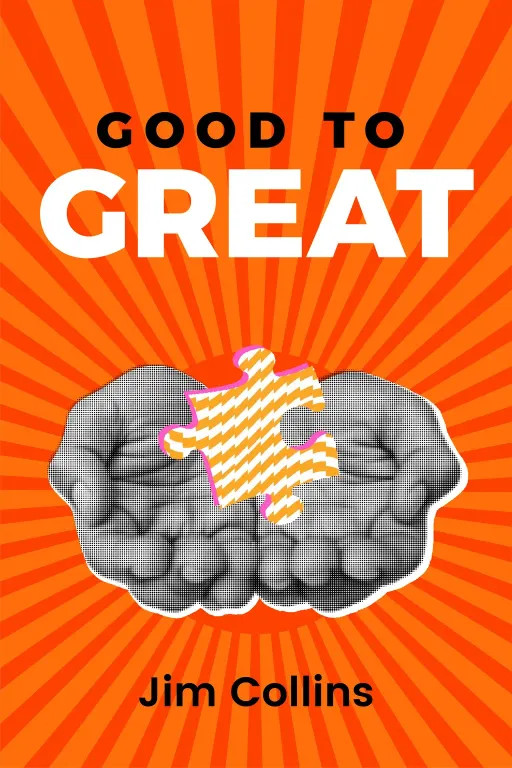
Nova: It is, Atlas, and it's a profound shift. Today, we're diving into this critical idea, drawing heavily from the monumental work of Jim Collins, specifically his book "Good to Great." What's fascinating about Collins's research is that it wasn't just theoretical musing. He and his team embarked on a rigorous five-year study, sifting through decades of company data, literally thousands of articles and interviews, to pinpoint what truly separated companies that made a sustained leap from being merely good to becoming truly great. It was an analytical, data-driven quest for the truth of organizational excellence.
Atlas: That kind of deep-dive research definitely appeals to anyone looking for robust understanding, not just fads. So, if we're moving beyond just task management, what did Collins's extensive research reveal as the foundational element for cultivating these truly impactful organizations?
From Taskmaster to Leader Cultivator: The Level 5 Mindset
SECTION
Nova: Well, his research pointed to something utterly counter-intuitive and yet incredibly powerful: the 'Level 5 Leader.' These aren't the charismatic, larger-than-life figures we often associate with success. Instead, Level 5 leaders are defined by a paradoxical blend of extreme personal humility and intense professional will. They are often quiet, unassuming, even shy, but possess an unwavering resolve to do whatever it takes for the long-term success of the organization, not for personal glory.
Atlas: Humility and fierce will? That sounds like two opposing forces. How do those seemingly contradictory traits actually work together in practice? And how on earth do you even identify someone with this 'Level 5 potential' in a team that's primarily focused on delivering immediate results? Because I imagine a lot of leaders are celebrated for their visible achievements, not their quiet strength.
Nova: That's precisely the paradox. A Level 5 leader channels their ego from themselves and the larger goal of building a great company. They attribute success to external factors or their team, and take personal responsibility for failures. Their professional will means they are absolutely relentless in pursuing results, making tough decisions, and setting incredibly high standards, but always for the benefit of the organization, not to boost their own profile.
Atlas: Can you give an example? Because it's hard to picture. Like, what's the difference between a Level 4, highly effective manager, and this almost mythical Level 5 leader?
Nova: Absolutely. Imagine two companies. In Company A, the CEO, a Level 4 leader, is brilliant, charismatic, and drives incredible success. But when they leave, the company often falters because all the key decisions, all the strategic direction, flowed through them. The success was tied to personality. Now, Company B has a Level 5 CEO. This leader focuses relentlessly on building a strong, capable executive team, developing successors, and establishing enduring systems and a culture of discipline. When eventually step down, the company continues its trajectory of greatness, often improving, because the Level 5 leader built an organization that didn't depend solely on them. They were like a gardener tending to a forest, ensuring it thrives long after they’re gone, rather than a single magnificent tree.
Atlas: Wow, that’s a powerful analogy. So it's not about being the brightest star, it's about making sure the entire constellation shines brighter, even in your absence. That makes me wonder, though, for our listeners who are striving for mastery and strategic leadership, how do you even begin to cultivate those Level 5 traits in yourself or in others? Because humility isn't exactly a skill you can learn in a weekend workshop.
Nova: It's true, it's more of a character trait, but it can absolutely be nurtured. Collins found that Level 5 leaders often come from within, developing over time through intense personal reflection and a deep sense of purpose. It starts with asking profound questions about what truly matters, what legacy you want to leave. And for identifying it in others, look for individuals who demonstrate unwavering commitment to results, but also possess an inherent modesty, a willingness to share credit, and a genuine concern for the long-term health of the organization over short-term personal gain. They aren't looking for the spotlight; they're looking for the right outcome.
The Power of Purpose: Inspiring Leadership Through 'Why'
SECTION
Nova: And while identifying these Level 5 leaders is crucial, what truly ignites their potential and the entire team's is understanding their collective 'why.' This brings us to another transformative insight, from Simon Sinek's "Start with Why." Sinek argues that truly inspiring leaders and organizations communicate from the inside out, starting with their 'why' – their purpose, cause, or belief – before moving to the 'how' and the 'what'.
Atlas: So, it's not just about finding great people, but giving them a compelling reason to be great? For someone trying to guide teams effectively, how does articulating a 'why' actually translate into fostering deep collaboration and innovation, beyond just a fancy mission statement that no one remembers? Because "impact" is what drives a lot of our audience, and a vague 'why' doesn't always feel impactful.
Nova: Exactly. A mere mission statement is often a 'what.' Sinek's 'why' is an emotional driver. Think about it: people don't buy you do; they buy you do it. This applies internally too. When your team understands and believes in the 'why' behind their work, they're not just performing tasks; they're contributing to a shared purpose. This fosters intrinsic motivation, resilience, and a willingness to collaborate and innovate because they're all rowing in the same direction, driven by a shared belief. It's the difference between a group of individuals working on tasks and a cohesive team building something meaningful.
Atlas: That’s a great way to put it. It’s like the team isn't just following instructions, they're on a quest. But in today's fast-paced environment, especially in fields like AI applications where innovation is constant, isn't there a risk that constantly chasing the 'why' can slow down execution? We need to move quickly, iterate, and sometimes the 'why' feels like a luxury when you're trying to meet a deadline.
Nova: That's a common misconception. A clear 'why' doesn't slow you down; it provides a compass. When everyone understands the core purpose, decision-making becomes faster and more aligned. Instead of debating every 'what,' you can ask, 'Does this 'what' serve our 'why'?' It empowers individuals to innovate within the boundaries of that purpose, knowing their contributions matter. It's about clarity, not paralysis. A strong 'why' fuels innovation because it gives meaning to the inevitable failures and pivots inherent in any creative process. It keeps the team resilient and focused on the ultimate goal, even when the 'how' or 'what' needs to change.
Atlas: So, it's less about a rigid philosophy and more about a guiding principle that actually accelerates effective action. I can see how that would build robust understanding among a team, leading to more meaningful contribution. It sounds like the 'why' is the north star for both the Level 5 leader and the entire organization.
Synthesis & Takeaways
SECTION
Nova: Precisely. The synthesis of these two powerful ideas is where true leadership transformation happens. Cultivating Level 5 leaders within your organization provides the steady, humble, and resolute hand at the helm, ensuring the long-term success and growth of the enterprise. And empowering those leaders, and indeed the entire team, with a crystal-clear 'why' provides the intrinsic motivation, the ethical compass, and the shared purpose that attracts top talent, fosters deep collaboration, and drives sustained innovation. It’s about building an organization that can achieve greatness not just through its products, but through its people and its purpose.
Atlas: So it's really about building an organization that not only performs at the highest level but also inspires, and that feels like a truly meaningful contribution, not just a job. That resonates deeply with the idea of strategic leadership and navigating the future responsibly. It’s more than just managing; it’s about creating a legacy.
Nova: Absolutely. And if there's one tiny step our listeners can take today, it's to reflect on their own team. Identify one person who shows that Level 5 potential – that unique blend of humility and fierce will – and create a specific, intentional plan to mentor their growth.
Atlas: And I’d add, maybe also reflect on your 'why' as a leader. What's the fundamental purpose that drives strategic innovation and quest for mastery? Because understanding that, and articulating it, is going to be key to unlocking not just your own potential, but the potential of everyone around you.
Nova: That's a perfect challenge to leave our listeners with. This is Aibrary. Congratulations on your growth!