Purpose-Driven Leadership: Crafting Vision & Impact
Golden Hook & Introduction
SECTION
Nova: You know, it’s wild to think about how many organizations, big and small, start with a bang, full of passion, only to fizzle out or lose their way over time. It’s almost like they forget the very heartbeat that brought them into existence.
Atlas: Oh, I know that feeling. It’s like watching a band release an incredible first album, then their next few are just… trying to chase trends. They lose their original sound, their soul.
Nova: Exactly! It makes you wonder, what’s the secret sauce for those rare few that not only endure but actually get with age, becoming these beacons of influence? What allows them to continuously adapt without losing their identity?
Atlas: That’s a deep question, Nova. For anyone building something—a company, a movement, even just a team—that kind of longevity and impact feels like the ultimate prize.
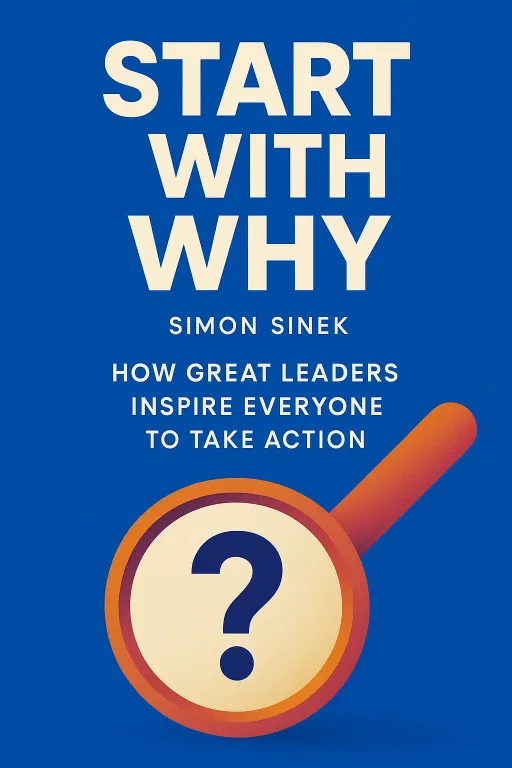
Nova: It absolutely is. And today, we’re peeling back the layers on that very question, drawing profound insights from a trio of books that, when woven together, offer an almost alchemical formula for enduring influence. We’re talking about "Start With Why" and "The Infinite Game" by the brilliant Simon Sinek, and "Good to Great" by the equally insightful Jim Collins.
Atlas: Those are heavy hitters! Sinek, with his unique blend of anthropology and leadership, really shifted how we think about motivation. I remember when "Start With Why" first hit, it wasn't just a business book; it felt like a philosophical treatise on human behavior. He has this incredible way of simplifying complex ideas, often drawing from unexpected places like biology and ancient history. And Collins, of course, is the master of rigorous data analysis, finding patterns where others just see noise. It’s a powerful combination.
Nova: It truly is. Sinek, in particular, has this knack for making you question fundamental assumptions about why we do what we do. He’s not just giving you a new strategy; he’s trying to rewire your brain to think about purpose first. It’s a truly illuminating concept, and it sets the stage for everything else.
The Power of Purpose: Starting with "Why"
SECTION
Nova: So, let’s dive into our first big idea, which is really the cornerstone of purpose-driven leadership: starting with your 'why.' Simon Sinek hammered this home in his seminal work, arguing that truly great leaders and organizations don’t just tell you they do or they do it. They lead with.
Atlas: So you're saying it's not about the product or the process, but the belief behind it? Like, the deeper motivation?
Nova: Precisely. Think about it through Sinek's Golden Circle. Most organizations communicate from the outside in: they tell you WHAT they offer, then HOW they do it, and maybe, if there’s time, WHY they do it. But inspiring leaders, they operate from the inside out. They start with their WHY—their purpose, cause, or belief—then move to HOW they fulfill that, and finally, WHAT they actually deliver.
Atlas: That makes me wonder, what's a vivid example of this in action? Because for many of our listeners who are building a business or leading a team, articulating a 'why' can feel a bit abstract.
Nova: It’s a fantastic question. Sinek famously uses Apple as a prime example. Most computer companies would say, "We make great computers. They're beautifully designed and user-friendly." Apple flipped that. Their 'why' is "We believe in challenging the status quo and thinking differently." Their 'how' is "We make beautifully designed, user-friendly products." And their 'what'? "We make computers."
Atlas: Oh, I see. So the 'why' isn't just a mission statement; it's a deeply held belief that drives everything. It's almost emotional. That's actually really inspiring.
Nova: It is! And the impact is profound. People don't buy what you do; they buy why you do it. When you communicate your 'why' first, you're speaking directly to the part of the brain that governs behavior, emotions, and trust. It forms a deeper connection. It's why Apple has such a fervent following. People don't just like their products; they identify with Apple's purpose.
Atlas: That's fascinating. It’s like they're not just selling a phone; they're selling an identity, a shared belief system. But wait, how does an organization, especially one already established, actually or its 'why' if it's been focused on the 'what' and 'how' for so long? Does it require a massive overhaul?
Nova: That’s where the reflection comes in. It often involves looking backward, not forward. What was the original inspiration? What problem were you truly trying to solve for people, beyond making money? What core belief drove the founders, even if it wasn't explicitly stated? It's often buried in the origin story, in the passion that started it all. It’s rarely about inventing a new 'why,' but rediscovering the authentic one that was always there. Sinek argues that your 'why' is usually fully formed by the time your organization is founded; it's just a matter of articulating it clearly and consistently.
Atlas: So basically you’re saying it's about authenticity. It has to come from a genuine place, not some marketing slogan dreamed up in a boardroom. That makes perfect sense for anyone who cares about impact and authenticity.
From Good to Great: Disciplined Action Rooted in Purpose
SECTION
Nova: And that naturally leads us to the second key idea, which often acts as the practical bridge from an inspiring 'why' to sustained, tangible greatness: the principles Jim Collins lays out in "Good to Great." While Sinek gives us the soul, Collins gives us the disciplined structure to manifest that soul over time.
Atlas: I've been thinking about this. For our listeners who are managing high-pressure teams, having a 'why' is great, but how do you actually translate that into consistent, high-level performance? Collins is all about the data, right?
Nova: Absolutely. Collins and his research team spent years analyzing companies that made the leap from merely good to truly great, and then maintained that greatness for at least 15 years. They found it wasn't about charismatic CEOs or flashy strategies, but a combination of disciplined people, disciplined thought, and disciplined action.
Atlas: Okay, so it’s not just about having a great idea; it’s about the rigor behind it. Can you give me an example of how a "good to great" company exemplified this discipline, especially when it comes to aligning with a purpose?
Nova: One of the most compelling examples Collins uncovered was Walgreens. For decades, they were a perfectly good drugstore chain. But they made the leap to greatness by ruthlessly focusing on being the most convenient drugstore chain. That became their purpose, their guiding star. They eschewed other opportunities—like diversifying into food or general merchandise—to double down on convenience.
Atlas: So they had a clear 'why'—convenience—and then they applied intense discipline to every decision to fulfill that 'why.' It's like their 'why' became their filter for all strategic choices.
Nova: Exactly! It wasn't about trying to be all things to all people. It was about knowing their purpose and then having the discipline to say "no" to anything that didn't serve that purpose, even if it seemed like a good opportunity. Collins calls this the "Hedgehog Concept": knowing what you're deeply passionate about, what you can be the best in the world at, and what drives your economic engine.
Atlas: That’s a great way to put it. It sounds like a powerful way to ensure strategic decisions are always aligned with a deeper purpose. For a visionary leader, that kind of clarity is gold. But what happens when the world shifts? How do these "good to great" companies, rooted in a specific purpose and discipline, stay relevant in an ever-changing landscape?
Nova: That’s where Sinek's "The Infinite Game" comes into play, offering a crucial evolution to the concept of sustained greatness.
The Infinite Game: Sustaining Purpose in an Ever-Evolving World
SECTION
Nova: So, Atlas, you just hit on the perfect segue. What happens when the world shifts? What if your purpose-driven discipline, while powerful, becomes rigid in a dynamic environment? This is where Simon Sinek’s "The Infinite Game" offers a truly profound reframe. Sinek argues that most leaders are playing a finite game—focused on winning, beating competitors, hitting quarterly targets. But leadership, true leadership, is an infinite game.
Atlas: Whoa. An "infinite game"? That sounds a bit out there. What does that even mean? How do you "win" an infinite game if it never ends?
Nova: That's the point, you don't "win" an infinite game. An infinite game has known and unknown players, the rules are changeable, and the objective isn't to win, but to keep playing, to perpetuate the game. In business, this means shifting focus from short-term victories to long-term relevance, adaptability, and fostering a "just cause."
Atlas: So basically you're saying it's about sustained relevance over temporary triumph. That’s actually really inspiring for anyone who embraces the journey, not just the destination.
Nova: Precisely. A "just cause" is Sinek’s term for a purpose so meaningful that people are willing to make sacrifices to advance it. It's inclusive, service-oriented, resilient, and idealistic. It’s what allows organizations to adapt and innovate without losing their core identity, because their 'why' is bigger than any single product, market share, or competitor. Think about it, Collins's "good to great" companies often had a clear purpose, but Sinek adds this layer of driven by an.
Atlas: I'm curious, can you give an example of a company that truly embodies this infinite game mindset, perhaps one that's had to pivot dramatically but kept its core purpose intact?
Nova: Consider companies like Microsoft under Satya Nadella. For a long time, Microsoft was playing a finite game, obsessed with beating Apple or Google. But Nadella shifted their focus to empowering. That's an infinite cause. It allows them to move from operating systems to cloud computing, to gaming, to AI, all while serving that broader purpose. They’re no longer fixated on specific finite battles; they’re focused on perpetuating their cause.
Atlas: That's powerful. It’s like their 'why' became their compass in an ever-shifting fog. It connects their deep purpose to resilient strategy. I can see how that would give a company incredible longevity and impact. It’s about being driven by something bigger than yourself, or even your current market position.
Nova: Exactly. It's about building an organization that can outlast its founders, its products, and even its current market. It’s about leaving an enduring influence, not just making a quick buck.
Synthesis & Takeaways
SECTION
Nova: So, when we weave these threads together – Sinek’s 'Start With Why,' Collins’s 'Good to Great,' and Sinek’s 'The Infinite Game' – what emerges is a truly holistic blueprint for purpose-driven leadership. It begins with articulating that authentic 'why,' then instilling the discipline to align every action with it, and finally, embracing an infinite mindset to ensure that purpose remains relevant and adaptable, perpetually inspiring action.
Atlas: That's a beautiful synthesis. It moves from introspection to execution, and then to sustained evolution. It’s about building something that's not just successful, but deeply meaningful and resilient. For anyone who seeks profound understanding and wants to lead with purpose and skill, this framework offers a clear path.
Nova: It’s not just about leadership in the traditional sense either. This is about how we approach our lives, our careers, our contributions. Are we playing a finite game, chasing fleeting wins? Or are we building a 'just cause' that will endure, adapt, and inspire others long after we're done? It’s a question that truly gets to the heart of what it means to leave a lasting mark.
Atlas: And that's what makes these books, and this conversation, so impactful. It's not just business advice; it's a philosophy for living a life of profound influence. It’s about understanding that the true fight isn’t about beating someone else, but about playing a game that allows everyone to keep growing and contributing.
Nova: Absolutely. And for anyone listening, a tiny step you can take right now is to reflect on your own endeavors. Can you articulate your 'why' in a single, compelling sentence? Try it. Share it with a trusted colleague. See if it resonates. It’s a powerful starting point.
Atlas: That’s a fantastic, actionable takeaway. It brings it right back to the listener. This is Aibrary. Congratulations on your growth!