Beyond Buzzwords: Building a Culture That Lasts
Golden Hook & Introduction
SECTION
Nova: What if I told you the biggest mistake companies make isn't about chasing profits, but about them? Not ignoring profits entirely, but ignoring the deeper, more profound purpose that truly sustains them.
Atlas: Whoa, ignoring profits? Nova, isn't that business heresy? Every startup pitch, every quarterly report, it all comes back to the bottom line. You're saying we should just... look away?
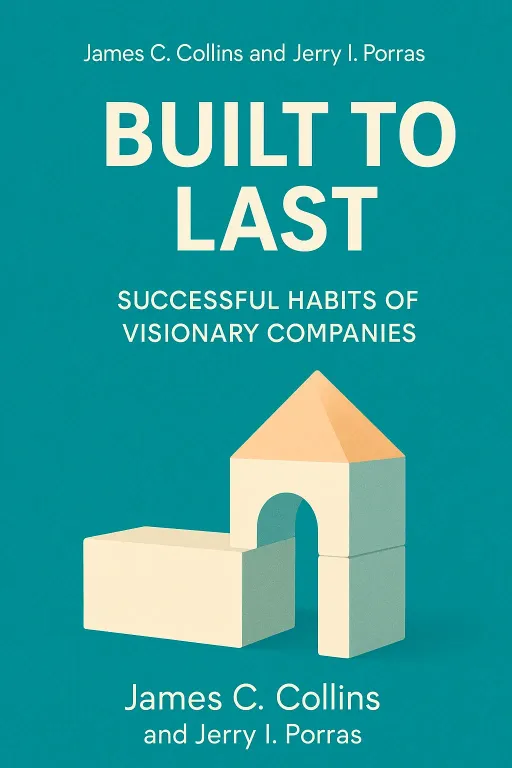
Nova: Not look away, Atlas, but look. We’re diving into a powerful idea today from the world of enduring organizations, drawing heavily from the groundbreaking work of James C. Collins and Jerry I. Porras. Their books, "Built to Last" and "Good to Great," are bedrock texts for anyone serious about creating something that truly endures. Collins, a former Stanford business lecturer, actually moved away from traditional consulting to conduct rigorous, data-driven research. He wanted to understand what made certain companies not just successful, but —companies that outperformed their peers for decades, even centuries, transcending leadership changes and economic downturns. He wasn't interested in anecdotes; he wanted empirical truth.
Atlas: That's a fascinating origin story for a business guru. It sounds like he wasn't just rehashing what everyone else was saying. He was looking for something deeper. So, what exactly this 'bedrock of enduring success' you're talking about, and how do these companies even find it?
The Bedrock of Enduring Success: Core Ideology
SECTION
Nova: Exactly, Atlas. What Collins and Porras discovered, especially in "Built to Last," is that truly great organizations aren't primarily driven by profit maximization. Instead, they operate with a powerful, almost sacred "core ideology." This isn't just a mission statement tacked onto a wall; it's the fundamental reason for their existence, their deeply held values, and their purpose beyond just making money. It's their North Star, guiding every decision, inspiring employees, and attracting the right kind of talent.
Atlas: That sounds almost philosophical. For an architect or cultivator out there, someone building something new, how do you even to articulate something so profound? It sounds almost… ethereal, when most people are just trying to hit quarterly targets and keep the lights on.
Nova: That's the beauty of it. It’s not about being ethereal; it’s about being. Think about a company that faced an existential threat. Back in the 1980s, a major consumer products corporation faced a horrific crisis when several people died after ingesting Tylenol capsules laced with cyanide. The easy, short-term profit-driven decision would have been to downplay, deny, or slowly recall products only in affected areas. But their deeply ingrained credo, which emphasized putting customers first, guided their immediate, decisive action. They pulled Tylenol products off shelves nationwide, a staggering financial hit.
Atlas: Wow. That's a massive gamble. Millions of dollars, maybe billions, gone overnight.
Nova: Absolutely. It was an unprecedented move. But because their core ideology dictated that their primary responsibility was to the user, not just shareholders, they didn't hesitate. The cause was their unwavering values; the process was a painful, expensive nationwide recall; and the outcome? They rebuilt trust, regained market share, and solidified their reputation as a company that genuinely cared. Their core ideology wasn't just words; it was tested under fire and proved to be their ultimate strength. It ensured sustained impact beyond mere profit, because that trust became invaluable.
Atlas: That’s incredible. It reframes the idea of "profit" entirely. It's like, by prioritizing something than profit, they ultimately secured their long-term profitability. So it's less about writing something fancy down, and more about truly understanding what drives you and your team at a fundamental level. It's like finding your company's soul, not just its bank account.
Nova: Precisely. It’s about discovery, not invention. What truly motivates your team? What impact do you genuinely want to make? It starts there.
The 'Who' Before the 'What': Building a Values-Aligned Team
SECTION
Nova: Finding that soul is critical, Atlas, but once you have it, the next question becomes: who do you invite to live in that soul? This brings us to Collins's powerful insight from "Good to Great": the 'who' before the 'what.'
Atlas: The 'who' before the 'what'? I've heard that phrase, but I wonder if it's just another corporate buzzword. For someone trying to scale their impact, trying to grow their vision, it feels like the 'what'—the strategy, the product—is everything.
Nova: It’s anything but a buzzword. Collins found that good-to-great companies first get the "right people on the bus," then they figure out where to drive it. This means prioritizing character, work ethic, and values alignment when hiring, even over specific skills or experience. It’s about building a team of people who deeply resonate with your core ideology.
Atlas: That sounds almost risky in today's fast-paced world, where everyone's scrambling for talent. Are you saying I should turn away someone brilliant because they don't 'fit' a vibe? For someone trying to scale their impact, someone with a clear vision of what they want to build, that seems counter-intuitive to rapid growth. You need specialists, you need people who can execute.
Nova: It's about deliberate choice, not exclusion. Consider the steel company Nucor. They consistently outperformed their competitors by focusing relentlessly on hiring people with incredible drive, discipline, and a strong sense of teamwork, even if they weren't the most experienced steelworkers. They created a culture where people were empowered, took ownership, and were rewarded for collective success. Their competitors, often focused on hiring experienced managers from other steel companies, found themselves with brilliant individuals who couldn't collaborate or adapt to Nucor's unique, high-autonomy culture.
Atlas: So, the cause was a deliberate hiring strategy for cultural fit; the process involved potentially passing on conventionally "top" talent; and the outcome was a highly adaptable, resilient company that thrived while others struggled. That’s a powerful illustration.
Nova: Exactly. Because when you have the right people, they don't need to be tightly managed. They innovate, they adapt, they self-correct, and they're all pulling in the same direction, driven by that shared core ideology. They become your greatest asset, far more valuable than any specific strategy, which can always change.
Atlas: I see. So, it's about building a collective intelligence, where the whole is truly greater than the sum of its parts, because everyone's pulling in the same direction. It's not just about hiring smart people, it's about hiring. That makes a huge difference for long-term resilience.
Synthesis & Takeaways
SECTION
Nova: Absolutely. This is why Nova's Take, mentioned in our content, is so powerful: "Culture is not a perk. It is the bedrock of enduring success. It starts with a clear vision and unwavering values." It's the foundation upon which everything else is built, from strategic delegation to sustained energy.
Atlas: This is huge for anyone building something with intention. It reframes culture from a soft, 'nice-to-have' to a hardcore strategic imperative. It's not just about making a profit, it's about building an organization that can withstand any storm because its roots are so deep. But how can our listeners, the architects and cultivators, take a tiny step toward this today? Where do they even begin to solidify this bedrock?
Nova: Collins and Porras offer a brilliant "Tiny Step" that resonates perfectly with this. Articulate your company's core values in one sentence. Then, share it with your team. This isn't about a lengthy manifesto; it's about distillation. It forces clarity.
Atlas: One sentence. That's deceptively simple, and incredibly powerful. It forces clarity. It forces you to distill that big picture, that grand vision, into something actionable, something everyone can understand and rally behind. And that, I think, is where true visionaries start.
Nova: It's the starting gun for attracting the right talent, guiding your strategic delegation, and building the resilience needed to sustain your energy through the inevitable challenges. When everyone understands and embodies that single sentence, you’re not just building a business; you’re cultivating a living, breathing entity designed for lasting impact.
Atlas: So, it's about laying that deep, strong foundation so everything you build on top of it can truly last. It's about building a legacy, not just a business. It's building a culture that transcends the current market, the current product, the current leader.
Nova: Exactly. It's about building "culture that lasts" – not just "beyond buzzwords," but beyond fleeting trends, beyond short-term gains, into something truly enduring.
Nova: This is Aibrary. Congratulations on your growth!