The Multiplier Effect: Personal and Team Evolution
Golden Hook & Introduction
SECTION
Nova: What if I told you the most powerful engine for your personal and professional growth isn't more effort, but a different kind of focus? And that the greatest return on investment you'll ever see isn't in stocks, but in the people you lead.
Atlas: Whoa, okay Nova, that’s a bold opening. It sounds like you’re talking about a different kind of wealth, not just financial. Intriguing.
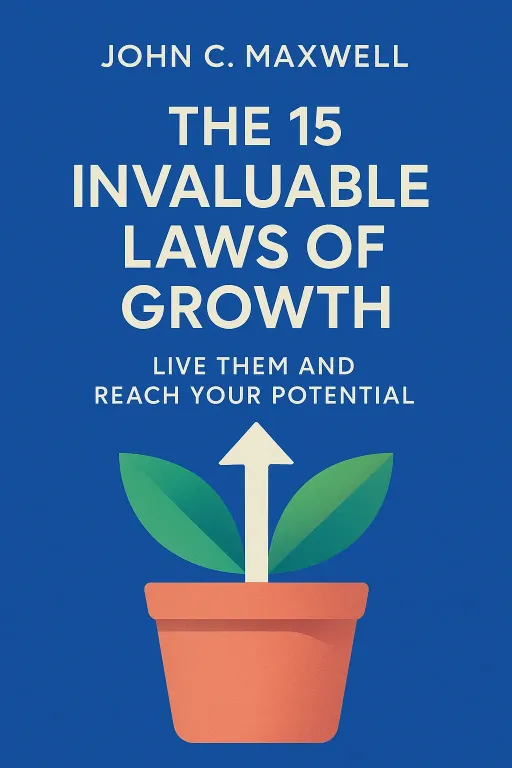
Nova: Exactly, Atlas. We're talking about exponential growth, about building capacity that ripples outwards. Today, we're unpacking these ideas from the work of John C. Maxwell, specifically looking at principles from his book 'The 15 Invaluable Laws of Growth' and his insights in 'Everyone Wins When You Develop Leaders'.
Atlas: John C. Maxwell. A name synonymous with leadership development. I mean, this is a guy who’s written over 100 books, right? That’s prolific. And his foundational work in leadership development has influenced millions globally for decades. So we’re tapping into some serious wisdom here.
Nova: Absolutely. And what’s fascinating is how these two seemingly distinct ideas—personal growth and developing others—are actually two sides of the same coin, creating this incredible multiplier effect. Let’s dive into the first side of that coin.
The Deliberate Architecture of Personal Growth
SECTION
Nova: Maxwell’s core message in 'The 15 Invaluable Laws of Growth' is profound in its simplicity: growth doesn't just happen passively. It requires a deliberate 'Growth Plan.' This isn't about just setting vague goals; it's about crafting a strategy tailored specifically to your unique strengths.
Atlas: A 'Growth Plan,' tailored to strengths. That immediately speaks to our listener profile—the Strategic Leader, the Growth Architect. It’s about intentionality, right? Not just hoping to get better, but actively designing the process. But Nova, for someone who feels that pull of many paths, that intellectual curiosity pulling them in a dozen directions, how do you even designing a plan? Isn't it easier to just react to whatever comes up?
Nova: That's precisely the challenge, Atlas. The 'pull of many paths' can lead to a scattered approach if we're not careful. Maxwell argues that the key to overcoming that is to anchor your growth plan in your strengths. Instead of trying to become a jack-of-all-trades, you focus on identifying what you're already good at, what energizes you, and then deliberately plan how to deepen mastery in those areas. It’s about leveraging your unique architecture, not trying to build something from scratch that doesn't fit your foundation.
Atlas: So it's less about fixing every perceived weakness and more about amplifying what's already working exceptionally well? That feels counter-intuitive to a lot of self-improvement advice we hear, which often focuses on shoring up deficiencies.
Nova: It is, and that’s where the genius lies. Think about it: when you're operating from your strengths, you naturally have more energy, more motivation, and you experience growth faster. The return on investment for your time and effort is exponentially higher. It’s like an architect who knows the soil conditions and the structural integrity of a site; they don’t try to build a skyscraper on sand. They build the strengths of the land. This focused exploration, as our user growth recommendations suggest, helps navigate that pull of many paths by giving you a clear direction rooted in your core capabilities.
Atlas: That makes so much sense for personal growth. It’s about building momentum by leaning into what’s already strong. And this is where that dedicated 20 minutes comes in, right? That non-negotiable time block to actually and on that plan? It’s not about finding hours in the day, but about making even a small, consistent commitment to that intentionality.
Nova: Exactly! That 20 minutes, consistently applied, builds momentum. It’s the disciplined practice that turns the plan from an idea into a tangible reality. It’s the 'Resilient Philosopher' aspect in action – understanding that growth is a journey, and showing up consistently, even for short bursts, is the path. It's about building that habit of deliberate progress, rather than waiting for inspiration to strike or for a crisis to force change. This intentionality is the bedrock for all other growth.
Atlas: It’s like the difference between a gardener who just lets things grow wild versus one who meticulously plans their planting, prunes strategically, and nurtures specific plants to flourish. The latter achieves a much more beautiful, productive, and intentional garden.
Nova: A perfect analogy, Atlas. And this deliberate cultivation of our own growth lays the foundation for the next crucial piece: how we cultivate growth in others.
The Multiplier Effect of Leadership: Investing in People
SECTION
Nova: Because here’s where Maxwell’s other key insight comes into play, from 'Everyone Wins When You Develop Leaders'. He states that the greatest return on investment for any manager, any leader, is the development of the people around them. It’s not about hoarding knowledge or power; it’s about sharing and multiplying it.
Atlas: That’s a powerful statement. The greatest ROI… not in product innovation, not in market expansion, but in. For the Strategic Leader and the Growth Architect, this sounds like the ultimate leverage. But how does that actually impact, beyond just having a more competent team? What’s the multiplier mechanism there?
Nova: The multiplier mechanism is leadership development itself. When you invest in developing your team members, you're not just upskilling them for their current role; you're potentially cultivating future leaders. Each person you help grow becomes more capable, more innovative, and potentially, a multiplier themselves. They can then go on to develop others, creating a cascade effect. It’s like planting a single fruit tree that doesn't just bear fruit for you, but whose seeds can grow into an orchard. This isn't a zero-sum game where your growth comes at their expense; it’s an exponential expansion where everyone wins.
Atlas: So it's not just about making individuals better for their current tasks, but about building a culture where is actively growing, contributing more, and potentially stepping into leadership roles. That really resonates with the user's desire for 'meaningful impact' and 'authentic connection.' It's about fostering an environment where people feel valued, supported, and have opportunities to thrive.
Nova: Precisely. And this investment in people directly fuels strategic thinking and emotional intelligence, which are listed as key growth areas for our listener. To develop someone, you need to understand their aspirations, their challenges, and how to guide them. That inherently requires empathy, strategic foresight, and clear communication. You’re not just managing tasks; you’re nurturing potential.
Atlas: This is where that simple takeaway Maxwell suggests becomes so potent. He says, 'Identify one team member this week and ask: "What is one skill you want to master this year, and how can I support that?"' It sounds almost too basic for such a profound concept. Is that single conversation really the starting point for this massive multiplier effect?
Nova: It’s the catalyst, Atlas. That single, intentional question does several powerful things. First, it signals to the team member that you see them as an individual with aspirations beyond their current job description. It fosters trust and authentic connection. Second, it forces clarity for both of you. They have to articulate what they want, and you have to think about how to support it. This might reveal opportunities you hadn't considered, aligning their growth with team or organizational goals—that’s the strategic thinking kicking in. And third, it’s the first step in a co-created growth plan. It’s active, it’s personal, and it’s the seed of that multiplier effect.
Atlas: I can see that. It’s like a doctor asking a patient not just about their immediate pain, but about their long-term health goals. It shifts the focus from just treating symptoms to building lasting well-being. And for a leader, asking that question is an act of genuine care and investment. It’s not just a task; it’s a relationship-building opportunity that unlocks potential.
Nova: Exactly. And when you start doing that consistently, you’re not just building a team; you're building a culture of continuous learning and development. You’re creating an environment where people feel empowered to take risks, to innovate, and to support each other’s growth. That’s the multiplier effect in full swing. Your capacity, and the team’s capacity, grows exponentially because you’re not just doing the work; you’re enabling more work to be done, and done better, by more people. It’s the kind of leadership that builds legacy, not just quarterly reports.
Synthesis & Takeaways
SECTION
Nova: So, when we look at these two ideas together—the deliberate architecture of personal growth and the multiplier effect of investing in people—we see a powerful synergy. Intentional personal growth fuels our own capacity to lead effectively and to mentor others. And in turn, intentionally developing the people around us creates a multiplying force that amplifies our own impact, extends our reach, and fosters a ripple effect of capability and wisdom throughout the organization. It’s a virtuous cycle, where personal mastery and team development feed into each other.
Atlas: It’s not just about doing more, Nova, it’s about enabling through ourselves and through others. For someone who identifies as a Strategic Leader, a Growth Architect, or even a Resilient Philosopher, this means growth isn't just about personal achievement or finding wisdom for oneself. It’s about orchestrating growth around us, creating a system where development is continuous and its effects are amplified. It’s about understanding that our own potential is amplified by the potential we unlock in others. This isn't just about climbing your own ladder; it's about building an elevator for everyone.
Nova: And that’s the essence of the multiplier effect. It’s the understanding that our efforts, when channeled intentionally and shared wisely, don't just add up; they multiply. This approach helps us navigate complexity, fosters resilience by building a stronger, more capable network, and ultimately leads to a more meaningful impact, aligning perfectly with the user's core drives for mastery and deep connection. It’s how strategic thinking, emotional intelligence, and resilience are not just destinations, but integral parts of the journey of multiplying impact.
Atlas: So, the challenge this week for everyone listening, and for us, is that one simple, yet profound conversation. Who on your team will you ask about their growth aspirations? What skill do they want to master this year, and crucially, how can you support that? It's a small step, but as we've discussed, small, intentional steps are the foundation of exponential growth. It’s about building a ripple that turns into a wave.
Nova: It’s about planting seeds, intentionally and consistently. The harvest, in terms of personal fulfillment, team success, and broader impact, can be truly extraordinary. It’s the architecture of growth, built by intention and multiplied by connection.
Atlas: This is Aibrary. Congratulations on your growth!