Becoming a Leader Worth Following
Golden Hook & Introduction
SECTION
Nova: The moment you get promoted, you're often set up to fail. Not because you're bad at your job, but because the rules of the game fundamentally change, and nobody tells you.
Atlas: Whoa, that's a bold statement, Nova. Set up to fail? I imagine a lot of our listeners who just got that big promotion, or are eyeing one, are feeling a little nervous right now. Why do you say that?
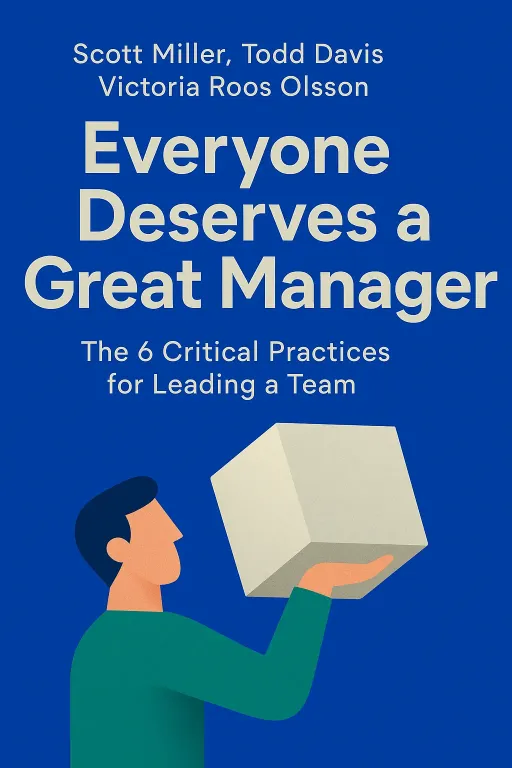
Nova: Because the very skills that made you an outstanding individual contributor—your technical prowess, your ability to execute perfectly on your own—those are often the exact things that can trip you up when you step into a leadership role. It's a different beast entirely. And that's exactly what "Everyone Deserves a Great Manager" by Scott Miller, Todd Davis, and Victoria Roos Olsson tackles head-on.
Atlas: Ah, the FranklinCovey book! I know FranklinCovey has a long-standing reputation for practical, research-backed approaches to leadership and productivity. So this isn't just theory, it's grounded in a lot of real-world experience, right?
Nova: Absolutely. This book distills FranklinCovey's extensive research into what makes managers not just good, but truly great. It’s a comprehensive guide, not just for new leaders, but for experienced ones too, helping them bridge that often-tricky gap between being a brilliant individual and an effective leader. It’s about more than just getting the title; it’s about making a profound shift in how you think and operate.
Atlas: That makes perfect sense. So, if the old rules don't apply anymore, what are the new ones? What's the first big hurdle the book identifies for someone stepping into that leadership role?
The Mindset Shift: From Individual Contributor to Leader
SECTION
Nova: The first, and arguably most crucial, hurdle is a fundamental mindset shift. The book emphasizes that you need to transition from an "individual contributor mindset" to a "leader's mindset." It sounds simple, but it's deceptively difficult.
Atlas: But isn't it just about delegating more tasks? Telling people what to do, then checking in? I mean, that’s what most people think management is, isn't it?
Nova: That's the common misconception, and it's precisely where many managers stumble. It’s not about just offloading tasks. It’s about a profound identity shift. As an individual contributor, your success is largely defined by output, achievements. As a leader, your success is defined by the success and growth of. You move from being the star player to being the coach.
Atlas: Okay, so it’s like a brilliant soloist suddenly having to conduct an orchestra. They might know every note, but conducting requires a whole different set of skills and a different perspective.
Nova: Exactly! Think of a brilliant software engineer, let’s call her Sarah. Sarah is a coding wizard. She can solve any bug, build any feature faster and more elegantly than anyone else. She gets promoted to lead a team of engineers. What’s her instinct? To jump in and fix everything herself, to show her team the "right" way by doing it.
Atlas: Oh, I know that feeling. It's tempting to just take over because you know you can do it faster or better. But then your team... they just watch, right?
Nova: Precisely. Sarah’s team starts to disengage. They stop bringing problems to her because they know she'll just solve them. They don't grow, they don't learn, and Sarah quickly becomes overwhelmed. She's still operating with an individual contributor mindset, trying to scale her own brilliance, which is impossible. The book highlights this as a major pitfall: you cannot scale yourself. You must scale your influence.
Atlas: That’s a powerful distinction. So, the consequence isn't just an overwhelmed manager, but a disempowered and ultimately underperforming team. It's like she's hoarding all the growth opportunities.
Nova: And inadvertently stifling innovation. The leader's mindset, as the book describes, means stepping back, trusting your team, and focusing on their success. It's about asking, "How can I help you be great?" instead of "How can I do this great myself?" It requires a shift in ego, too, where your satisfaction comes not from your individual wins, but from seeing your team flourish.
Atlas: That’s a profound shift, moving from "I did it" to "we did it, and I helped them do it." It requires a lot of self-awareness and a willingness to let go.
The Art of the Effective 1-on-1
SECTION
Nova: It absolutely does. And once you've embraced that mindset, the next question is, how do you it? How do you actually the work of leading, building that trust and fostering that growth? The book points to one incredibly powerful, yet often overlooked, tool: the intentional 1-on-1 meeting.
Atlas: Oh, the weekly check-in? Honestly, most people dread those, or they're just glorified status updates. I imagine a lot of our listeners have been in or led 1-on-1s that felt like a waste of time.
Nova: Exactly! And the book argues that's why they fail. The FranklinCovey research shows that effective 1-on-1s are status reports for the manager. They are. It’s a dedicated, protected space for connection, coaching, and career development. It's an investment in your people.
Atlas: So, how do you make it meeting? What should a manager be doing or asking to shift it from a dreaded obligation to a powerful tool?
Nova: The key is that the employee sets the agenda. The manager's role is primarily to listen, ask open-ended questions, and offer support or coaching where needed. The book suggests questions like, "What's on your mind?" "What are your biggest challenges right now?" "What support do you need from me?" and "What are your development goals?" It flips the dynamic entirely.
Atlas: Can you give us an example of how that looks in practice? A manager who gets it right versus one who just... goes through the motions?
Nova: Certainly. Imagine two managers, David and Emily. David uses his 1-on-1s to run through a list of project updates, tell his team what he needs from them, and basically talk for 45 of the 60 minutes. His team members feel unheard, like cogs in a machine. They leave feeling drained, and their real issues often go unaddressed.
Atlas: That sounds like a lot of meetings I’ve been in. Efficient, maybe, but not effective for building people up.
Nova: Precisely. Now, Emily. Emily starts her 1-on-1s by saying, "This hour is yours. What's most important for us to discuss today?" She genuinely listens, takes notes, and asks clarifying questions. When her team member, Mark, mentions a struggle with a particular client, Emily doesn't jump in with solutions. Instead, she asks, "What have you tried so far? What do you think the next step should be? How can I support you in that?"
Atlas: That's a huge difference! Mark probably feels heard, valued, and empowered to solve his own problems, knowing he has support.
Nova: Exactly. And the outcomes are dramatically different. David's team has higher turnover and lower engagement. Emily's team feels trusted, grows rapidly, and often proactively solves problems before they become crises because they feel safe bringing them up. The book emphasizes that these regular, intentional conversations build the trust and psychological safety that are the bedrock of high-performing teams. It's a consistent investment that prevents bigger, more costly problems down the line.
Atlas: That sounds simple on paper, but I imagine it's hard to implement consistently, especially when managers are swamped. What's the biggest barrier to managers actually doing this right?
Nova: Time, and the perceived lack of urgency. Managers often feel they don't have an hour a week per person. But the book stresses it's not an expense; it's the highest-leverage investment a manager can make. It prevents bigger problems down the line – burnout, disengagement, missed deadlines, team conflict. It's about being proactive in developing your people, rather than reactive to crises.
Synthesis & Takeaways
SECTION
Nova: So, bringing it all together, becoming a great manager, one truly worth following, isn't about inheriting a title. It's about a profound internal shift from individual contributor to a leader who scales influence, and then consistently applying human-centered practices like effective 1-on-1s. It's about being the hero-maker, not the hero.
Atlas: That's such a powerful reframe. It means leadership isn't about being the smartest person in the room, but about cultivating the potential of everyone else in it. And it's why FranklinCovey's research consistently highlights these practices as leading to higher engagement and performance.
Nova: Absolutely. It's about building trust, fostering growth, and ultimately, creating a team that thrives even when you're not directly solving every problem. The book helps managers transition from being overwhelmed to empowering.
Atlas: For anyone feeling that immense weight of management, or just wanting to elevate their leadership, focusing on these two areas—the mindset shift and the intentional 1-on-1—could truly transform their approach.
Nova: It really can. And if you're curious about the other critical practices, or want to dive deeper into the practical tools, we highly recommend "Everyone Deserves a Great Manager."
Atlas: What's one simple action listeners can take this week to start implementing these ideas?
Nova: Schedule your next 1-on-1, and for 75% of that time, just listen. Let your team member lead the conversation. You'll be amazed at what you discover.
Atlas: That's a powerful challenge. Thank you, Nova.
Nova: Thank you, Atlas. This is Aibrary. Congratulations on your growth!