The Contribution Compass
Golden Hook & Introduction
SECTION
Nova: If you think being busy means being productive, this episode is about to flip your entire understanding of what success actually looks like. We're talking about the silent killer of impact: the activity trap.
Atlas: Oh man, the activity trap. I feel like I live in that trap sometimes. It’s that constant feeling of running on a hamster wheel, right? Always moving, but not always getting anywhere truly significant.
Nova: Exactly! It’s the illusion of progress, the tyranny of the urgent over the important. And today, we're diving deep into how to escape it, drawing wisdom from two absolute titans of productivity and management.
Atlas: Okay, so who are we talking about here? Because I imagine a lot of our listeners, who are constantly juggling tasks and trying to maximize their impact, are leaning in right now.
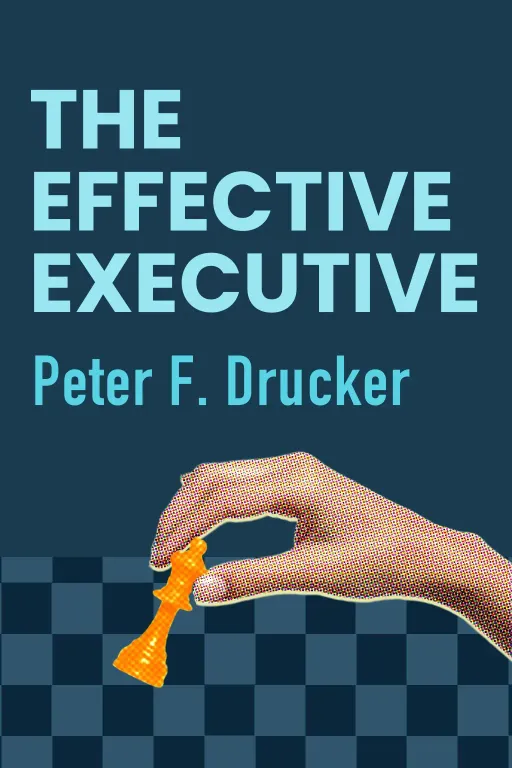
Nova: We're starting with the foundational genius, Peter Drucker, and his seminal work, "The Effective Executive." Drucker wrote this in 1967, a time when the world was rapidly shifting from manual labor to knowledge work. His insights on how to be truly effective in an intellectual role were revolutionary then, and they're even more critical now.
Atlas: So, a classic, then. But 1967 feels like a different universe with flip phones, let alone smartphones and constant notifications. How does that translate to today?
Nova: That's where Laura Stack comes in with "Doing the Right Things Right." She updates Drucker's timeless principles for our modern, digitally overwhelmed world, focusing on the crucial intersection of efficiency effectiveness. Together, they offer a powerful compass for anyone who wants to stop just doing things and start making a real difference.
Atlas: I love that – a "contribution compass." Because honestly, the sheer volume of "things to do" can make it impossible to even see the compass, let alone follow it. So, where do we begin with Drucker? What's his core challenge to our busy-ness?
The Druckerian Shift from Activity to Contribution
SECTION
Nova: Drucker's central argument is that effectiveness is not a talent; it's a habit that can be learned. And the core of that habit? Focusing on. He challenges us to ask, "What can I contribute that will significantly affect the performance and the results of the institution I serve?"
Atlas: Wait, so you're saying it's not about how many emails I answer, or how many meetings I attend, or how many items I check off my to-do list? Because that's how most of us measure our day, isn't it? By the sheer volume of completed tasks.
Nova: Precisely. Drucker saw right through that. He wasn't interested in activity for activity's sake. He saw that knowledge workers, unlike manual laborers, aren't measured by their output of physical goods. Their value comes from the of their decisions and insights. He's saying, if you're just busy, you're likely optimizing for the wrong thing.
Atlas: That’s a bit of a mind-bender. So many of us are conditioned to equate busyness with productivity, even with self-worth. It’s almost a badge of honor to say, "I'm swamped!"
Nova: It absolutely is. Let me give you a hypothetical, but very relatable, scenario. Imagine a brilliant research scientist, let’s call her Dr. Anya Sharma. Dr. Sharma is fantastic at experimental design, the kind of person who can spot a flaw in a protocol from a mile away and design a study that yields truly groundbreaking insights. This is her unique, high-leverage contribution to her institution.
Atlas: Okay, I can picture her. The kind of person whose work could lead to major breakthroughs.
Nova: Exactly. But Dr. Sharma also has a dozen other responsibilities: teaching undergraduate classes, serving on three university committees, writing grant applications, managing lab budgets, mentoring junior researchers, and responding to an endless stream of administrative emails. All, right? Important ones, even.
Atlas: Right. And in a clinic or research setting, everything feels urgent, everything feels like it needs to be done.
Nova: So, if Dr. Sharma measures her success by how many grant applications she submits, how many committee meetings she attends, or how quickly she clears her inbox, she’s focusing on activity. She’s busy, she’s exhausted, but is she making her? Is she leveraging her unique genius for experimental design? Probably not. The cause of her potential underperformance isn't a lack of effort; it's a misplaced focus. The process is a reactive scramble, and the outcome is often burnout and a missed opportunity for true impact.
Atlas: That makes perfect sense. It's like she's so busy bailing water out of the boat, she never gets a chance to steer it. But how do you even identify that one thing? In a complex environment, everything feels like a contribution, or at least a necessary task. How do you distinguish between activity and contribution?
Nova: It requires a deep understanding of what truly matter for your institution, and then an honest assessment of where your unique strengths intersect with those results. It's about asking, "What is the of what I do? What is the one thing that, if I do it, or don't do it well, the entire system suffers, or a unique opportunity is lost?" It’s a profound act of self-awareness and strategic thinking.
Atlas: So, it's about understanding the mission, and then finding your personal, high-leverage way to move that mission forward. That’s a really powerful reframing. It almost gives you permission to say "no" to things that don't align with that core contribution.
Modernizing Contribution & Identifying Your Unique Impact
SECTION
Nova: And that naturally leads us to Laura Stack's update, because in Drucker's time, "busy" looked different. It was paper memos and phone calls. Today, "busy" is a whole new beast of digital distractions, constant connectivity, and an expectation of instant responses. Stack brings Drucker's wisdom into this hyper-connected, hyper-demanding world.
Atlas: So it's not just doing the right things, but doing the right things, and doing them efficiently? Because efficiency without effectiveness is just fast busy-work.
Nova: Exactly! Stack emphasizes that both efficiency and effectiveness are crucial. You need to be efficient in how you execute tasks, but first, you must ensure you're working on the tasks – the ones that drive significant contribution. And her key takeaway, building on Drucker, is to identify the one contribution in your research or clinic that can provide, and then build your schedule around it.
Atlas: "Only you can provide." That sounds like a lot of pressure, especially for people in highly collaborative fields. It almost implies you have to be indispensable in every single way.
Nova: Hold on, it’s not about being irreplaceable in tasks. It’s about identifying that specific, high-leverage contribution that aligns with your unique skills, your deep knowledge, and your specific position. Think of it as your unique within your role. What is the one thing that, because of your particular blend of experience and insight, you can do better or differently than anyone else, and that has the highest impact?
Atlas: Can you give me another example? Because I imagine a lot of our listeners are thinking, "But my job is a team sport! Everything I do, someone else do."
Nova: Let's consider a marketing strategist, Liam. Liam is excellent at managing social media campaigns, writing compelling ad copy, and coordinating with design teams. These are all valuable activities. But Liam also has an uncanny ability to analyze complex market data, spot nascent trends before anyone else, and predict shifts in consumer behavior months in advance. This deep, analytical foresight, this ability to connect disparate data points into a cohesive, actionable strategy, is his.
Atlas: Ah, I see. So while someone else schedule posts or write decent copy, Liam’s superpower is that strategic foresight, that ability to see around corners.
Nova: Precisely. If Liam spends all his time bogged down in the of scheduling social media posts, responding to comments, and tweaking ad copy – tasks that could potentially be delegated or automated – he's not leveraging his unique, high-impact contribution. He's efficient at the wrong things. His unique value, his true strategic worth, lies in those deep dives into data, synthesizing insights, and guiding the overall direction. If he dedicates his precious cognitive energy to the former, the latter, the truly impactful work can do, gets neglected.
Atlas: That’s a perfect example. It's about finding your "superpower" within your role and then making sure you’re actually it. But then the takeaway is to "build your schedule around it." How does that even work when your calendar is already a war zone of meetings, deadlines, and unexpected emergencies? For our listeners grappling with time management, this sounds like a dream, but how do you make it a reality?
Nova: It’s a radical act of intentionality. It means proactively blocking out time for that unique contribution, treating it as your most important appointment. It means delegating tasks that aren't in your unique contribution zone, even if you're good at them. It means having the courage to say "no" to requests that pull you away from your highest leverage work, or at least negotiating for more time. It's about designing your day around impact, not just reacting to demands.
Atlas: That takes serious discipline, and probably a shift in how you communicate with your team and even your leadership. It's not just about what you, but what you do, and why.
Nova: Absolutely. It's a proactive design, not a reactive busy-ness. It’s about understanding that your true value isn't in filling every minute, but in filling specific, high-impact minutes with the work can deliver.
Synthesis & Takeaways
SECTION
Nova: So, bringing Drucker and Stack together, it’s a powerful two-part punch. First, the mindset shift from Peter Drucker: stop measuring success by how many tasks you complete and start asking, "What can I contribute that will truly move the needle?" Then, the modern application from Laura Stack: identify that that only you can provide, and then radically re-engineer your schedule to prioritize it.
Atlas: So, essentially, it’s about becoming a "contribution compass," always pointing towards what truly moves the needle, not just what fills the day. For our listeners who are pragmatic learners and focused achievers, this is huge. It's about reclaiming your time and making it count for what truly matters, cutting through the noise to find what creates real value.
Nova: It takes courage, Atlas, because it challenges that deeply ingrained belief that busyness equals worth. It asks us to be strategic, to be self-aware, and to be disciplined in protecting our most valuable asset: our unique ability to contribute. It's about strategic learning and intentional impact, making every hour count towards your most profound work.
Atlas: That’s actually really inspiring. It’s not just about doing more, it's about doing what can do to create the most value. It challenges that ingrained belief that busyness equals worth. It’s a shift from being a cog in the machine to being the engine that drives it forward.
Nova: And for anyone feeling overwhelmed by their to-do list, this isn't about adding more pressure. It’s about alleviating it by focusing your energy where it matters most, leading to both greater impact and, ironically, often greater personal satisfaction. What if, instead of being busy, you were simply… impactful?
Atlas: Now that’s a question worth asking yourself every single morning.
Nova: Indeed. This is Aibrary. Congratulations on your growth!