The Architecture of Strategic Decision Making
Golden Hook & Introduction
SECTION
Nova: Atlas, rapid-fire word association. I say "decision," you give me the first thing that pops into your head. Ready?
Atlas: Oh, I like this! Ready.
Nova: Decision.
Atlas: Crossroads.
Nova: Good. Strategic decision.
Atlas: Headache.
Nova: Ha! Okay, high-stakes decision.
Atlas: Sleep deprivation.
Nova: Whoa, that’s honest! And incredibly relatable for anyone trying to navigate the choppy waters of business today. Because let’s face it, making critical choices, especially when the market feels like a wild roller coaster, isn't just about picking the right path; it’s about having the courage and the to even see the paths clearly.
Atlas: Absolutely. For our listeners who are constantly trying to scale their ventures or master the next big tech trend, every decision feels like it could make or break things. It's not just a 'choice,' it's a commitment of resources, time, and team morale.
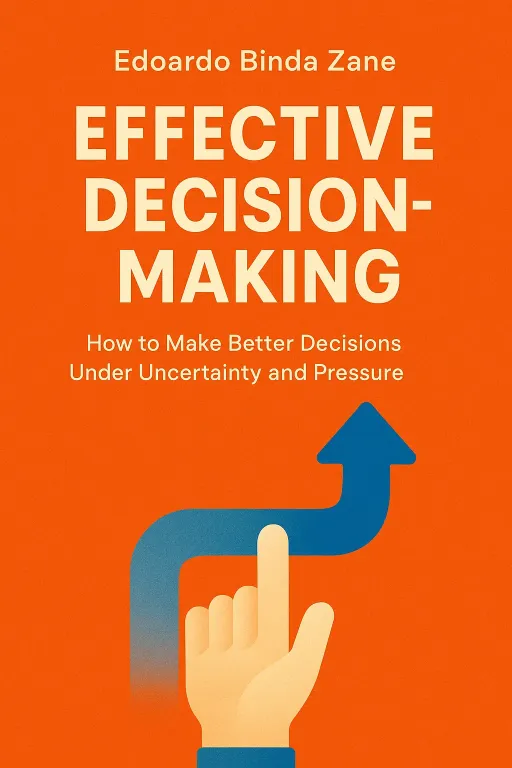
Nova: Exactly. And that's why today, we're diving into the architecture of truly impactful strategic decision-making. We're pulling insights from two brilliant minds: Edoardo Binda Zane’s "Effective Decision-Making," which offers a structured framework for high-stakes choices, and John Adair’s "Decision Making and Problem Solving," which introduces his famous 'Three Circles' model. Adair, by the way, is a foundational figure in leadership theory, often credited with developing Action-Centred Leadership, which really underpins a lot of modern management thinking.
Atlas: That’s a great way to put it. Because you can have the most brilliant, technically sound decision on paper, but if your team isn't bought in, if the people aren't aligned, it's just a fancy piece of paper, right?
Nova: Precisely. We're looking at both the logical precision and the human element.
Navigating Uncertainty: Zane's Framework for High-Stakes Decisions
SECTION
Nova: So, let's start with Edoardo Binda Zane. His work in "Effective Decision-Making" really shines a light on how to filter technical options when you're swimming in extreme market uncertainty. Think about it: a new tech emerges, your competitors are making moves, customer demands are shifting almost daily. How do you decide where to put your chips?
Atlas: That makes me wonder, Nova, what does "extreme market uncertainty" actually look like in practice? Because for a lot of our listeners, that's just their Tuesday. Is he talking about predicting the next global financial crisis, or something more immediate, like a sudden pivot in consumer behavior driven by a new social platform?
Nova: That’s a fantastic question, Atlas. Zane isn't just talking about black swan events, though his framework certainly helps there. He’s addressing the pervasive, everyday uncertainty that innovation leaders and strategists face. Imagine you’re a CEO of a mid-sized SaaS company. You've got a roadmap, but suddenly, a major competitor launches a freemium model that disrupts your pricing structure, or a new AI capability emerges that could either revolutionize your product or render it obsolete. The data is incomplete, the future is opaque. That’s Zane’s playground.
Atlas: Okay, so the ground is shifting constantly. How does his framework help you actually those technical options without just drowning in analysis paralysis? Because if you're a driven innovator, you want to move fast, but you also want to move smart.
Nova: That's the core of it. Zane’s framework isn't about endless analysis; it’s about analysis to gain clarity and confidence quickly. He emphasizes a systematic approach that often starts with rigorously defining the problem and the desired outcome. It sounds simple, but many leaders jump straight to solutions without truly understanding the problem they're trying to solve.
Atlas: So, it’s like before you even pick a direction, you need a crystal-clear map of what success looks like, and what failure means?
Nova: Exactly. And then, his framework guides you through identifying the critical variables – what truly matters in this decision? Not every piece of information is equally important. Then, it's about scenario planning: if we choose Option A, what are the most likely positive and negative outcomes? If we choose Option B? This isn't about predicting the future with a crystal ball, but about understanding the of possible futures and their associated risks.
Atlas: Can you give an example? Like how would a scaling tech venture apply this when deciding, say, to build a new feature in-house versus acquiring a startup that already has it? That's a huge technical and financial decision.
Nova: Absolutely. Let's take that scenario. A scaling venture needs a new AI-driven analytics feature.
Nova: Option A: Build it in-house. Option B: Acquire a smaller AI startup.
Nova: Zane's framework would first force them to define the: Is it just about having the feature, or is it about speed to market, intellectual property ownership, team capacity, or maintaining a specific company culture?
Nova: Then, identify critical variables: time to market, cost of development, integration risk, talent acquisition, long-term maintenance, potential for future innovation from each path.
Nova: Next, scenario planning for each option. For "build in-house," what if key engineers leave? What if the technology evolves faster than we can build? For "acquire," what if the integration is a nightmare? What if the acquired talent isn't a cultural fit? What if their tech debt is worse than we thought?
Atlas: Whoa, that’s a lot to consider. But it sounds like it gives you a structured way to ask the questions, rather than just reacting to the loudest voice in the room. This sounds like it could really help a focused strategist cut through the noise and validate the worth of different technical paths.
Nova: Precisely. It brings a logical rigor to the technical filtering, allowing leaders to objectively weigh the pros and cons, assess the real risks, and make a decision based on a clearer understanding of the potential outcomes, even when the market is behaving erratically. It’s about making informed bets, not just guesses.
Beyond the Logic: Adair's Three Circles for Team Alignment
SECTION
Nova: Now, once you've meticulously used Zane's framework to filter those technical options and you’ve landed on what you believe is the absolute best strategic path forward, what happens next? This is where John Adair steps in with his 'Three Circles' model. Because even the most technically brilliant decision can completely fall flat if your leadership team isn't emotionally and strategically aligned with it.
Atlas: I can definitely relate to that. I imagine a lot of our listeners have seen perfectly good strategies fizzle out because of internal resistance or a lack of real commitment. So, what are these three circles, and how do they ensure that crucial alignment?
Nova: Adair's model is beautifully simple yet profoundly effective. He argues that effective decisions and, more broadly, effective leadership, must simultaneously address three interconnected areas: the, the, and the. Think of them as three overlapping circles, and true success lies in the sweet spot where they all intersect.
Atlas: Okay, so Task, Team, Individual. Let's break that down. How does the 'Task' circle apply here?
Nova: The circle is about ensuring the objective is clear, understood, and achievable. Once Zane’s framework has helped you define the strategic decision, this circle is about articulating and the with absolute clarity. It's about setting clear goals, allocating resources, defining processes, and ensuring everyone knows what needs to be done. If the task isn't clear, even the most motivated team will flounder.
Atlas: That makes sense. It’s the "what" and the "how" of the execution. But what about the 'Team' circle? This feels like where a lot of the emotional alignment comes in.
Nova: Absolutely. The circle focuses on maintaining group cohesion, fostering effective communication, and building morale. When you’ve made a big strategic decision, you need your team to function as a unified unit. This means ensuring everyone feels heard, conflicts are managed constructively, roles are clear, and there’s a shared sense of purpose. If the team isn’t working together, if there’s internal friction or silos, even a clear task will be impossible to complete efficiently.
Atlas: So, it’s not just about telling them the decision; it’s about making sure they like a team moving towards it, that they're truly collaborating. And the 'Individual' circle? How does that fit in?
Nova: The circle is often the most overlooked, but it's vital. It’s about recognizing and addressing the personal needs, motivations, and development of each team member. When a new strategy rolls out, individuals might feel excited, anxious, challenged, or even threatened. It's about ensuring they have the skills, the support, and the personal motivation to contribute. Are their personal goals aligned with the team's? Are they getting the recognition they deserve? Are their well-being and development being considered?
Atlas: That’s actually really inspiring. So you’re saying that a technically sound decision, filtered through Zane's framework, still needs this human touch from Adair to succeed? Can you give us an example where a decision, though technically brilliant, might fail because one of Adair’s circles was neglected?
Nova: Definitely. Imagine a highly innovative tech company decides to shift its entire product line to a new, bleeding-edge technology – a decision that Zane’s framework might confirm as technically superior for market growth. The "Task" is clear: develop and launch the new product.
Nova: But, the leadership team, under intense pressure, neglects the "Team" and "Individual" circles. They don't adequately communicate the shift is happening, how it benefits the employees, or provide sufficient training for the new tech. They push it through as a top-down mandate.
Atlas: That sounds rough. What happens then?
Nova: Well, the engineers might feel devalued because their existing skills are suddenly obsolete, or they weren't consulted. Sales teams might be confused about how to sell the new product. Marketing might struggle to articulate its value because they don't emotionally connect with the change. The result? High turnover, low morale, internal sabotage, and a product launch that’s delayed, over budget, and ultimately fails to gain market traction, not because the was bad, but because the weren't brought along.
Atlas: That’s a perfect example. It shows that the 'human element' isn't a soft skill; it's the hard truth of successful implementation. It's about making sure that the logical decision has an emotional resonance and strategic alignment across the entire organization.
Synthesis & Takeaways
SECTION
Nova: So, what we're really talking about here is a two-pronged approach to strategic decision-making, especially when you're scaling a venture or mastering new tech trends.
Atlas: Right, like a powerful one-two punch. First, you use Zane's framework to rigorously filter the technical options, to bring clarity to the chaos of market uncertainty and ensure you're making the smartest choice.
Nova: Exactly. It's about the "what" – what is the best strategic option based on logic, data, and future scenarios. It’s the analytical backbone.
Atlas: And then, once you’ve got that "what," you immediately apply Adair's Three Circles model – Task, Team, and Individual – to ensure that your leadership team, and by extension, the entire organization, is emotionally and strategically aligned with that decision. It’s the "who" and the "how."
Nova: That’s the magic. It's not enough to just make a decision; you have to make a decision that can be by people. The insights from Zane help you craft the perfect arrow, and Adair ensures you have a strong, unified bow to launch it effectively.
Atlas: Honestly, that sounds like the secret sauce for any driven innovator looking to make a real impact. It’s about building momentum through smart, efficient choices, and ensuring those choices actually translate into growth. It's embracing that even small steps build momentum, but only if they're steps taken together.
Nova: It’s a powerful combination. It allows you to make audacious, high-stakes decisions with confidence, knowing you've considered both the analytical rigor and the essential human dynamics that will determine its ultimate success.
Atlas: So, for our listeners, the next time you're facing a monumental decision for your venture, don't just weigh the technical specs. Take a moment to also consider the task, the team, and each individual involved. That might just be the difference between a good idea and a game-changing reality.
Nova: Think about how Zane helps you define that perfect trajectory, and Adair ensures everyone's energy is propelling it forward.
Atlas: This is Aibrary. Congratulations on your growth!