

The Invisible Architect: Building Influence Through Mentorship
Golden Hook & Introduction
SECTION
Nova: Atlas, I want to play a quick game. I'll give you a common leadership scenario, and you give me the most cliché, well-meaning, but ultimately unhelpful piece of advice you’ve ever heard. Ready?
Atlas: Oh, I love this game! Lay it on me, Nova. I've got a whole mental Rolodex of corporate platitudes.
Nova: Alright, scenario one: Your mentee comes to you with a complex problem, clearly looking for a solution. What's the go-to, 'wisdom-filled' advice everyone always gives?
Atlas: Oh, the classic! "Just work harder," or "You need to think outside the box!" Bonus points for, "What would you do if you weren't afraid?" It's like, thanks, but also… not helpful.
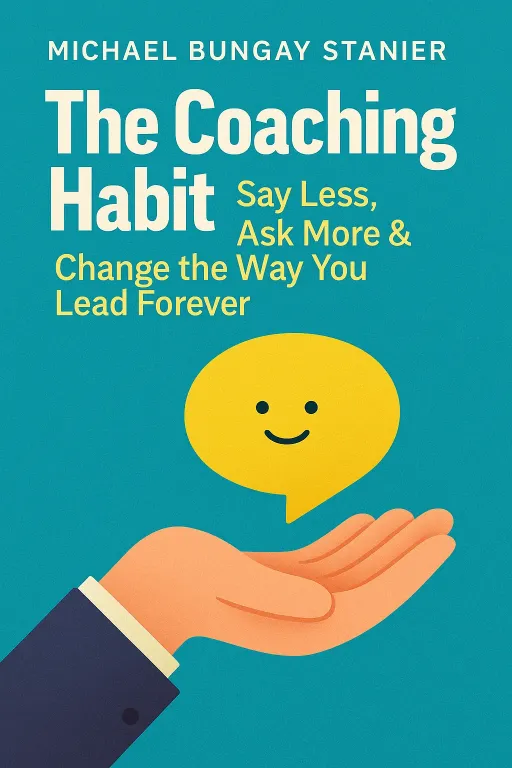
Nova: Exactly! Those are the kind of well-intentioned but ultimately shallow responses that sometimes plague mentorship. Today, we're flipping that script entirely as we dive into two incredible books that redefine what it means to truly guide and influence: Michael Bungay Stanier's "The Coaching Habit" and Brené Brown's "Dare to Lead."
Atlas: That’s a powerful pairing! I’m curious how Stanier, a renowned coaching expert known for his practical, no-nonsense approach, and Brown, the vulnerability researcher who’s become a cultural phenomenon, will tie together. Stanier is all about those seven essential questions, turning every conversation into a coaching opportunity, while Brown's work is celebrated for its deep dive into the emotional landscape of leadership.
Nova: What's fascinating is how both, in their own unique ways, challenge the ingrained notion that leaders and mentors must have all the answers. They both argue that true leadership and profound influence aren't about being the sage on the stage, but about creating an environment where others can find their own wisdom, fostering resilience and genuine growth.
The Art of Asking: Coaching for Independence
SECTION
Nova: So, let's start with Stanier's "The Coaching Habit." This book is a masterclass in how to transform your interactions by simply changing the questions you ask. It's built around seven deceptively simple questions that, when used consistently, can shift someone from dependency to independence.
Atlas: That sounds almost too simple. I mean, we’re taught to be problem-solvers, right? To swoop in with the answers. As an educator, when a student is struggling, my first instinct is often to guide them directly to the solution. How does Stanier suggest we resist that urge?
Nova: Well, that's exactly the paradigm shift. Stanier argues that our default, our "advice monster" as he calls it, is always ready to jump in. But when we give advice too quickly, we disempower the other person. They learn to rely on us, rather than developing their own critical thinking.
Atlas: Oh, I know that feeling. I imagine a lot of our listeners who are managing high-pressure teams or even just trying to guide their kids feel that pull. It's faster to just tell someone what to do. But you're saying that speed comes at a long-term cost?
Nova: Precisely. One of his core questions, and it’s beautifully simple, is "What's the real challenge here for you?" This isn't just small talk. It's an invitation for the person to go deeper, beyond the surface-level problem they might be presenting.
Atlas: So you're saying, instead of me immediately dissecting their problem and offering my wisdom, I should just… listen? And then ask them to clarify what perceive as the root issue?
Nova: Exactly. Think of it like this: a mentee comes to you saying, "I can't meet this deadline." Your advice monster screams, "Break it down into smaller tasks! Prioritize!" But if you ask, "What's the real challenge here for you?", they might respond, "Actually, I'm feeling overwhelmed because I don't understand the core objective." Or "I'm avoiding it because I'm afraid to fail."
Atlas: Wow. That’s kind of heartbreaking, but also incredibly insightful. It completely changes the nature of the problem, and therefore, the solution. It’s like, the visible problem is just a symptom, and that question gets to the actual disease.
Nova: It does. And Stanier backs this up with practical scenarios. Imagine a manager, let’s call her Sarah, whose team member, David, is constantly coming to her with minor issues, asking for approval on every step. Sarah, initially, is efficient; she gives quick answers. But she’s exhausted, and David isn't growing. Applying Stanier's questions, instead of saying, "Just do X," Sarah starts asking, "What's the challenge for you here?" When David says he's unsure about a decision, she follows up with, "And what else?"
Atlas: "And what else?" That sounds so simple, yet powerful. It forces deeper reflection.
Nova: It does. David might initially say, "I'm not sure if this report format is correct." Sarah, resisting the urge to show him an old report, asks, "And what else is on your mind about this?" David pauses, then admits, "Well, I'm also worried about presenting it to the client, I've never done that before."
Atlas: See, that’s the real challenge! Not the report format, but the fear of public speaking or client interaction. If Sarah had just fixed the report, she wouldn't have even touched the actual growth opportunity for David. This is about building competence and confidence, not just completing tasks.
Nova: Precisely. The outcome for David is that he not only learns to format a report, but he also gets to address his presentation anxiety with Sarah's guidance, becoming a much more well-rounded and independent professional. This subtle shift from advising to coaching builds capacity and resilience in others, rather than creating a bottleneck.
Vulnerability & Empathy: The Cornerstones of Daring Leadership
SECTION
Nova: And this ties beautifully into our second book, Brené Brown's "Dare to Lead." Brown, through decades of research on shame, vulnerability, and courage, argues that true leadership isn't about being tough or having all the answers, but about showing up, being seen, and answering the call to courage—which often means being vulnerable.
Atlas: That sounds a bit out there for some traditional leadership models. I mean, vulnerability in leadership? For many, that screams weakness, especially in competitive environments. How does Brown make the case that it’s actually a strength?
Nova: Brown challenges that very notion. She defines vulnerability not as weakness, but as "uncertainty, risk, and emotional exposure." It's the emotional courage to show up when you can't control the outcome. And she has mountains of data to prove that this is where innovation, trust, and connection are born.
Atlas: So, it’s not about oversharing every personal detail, but about having the courage to be authentic and open about challenges, even your own limitations?
Nova: Exactly. She uses the concept of 'rumbling with vulnerability.' It's about having hard conversations, admitting when you don't know something, or owning your mistakes. It's about empathy, connecting with others' feelings and experiences, and then having the courage to act.
Atlas: Give me an example. For those of us who are academic architects or empathetic educators, how does daring leadership manifest in a tangible way?
Nova: Imagine a university department head, Dr. Elena, facing budget cuts. The traditional approach might be to present a stoic front, make decisions behind closed doors, and then announce them. This often leads to resentment, fear, and a breakdown of trust.
Atlas: And a lot of speculation and rumor-mongering, I’d imagine.
Nova: Exactly. A daring leader, following Brown's principles, would do something different. Dr. Elena might gather her team, admit openly, "I don't have all the answers for how we navigate these cuts, and honestly, I'm scared about the impact this will have on our programs and our people."
Atlas: Whoa. That’s a huge admission. Most leaders would try to project an image of being in control.
Nova: That's the vulnerability. But it's not weakness. It's courage. She then invites them into the process: "My intention is to be as transparent as possible, and I need your input, your creativity, and your empathy to help us find the best path forward." She then facilitates a 'rumble'—a vulnerable, empathetic discussion about the challenges, fears, and potential solutions.
Atlas: So, instead of shouldering the burden alone and creating distance, she’s inviting shared ownership and reinforcing the collective strength of the team. That's a profound shift.
Nova: The outcome is a team that feels respected, valued, and more committed to the eventual decisions, even if they're difficult. They've been part of the solution, they trust their leader, and they've seen her courage. It builds what Brown calls 'collective courage,' which is far more resilient than individual bravado.
Synthesis & Takeaways
SECTION
Nova: When you bring these two ideas together, what emerges is a powerful blueprint for influence. Stanier teaches us to ask the questions that empower, while Brown teaches us to create the space—through vulnerability and empathy—where those questions can be genuinely answered.
Atlas: That’s actually really inspiring. So, true influence isn't about having a grand vision that everyone blindly follows, but about guiding people to their own visions, and then having the courage to be human through the process. It's about building trust by revealing your own humanity, and then using that trust to unlock the potential in others.
Nova: Absolutely. It’s about creating an environment where people feel safe enough to be vulnerable, and then skilled enough to find their own solutions. It’s a shift from being the 'hero' who saves the day, to being the 'architect' who designs the growth environment.
Atlas: And that gives me chills, because it highlights that real growth comes from within, not from external fixes. For all our listeners who are academic architects, empathetic educators, or strategic seekers, this isn't just about managing people; it's about elevating them. It’s an investment in human potential.
Nova: Indeed. So, our deep question for you this week: How can you intentionally create more moments for genuine connection and vulnerable leadership within your sphere of influence, both as a mentor and as a learner? Start by asking, "What's the real challenge here for you?" and then truly listen, without immediately offering a solution. This is Aibrary. Congratulations on your growth!









