The Hidden Leverage: Unlocking Team Potential Through Psychological Safety
Golden Hook & Introduction
SECTION
Nova: Atlas, what if I told you the single biggest factor in your team’s success isn't who you hire, or even the brilliant strategy you devise?
Atlas: Oh, I'm already hooked. You're telling me it's not about the rockstar talent or the billion-dollar blueprint? My strategic analyst brain is buzzing with questions. What else could there possibly be?
Nova: Exactly. Today, we're dissecting a concept that's often overlooked, yet absolutely foundational, inspired by the profound insights in 'The Hidden Leverage: Unlocking Team Potential Through Psychological Safety.' It’s about an invisible force, a current operating beneath the surface of every team.
Atlas: Okay, so we're talking about the 'invisible force' that makes or breaks a team? I love that framing, because honestly, I’ve seen teams with incredible individual talent just… fizzle. And then others, with seemingly average individuals, just soar. What’s that secret sauce?
Nova: That secret sauce, that hidden leverage, is psychological safety. We're going to explore what it truly is, why it's the unseen foundation of high-performing teams, and then, crucially, how leaders can actively engineer this culture of trust and growth through vulnerability and empathy. It’s far more strategic than it sounds.
Defining Psychological Safety: The Unseen Foundation of High Performance
SECTION
Nova: Many people hear 'psychological safety' and immediately think 'being nice' or 'avoiding conflict.' But that's a massive misunderstanding. What it really means is creating an environment where people feel safe to take interpersonal risks. They can share half-baked ideas, ask 'dumb' questions, point out mistakes, or even admit their own without fear of punishment, humiliation, or being seen as incompetent.
Atlas: That sounds rough, but… isn't some pressure good? In a high-stakes environment, where deadlines are tight and innovation is everything, doesn't that require people to be tough, to push through? Isn't this just coddling people?
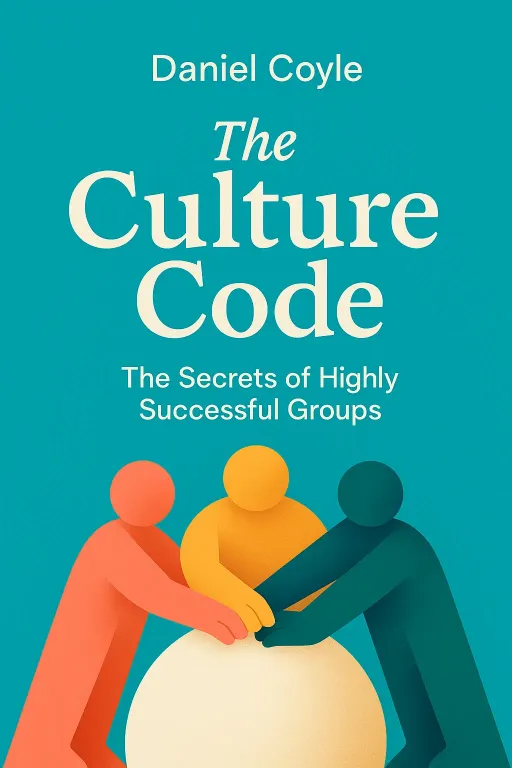
Nova: Absolutely not. Think of it this way: Daniel Coyle, in his brilliant book 'The Culture Code,' talks about 'building safety' as one of the three key skills for strong group cultures. He shows that true safety isn't about comfort, it's about signaling belonging. It’s about creating an undeniable sense that 'we are safe here, together.' When that signal is strong, people are free to focus their energy on the work, not on self-protection.
Atlas: Can you give an example? Because it still feels a little abstract when you’re talking about 'signals of belonging.'
Nova: Imagine a high-pressure tech team. They're developing a critical new feature. A junior developer, fresh out of college, spots a potential flaw in a senior architect's code – a flaw that could cause a major system crash down the line. In a low-psychological safety environment, that junior developer stays silent. They might think, 'Who am I to question someone so experienced? I'll look foolish, or worse, get reprimanded.' The flaw goes unnoticed, and eventually, the project fails or incurs massive costs.
Atlas: Oh, I’ve been there. Not personally, but I've seen that dynamic play out. The fear of looking stupid or causing offense can be paralyzing.
Nova: Exactly. Now, in a psychologically safe environment, that junior developer feels confident enough to raise their concern, perhaps tentatively at first, but they know they won't be ridiculed. The senior architect listens, respects the input, and together they identify and fix the problem. The project is saved. The team learns. That’s the hidden leverage.
Atlas: So it's not about avoiding conflict, but about making conflict productive? Like, the conflict is about the, not the? That makes sense. It’s about creating a space where people can be intellectually honest without fear of personal repercussion.
Nova: Precisely. It’s the absence of fear that allows faster learning, more innovation, and far better error detection. It’s the engine of collective intelligence. Without it, even the smartest individuals become cautious, withholding their best ideas or insights, and the team's true potential remains locked away.
Leading with Vulnerability: Engineering a Culture of Trust and Growth
SECTION
Nova: And that brings us to the crucial question: how do leaders actually this safety? It sounds abstract, but it's incredibly practical, and it starts with them.
Atlas: Okay, so it's not just a 'nice to have' for HR? This is a leadership imperative? For a 'Strategic Analyst' or 'Impact Driver,' this needs to be tied directly to outcomes.
Nova: Absolutely. This is where Brené Brown’s work, particularly 'Dare to Lead,' becomes so vital. She emphasizes courage, vulnerability, and empathy as core leadership traits. Many leaders still equate vulnerability with weakness, but Brown argues it’s the exact opposite—it's courage. When a leader shows vulnerability, they model the behavior they want to see. They create the space for others to be vulnerable in return.
Atlas: But wait, for a lot of our listeners, especially those in high-pressure roles, showing vulnerability might feel career-limiting. How do you convince someone that admitting a mistake or asking for help isn't weakness, but actually a strategic superpower? It feels counterintuitive to what many of us were taught about leadership.
Nova: It’s a huge mindset shift, but the impact is undeniable. Think about a CEO who, during an all-hands meeting, openly admits to a strategic misstep. They don't just gloss over it; they say, 'We tried X, and it didn't work as planned. I own that decision. Now, what have we learned, and how can we collectively pivot to make our next move successful?'
Atlas: Wow, that’s actually really inspiring. So, instead of trying to project an image of infallibility, they’re showing humanity and inviting collaboration.
Nova: Exactly. That leader isn't seen as weak; they're seen as human, trustworthy, and genuinely invested in collective success. It fosters what Coyle calls 'sharing vulnerability' and 'establishing purpose.' When the leader admits a flaw or asks for help, they signal that it’s safe for to do so. This isn't just about feelings; it's about creating a culture where problems are surfaced faster, solutions are more robust because everyone contributes, and innovation thrives without the drag of fear.
Atlas: That’s a huge shift in mindset. So, it's about modeling the behavior you want to see, and creating a space where people feel safe enough to actually that? It's about leading by example in a way that builds trust from the ground up, rather than just demanding it.
Nova: Absolutely. It cultivates collective intelligence and a deeper sense of belonging. When people feel truly safe, they bring their full selves to work, not just the parts they think are acceptable. They're more engaged, more creative, and ultimately, more productive. It’s the ultimate investment in your team's long-term capability.
Synthesis & Takeaways
SECTION
Nova: So, what we've really been talking about today is that psychological safety isn't a 'soft skill' to be delegated to HR. It’s a hard-edged, strategic differentiator, actively built by leaders who dare to be vulnerable, who signal belonging, and who embrace empathy. It’s the hidden engine of high performance.
Atlas: This isn't just about 'feeling good,' it's about unlocking actual, measurable performance. It's the ultimate 'Hidden Leverage' for strategic leaders who want to future-proof their teams and truly innovate. It makes perfect sense, because without that base level of trust and safety, everything else just crumbles under pressure.
Nova: It truly does. And the beauty of it is, you don't need a massive cultural overhaul to start. The 'Tiny Step' the book suggests is incredibly powerful: tomorrow, during a team meeting, consciously create a moment for someone to share a vulnerability or a mistake without judgment.
Atlas: That’s a powerful and actionable challenge. It's about starting small, but thinking big about the ripple effect. Just one moment, one leader, can begin to shift the entire dynamic. It's about being the change you want to see, right there in the meeting room.
Nova: Exactly. As Daniel Coyle puts it, "Safety isn’t the absence of danger, it’s the presence of connection." Cultivate that connection, and you unlock everything else.
Atlas: What a fantastic insight to leave our listeners with. It truly redefines what 'strength' looks like in leadership.
Nova: This is Aibrary. Congratulations on your growth!