The 'Elephant in the Room' Law: Rethinking Team Conflict.
Golden Hook & Introduction
SECTION
Nova: You know, Atlas, we often hear that 'nice guys finish last.' But what if I told you that being too nice, especially in a team, might actually be the fastest way to derail trust and performance?
Atlas: Hold on, too nice? I thought being nice was, you know, good for team morale. Isn’t avoiding conflict the path of least resistance for an empathetic leader?
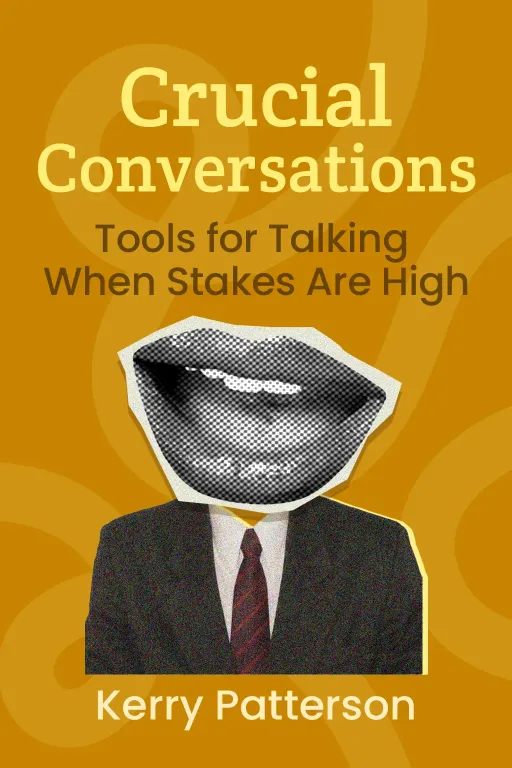
Nova: Today, we're tackling precisely that paradox by diving into the wisdom of two titans in the field: "Crucial Conversations" by Kerry Patterson, Joseph Grenny, Ron McMillan, and Al Switzler, and Brené Brown's "Dare to Lead." The "Crucial Conversations" team, in particular, built their framework on decades of research, observing over 25,000 people and identifying the specific verbal behaviors that differentiate effective communicators from those who struggle. It's a book that's been widely acclaimed as a practical guide for navigating high-stakes dialogue. And it points right to this idea of the 'Elephant in the Room' Law.
Atlas: The 'Elephant in the Room' Law? That makes me wonder about anyone trying to build an engaged community, where unspoken issues can fester and derail progress.
Nova: Exactly! It's about the cold, hard fact that unaddressed conflict erodes team trust and performance. Many leaders, often with good intentions, avoid tough conversations, letting small issues fester into major problems. It's a silent killer of team cohesion.
The Cost of Unaddressed Conflict
SECTION
Nova: Think about it like this: imagine a team working on a critical product launch. There's a brilliant but consistently late developer. Everyone’s frustrated, deadlines are slipping, but no one says anything directly to him. The project manager hints, colleagues grumble behind his back, but the crucial conversation never happens. What's the outcome?
Atlas: Oh, I know that feeling. The resentment builds, quiet quitting starts, eventually good people leave. For a visionary architect focused on sustainable growth, that's a nightmare. But why do leaders avoid it? Is it just fear of confrontation?
Nova: It's often fear, yes. Fear of hurting feelings, fear of an explosive argument, fear of being disliked. But what "Crucial Conversations" highlights is that when stakes are high, opinions vary, and emotions run strong, our default is often silence or violence—either we clam up, or we blow up. Neither is productive. The cost isn't just a missed deadline; it's the invisible erosion of psychological safety, where people no longer feel safe speaking up about anything.
Atlas: So, the silence itself becomes the problem. It’s not just the issue, it’s the lack of addressing it. That's a profound insight. It’s like a slow leak that eventually sinks the whole ship of a strategic builder.
Nova: Precisely. And Brené Brown in "Dare to Lead" takes this further, arguing that avoiding these tough conversations is actually a lack of courage. True leadership isn't about being comfortable; it's about leaning into discomfort for the sake of the team and the mission. She calls it 'rumbling with vulnerability,' which is far more uncomfortable than just being 'nice.'
Tactical Tools for Transformative Dialogue
SECTION
Nova: So, if silence and violence are out, how do we actually do these crucial conversations effectively? "Crucial Conversations" offers a powerful framework. It starts with 'Start with Heart'—what do you really want for yourself, for the other person, and for the relationship? Not just in this moment, but long-term.
Atlas: That makes sense. It reframes the conversation from 'winning an argument' to 'achieving a shared outcome.' But how do you prevent it from devolving into an emotional shouting match, especially when emotions are already high in a fast-paced environment?
Nova: That's where their concept of 'Make it Safe' comes in. Before you dive into the contentious topic, you have to establish mutual purpose and mutual respect. For example, if you're confronting the late developer, you might say, 'I value your talent, and I know we both want this project to succeed. I need to talk about something that's impacting our deadlines.' You're creating a shared pool of meaning, inviting them to the conversation, not ambushing them.
Atlas: Okay, so you're not just throwing accusations. You're inviting collaboration. And what about when you do have to deliver tough feedback? How do you speak persuasively without being abrasive, especially when the stakes are high for team performance?
Nova: This is where 'State My Path' becomes critical. You share your facts, tell your story, and then ask for their path. For instance, 'I've noticed your last three check-ins were missed. I'm concerned about the project timeline and how this impacts the team. What's happening from your perspective?.' You're not labeling them; you're observing behavior and inviting dialogue. This is how you build trust, rather than erode it.
Atlas: I see. It's about being clear, but also genuinely curious, not just accusatory. And where does Brené Brown's "Dare to Lead" fit into this? Does it complement this tactical approach, perhaps for an empathetic leader?
Nova: Absolutely. Brown emphasizes that for these crucial conversations to even happen, you need a culture of courage and vulnerability. She argues that empathy isn't about feeling sorry for someone; it's about connecting with the emotions someone is experiencing. When you approach a difficult conversation with empathy, you're not just using a technique; you're operating from a place of genuine understanding and connection. It's the 'why' behind "Crucial Conversations"' 'how.' It’s the groundwork that makes the tactics effective.
Atlas: So, "Crucial Conversations" gives you the map, and "Dare to Lead" gives you the courage and empathy to actually walk the path. That's powerful. It’s not just about managing conflict, it’s about transforming it into an opportunity for deeper connection and better outcomes, especially for those focused on advanced retention metrics within their teams.
Synthesis & Takeaways
SECTION
Nova: Exactly. The big takeaway here is that conflict isn't the enemy; unaddressed conflict is. Learning to navigate these moments isn't just a soft skill; it's a leadership superpower. It builds trust, fosters innovation, and ultimately, accelerates performance. It’s how you build a resilient, high-performing team.
Atlas: And it provides a narrative. For a strategic builder, understanding how these conversations work, and having the courage to lean into them, is critical for inspiring teams and securing that sustainable growth we talked about. It's not just about avoiding problems; it's about proactively building strength, which is essential for strategic storytelling.
Nova: That's it. It transforms potential breakdowns into breakthroughs. And a tiny step everyone can take before their next potentially difficult conversation: write down your desired outcome, and then list three ways you can actively listen during that exchange. It sounds simple, but that preparation can shift everything.
Atlas: Desired outcome and three ways to listen. That's concrete. It brings it back to the empathetic leader, ensuring you're not just heard, but you're also truly hearing the other person.
Nova: Precisely. It's about creating that shared pool of meaning, even when the waters are turbulent. Because when we can rumble with vulnerability, and speak persuasively, not abrasively, that's when real magic happens in teams.
Nova: This is Aibrary. Congratulations on your growth!