The Anatomy of Courageous and Motivated Leadership
Golden Hook & Introduction
SECTION
Nova: Imagine for a moment that you are a manager who has just spent three months crafting the perfect incentive plan. You have bonuses, you have tiered rewards, you have the classic carrot and stick. And yet, six months later, your team is more disengaged than when you started. It turns out that the most expensive part of your business strategy might be the very thing crushing your team’s performance.
Atlas: That sounds like a nightmare scenario for anyone in a leadership role. I have seen this exact dynamic play out in so many offices. We keep reaching for the same old tools—more money, more pressure, more oversight—expecting a different result, and it just never happens.
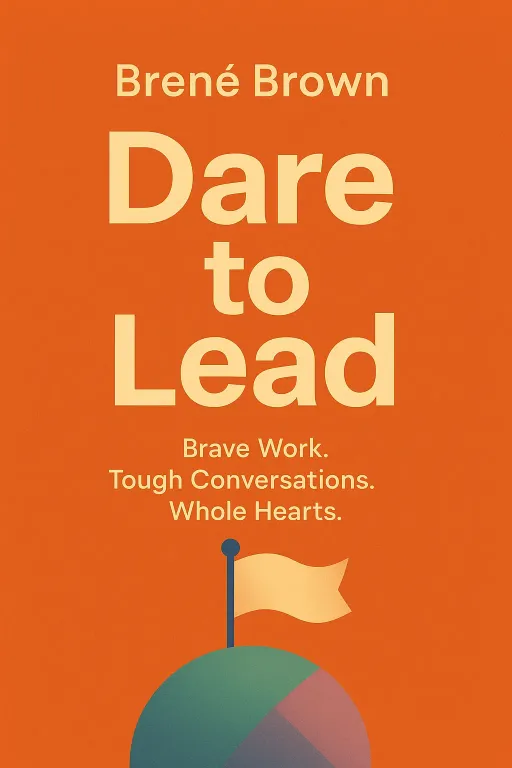
Nova: Exactly. And that is why we are looking at two fundamental pillars of modern leadership today. We are diving into Dare to Lead by Brené Brown, and Drive by Daniel H. Pink. These two authors have essentially dismantled the traditional command-and-control model. Brené Brown, a research professor at the University of Houston, spent decades studying vulnerability and courage, shifting our understanding of how trust is actually built in high-stakes environments. And Daniel Pink, who has a fascinating background as a former speechwriter for Al Gore, took a deep dive into the social science of motivation, proving that when we treat people like cogs in a machine, we lose the very thing that makes them valuable: their humanity and their drive.
Atlas: It is a powerful combination. On one hand, you have the emotional intelligence and the structural vulnerability required to build a team, and on the other, you have the mechanics of what actually gets people to wake up excited to do their best work.
The Trust Foundation
SECTION
Nova: Let us start with that first piece, which is the foundation of everything: trust. In Dare to Lead, Brené Brown argues that we often view vulnerability as a weakness, but in reality, it is the birthplace of innovation and accountability. She talks about the concept of clear being kind. Most leaders avoid difficult conversations because they think they are being nice by staying silent.
Atlas: That is such a common trap. I have been there myself. You see someone missing the mark, but you hold back because you do not want to hurt their feelings or start a conflict. You tell yourself you are being supportive, but in reality, you are just letting the problem fester.
Nova: That is the crux of the issue. By avoiding that uncomfortable conversation, you are actually denying that person the opportunity to grow. Brown’s research shows that when we choose comfort over honesty, we erode trust. The most effective leaders are the ones who can look a team member in the eye and give clean, actionable feedback without attacking the person’s character.
Atlas: I am curious about the practical application of this. For someone leading a remote or hybrid team, where you do not have the luxury of reading body language in a hallway, how do you actually implement this without it feeling aggressive or cold?
Nova: That is where her blueprint for boundaries comes in. In a digital environment, trust is built through the consistency of expectations. You have to be explicit about what is okay and what is not. When you set clear boundaries, you are actually creating a container for safety. If everyone knows where the lines are, they do not have to spend energy guessing or walking on eggshells.
Atlas: That makes sense. It shifts the dynamic from guessing games to shared clarity. When I know exactly what you expect of me, I can focus on the work rather than managing the relationship anxiety.
Nova: Precisely. And she uses this beautiful analogy of the marble jar. Every time you show up, every time you are honest, every time you respect a boundary, you are putting a marble in the jar. When the jar is full, you have a foundation of trust that can withstand the inevitable mistakes and conflicts. But when you are inconsistent, or when you avoid the hard truth, you are pulling marbles out. You cannot have a high-performing team if the jar is empty.
Atlas: I love that visual. It makes the abstract concept of trust feel like a tangible account you are managing every single day. But let us bridge this into the second part. Once you have that trust and the jar is full, how do you actually get people to perform without dangling a carrot in front of them?
The Motivation Shift
SECTION
Nova: That is the perfect pivot to Daniel Pink’s work in Drive. He suggests that the carrot-and-stick approach is not just ineffective, but often counterproductive for anything beyond simple, repetitive tasks. He categorizes motivation into two types: Type X, which is extrinsic, and Type I, which is intrinsic.
Atlas: I have heard him talk about this. Type X is the external reward, like money or a promotion, and Type I is the internal fire, like the desire to get better at something or the belief in a mission.
Nova: You nailed it. And the science he presents is fascinating. He references experiments like the Candle Problem, which is a classic psychological task. Participants are given a candle, some thumbtacks, and a book of matches, and they have to fix the candle to the wall so the wax does not drip on the table.
Atlas: I remember this. You have to tack the box to the wall and use it as a shelf.
Nova: Exactly. And when researchers offered participants money to solve this problem faster, the results were shocking. The people offered the cash incentive consistently performed worse than those who were not offered any money.
Atlas: That is the opposite of what most business leaders believe. We are taught that incentives drive speed.
Nova: That is the myth. The reality is that incentives narrow our focus. For tasks that require creativity, problem-solving, or deep thinking, that tunnel vision is a liability. You need a broad focus to see the solution. When you introduce a reward, you are effectively telling the brain to stop looking for creative solutions and just get to the finish line, which actually kills the performance.
Atlas: That is a profound insight. It suggests that if you are managing knowledge workers, developers, creatives, or anyone doing complex work, you are actually paying them to think less effectively by dangling bonuses for speed. So, what is the alternative?
Nova: Pink identifies three core drivers that replace the carrot and stick: autonomy, mastery, and purpose. Autonomy is the desire to direct our own lives. Mastery is the urge to get better at something that matters. And purpose is the yearning to do what we do in the service of something larger than ourselves.
Atlas: Let us break that down for the workplace. If I am a team leader, how do I foster autonomy without losing control over the project outcomes?
Nova: It is about moving from managing people to managing the environment. Instead of dictating the how, you focus on the what and the why. You provide the vision, you clarify the goals, and then you get out of the way. You let the individuals figure out the best path to get there.
Atlas: That is where the connection to Brené Brown’s work becomes so vital. You cannot grant autonomy if you do not have trust. If you are terrified that your team is going to mess up, you will micromanage. You need the psychological safety Brown talks about to feel secure enough to let go.
Nova: That is a brilliant connection. The two frameworks are symbiotic. If you try to implement autonomy without the foundation of trust and vulnerability, it creates chaos. People will feel abandoned rather than empowered. But if you have that marble jar full of trust, autonomy becomes the most powerful tool in your leadership arsenal.
The Integration
SECTION
Atlas: I am thinking about a high-pressure, fast-paced environment, maybe a startup or a tech team. If you are dealing with a crisis, does this model still hold up? Or do you have to revert to the carrot and stick just to get things moving?
Nova: That is a great question. In a crisis, people need clarity and direction. That is where the clear boundaries from Dare to Lead are essential. You do not abandon autonomy, but you tighten the scope of the decision-making. You explain why the situation is urgent, you align on the mission, and then you trust your team to execute. The motivation shifts from the daily grind to the collective survival or success of the mission, which taps directly into that third pillar: purpose.
Atlas: It is about contextual leadership. You are not discarding the framework; you are adjusting the dial.
Nova: Exactly. And the most interesting part is how this impacts retention. People do not leave jobs because they are not being paid enough—usually. They leave because they feel like a cog in a machine, they feel like they have no control over their day, or they feel like they are working on something that does not matter.
Atlas: That resonates with me. I have left roles where I had a great salary but felt like my brain was rotting because I was just following a script.
Nova: We have all been there. And that is why Pink’s research is so important. When you give people the freedom to master their craft and connect their daily tasks to a meaningful purpose, the engagement levels skyrocket. They are not just showing up; they are investing their best selves.
Atlas: I want to dig deeper into the mastery aspect. How do you encourage mastery in a team without it feeling like another performance review metric?
Nova: You create a culture of learning rather than a culture of auditing. Instead of measuring success by output alone, you celebrate the growth. You provide the resources for skill development, you encourage experimentation, and most importantly, you normalize failure. If someone tries a new approach and it does not work, the response should not be punishment. It should be, what did we learn, and how does this make us better for the next time?
Atlas: That is the vulnerability piece again. If I am the leader, I have to be the first one to say, I tried this, and it failed, and here is what I learned.
Nova: Precisely. If you are not willing to be vulnerable, your team will never be willing to take the risks necessary for mastery. You have to lead by example. You have to show them that it is safe to be human.
Synthesis & Takeaways
SECTION
Atlas: This has been a massive shift in perspective. We started by looking at how to build trust, and we ended by looking at how to unleash human potential through autonomy, mastery, and purpose. It really feels like the modern leader’s job is less about being a commander and more about being a gardener. You are not forcing the plants to grow; you are creating the conditions where growth is inevitable.
Nova: That is a beautiful analogy. You are clearing the weeds, providing the soil, and ensuring there is enough light. And if you do that, the team does the rest. The key takeaway for our listeners today is that leadership is not about having all the answers. It is about having the courage to be vulnerable enough to ask the right questions, and the wisdom to create a space where your team can find the solutions themselves.
Atlas: I love that. It is actionable, too. If you are listening to this, look at your current management style. Are you focusing on the carrots and the sticks, or are you focusing on the trust and the autonomy? I think we all have a bit of work to do there.
Nova: We absolutely do. And remember, the goal is not to be perfect. The goal is to be consistent. Start with one conversation. Start with one project where you give your team full autonomy and see what happens. You might be surprised at how much they rise to the occasion.
Atlas: That is a great challenge. I am going to look at my own calendar this week and see where I can trade a bit of oversight for a bit of trust.
Nova: That is exactly the kind of shift that changes everything. We have barely scratched the surface of what these frameworks can do, but applying these principles is the first step toward building a team that is not just productive, but truly engaged and resilient.
Atlas: This has been such an eye-opening deep dive. I feel like I have a much better roadmap for how to lead with authority and empathy.
Nova: I am glad to hear that. That is the goal. Leadership is a journey, and we are all just trying to get a little better at it every day. Thank you for joining us in this exploration. Keep questioning, keep growing, and keep leading with purpose. This is Aibrary. Congratulations on your growth!