

Feminist Leadership: How to Redefine Power Beyond Traditional Hierarchies
Golden Hook & Introduction
SECTION
Nova: Atlas, what five words come to mind when I say "traditional leadership"?
Atlas: Hierarchical, rigid, exhausting, competitive, and... lonely.
Nova: Ooh, "lonely" is a good one. It's true, isn't it? That isolating summit. And what about "feminist leadership"?
Atlas: Inclusive, ethical, empathetic, courageous, and... revolutionary.
Nova: Revolutionary. I love that. Because that's exactly what we're talking about today: how feminist leadership isn't just a niche concept, but a powerful framework for redefining power and creating more ethical, effective, and authentic leadership across all sectors.
Atlas: And it’s a conversation that feels incredibly urgent right now. We’re seeing so many traditional structures cracking under pressure.
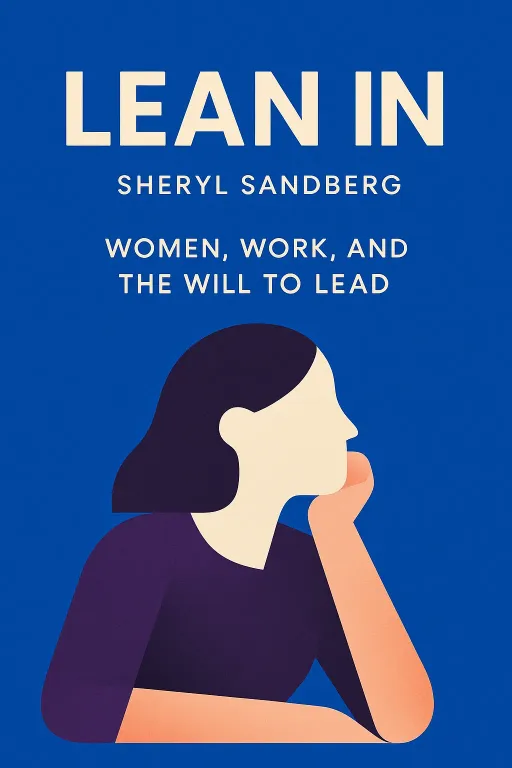
Nova: Absolutely. And to navigate this, we're drawing insights from two incredibly influential books. First, Sheryl Sandberg's "Lean In: Women, Work, and the Will to Lead." Sandberg, coming from her incredibly high-profile role as the COO of Facebook, offered a unique, insider's view on how women can navigate and succeed within existing corporate structures, while also highlighting the systemic barriers.
Atlas: And complementing that, we have Brené Brown's "Dare to Lead: Brave Work. Tough Conversations. Whole Hearts." Brown, a research professor with a background in social work, brings a deeply researched, vulnerability-focused approach to leadership, arguing that courage and empathy are the bedrock of true leadership, not weaknesses.
Nova: Two distinct voices, two powerful perspectives. But before we can fully appreciate how they help us redefine power, we have to understand what we're redefining.
The Blind Spot – Unpacking Traditional Power
SECTION
Atlas: That makes sense. We can’t build something new if we don’t understand the cracks in the old foundation.
Nova: Exactly. Many traditional leadership models, the ones we've inherited, often have a significant "blind spot." They tend to prioritize traits like aggression, dominance, and relentless pursuit of profit above all else. They effectively ignore, or even devalue, strengths like empathy, collaboration, ethical decision-making, and fostering a sense of belonging.
Atlas: I imagine a lot of our listeners, especially those in high-pressure roles, feel that tension daily. It's like being told to drive a car with one eye closed because the other eye sees "too much emotion" or "too much collaboration" as a distraction.
Nova: Precisely. Imagine a corporate scenario where a leader, driven by quarterly targets, pushes their team to the brink, celebrating individual "heroic" efforts, but completely overlooking the rising burnout rates, the quiet quitting, and the erosion of trust within the team. The bottom line might look good for a quarter or two, but the human cost, and the long-term organizational health, is severely compromised. That's the blind spot in action.
Atlas: So basically, we're building skyscrapers with foundations designed for single-story homes, and then wondering why they're cracking under pressure. But how does this "blind spot" specifically limit someone trying to blend their values with their career, as many of our listeners are?
Nova: It creates immense internal conflict. If you're a leader who deeply values collaboration and ethical outcomes, but your organizational culture rewards cutthroat competition, you're constantly battling between who you are and what the system demands. You might feel constrained, or that your unique strengths are undervalued, leading to a sense of misalignment.
Atlas: And I can see how that would lead to a lot of frustration, feeling like you have to put on a different persona just to survive, let alone thrive.
Nova: Exactly. This traditional approach, often rooted in industrial-era efficiency and military structures, inherently devalues relational aspects of leadership. It's why many organizations miss opportunities for innovation because the loudest, most dominant voices take over, while diverse, quieter insights are overlooked. The implicit reliance on masculine-coded traits creates a systemic barrier, making it harder for those who lead with different strengths to be recognized and empowered.
Atlas: That makes me wonder, if these models have such clear downsides, why do they persist? It feels almost ingrained.
Nova: It’s a powerful inertia, isn't it? It's the comfort of the familiar, the "way things have always been done," even when "always" means "not very effectively" for a huge segment of the workforce. It’s also often about a deeply entrenched, often unconscious, fear that valuing empathy or vulnerability means sacrificing strength or toughness. Which, as we’ll see, is a total misconception.
The Shift – Lean In vs. Dare to Lead
SECTION
Atlas: That's a perfect segue into our next point. Because if the old models aren’t serving us, then what does the shift look like? How do we actually redefine power?
Nova: That's exactly where our two books come in, Atlas. They represent two powerful, yet distinct, pathways to navigating this. Let’s start with Sheryl Sandberg’s "Lean In." Her core message is about individual women embracing ambition and advocating for themselves within existing corporate structures. She encourages women to literally "lean in" to career opportunities, to take risks, to negotiate for what they deserve, and to actively seek out leadership roles.
Atlas: I remember when that book came out, it sparked so much conversation. On one hand, it was incredibly empowering, a call to action for individual women. On the other, I heard a lot of people saying, "Okay, but wait, isn't that just telling women to conform to the broken system, albeit more assertively?" It’s like saying, "The rules of the game are unfair, so you just need to play harder." I can see how that would feel empowering for some, but also incredibly frustrating for others who see the system itself as the problem.
Nova: You've hit on the core tension and critique. Sandberg's approach is powerful for individual empowerment the existing framework. For example, I know of a woman who, inspired by "Lean In," strategically networked, spoke up more in meetings, and successfully negotiated for a leadership role that had traditionally been given to men. She learned to navigate the system effectively. But you're right, it doesn't fundamentally dismantle the system itself.
Atlas: So, it’s about mastering the game.
Nova: Exactly. But then we have Brené Brown's "Dare to Lead," which offers a complementary, deeper systemic challenge. Brown argues that true strength in leadership comes from vulnerability, courage, and empathy. She says that showing up fully, even when it's uncomfortable, is how we build trust and create truly ethical and inclusive cultures. It’s about transforming the of the game, not just playing it better.
Atlas: That’s a powerful contrast. So, Sandberg says, "Go for it, play the game better," and Brown says, "Let's change the game’s rules by showing up authentically." It’s like one is about strategy, and the other is about soul. How do these two seemingly different approaches actually work together for someone trying to integrate their feminist values into their leadership?
Nova: It’s not about choosing one or the other; it’s about a dynamic interplay. Sandberg gives you the courage to step onto the playing field, to take up space, and to assert your worth. Brown then gives you the tools to transform that playing field, to make it a place where courage means vulnerability, where empathy is a strategic asset, and where authenticity builds genuine connection. It’s about being ambitious ethical, assertive empathetic.
Atlas: That makes so much sense. It's like you need the confidence to 'lean in' and claim your seat at the table, but then you need the 'dare to lead' courage to use that seat to advocate for different values, to bring vulnerability and empathy into the conversation. Otherwise, you’re just another cog in the old machine.
Nova: Precisely. It’s about bringing your whole self – your values, your ethics, your courage – to every leadership moment, no matter how small. It’s about recognizing that power isn't just about control or hierarchy; it's about influence, connection, and the ability to inspire genuine change.
Synthesis & Takeaways
SECTION
Nova: The brilliance is in seeing them not as mutually exclusive, but as a powerful one-two punch. "Lean In" gives you the tactical courage to seize opportunities and push for individual advancement, while "Dare to Lead" provides the ethical compass and emotional intelligence to transform the environment you're leaning into. It’s about leveraging individual ambition with collective, empathetic change.
Atlas: So, it’s not about choosing between being ambitious and being empathetic; it's about being both. It's about bringing your whole, authentic self – your values, your ethics, your courage – to every leadership moment, no matter how small. That’s actually really inspiring, especially for someone who wants to make a societal impact beyond just climbing the ladder.
Nova: Exactly. Consider this: where in your day-to-day interactions can you bring a little more courage to speak your truth, or a little more empathy to listen to others? It’s in those micro-moments that the big shifts begin. Redefining power starts with those small, brave acts.
Atlas: That's a great challenge. It truly is about redefining power from the inside out, one interaction at a time.
Nova: This is Aibrary. Congratulations on your growth!









