Cultivating High-Performance Team Culture & Psychological Safety
Golden Hook & Introduction
SECTION
Nova: Atlas, I’m going to throw out three book titles, and I want you to give me your gut reaction, like the first thing that pops into your head that makes you go, 'Huh?' Ready?
Atlas: Oh, I like this game. Hit me. Let’s see if my 'huh' matches yours.
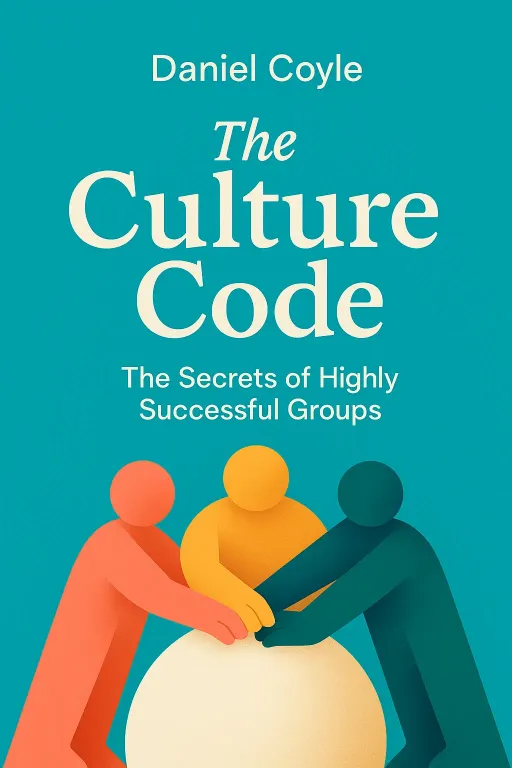
Nova: Alright, first up: by Daniel Coyle.
Atlas: Huh. That makes me think of, like, a secret handshake for success. Like, there’s a hidden algorithm for awesome teams that we just aren’t privy to.
Nova: Exactly! See, you’re already in the right headspace. Second: by Kim Scott.
Atlas: Oh, I know that feeling. That makes me think of a boss who tells you the truth, but then also helps you pick up the pieces. It’s like, 'You’re doing that wrong, but I still believe in you.' Not just brutally honest, but genuinely caring.
Nova: Nailed it. And finally, by Brené Brown.
Atlas: Wow. That one makes me think of leadership not as a title, but as an act of courage. Like, it takes guts to truly lead, especially when you’re asking people to be vulnerable. Not just leading from a power position, but from a place of shared humanity.
Nova: Absolutely. And that’s our theme today, Atlas. We’re diving into how these three powerful books— by Daniel Coyle, by Kim Scott, and by Brené Brown—converge to illuminate the path to cultivating high-performance team culture and, crucially, psychological safety. What's fascinating is that Daniel Coyle, the author of, spent years embedded with some of the world's most successful groups, from Pixar to the Navy SEALs, dissecting the invisible forces that make them tick. He wasn't looking for grand strategies, but for the tiny, almost imperceptible signals that build trust and cooperation.
Atlas: That’s a great way to put it. It’s almost like he’s a cultural anthropologist, right? Not just observing, but trying to understand the 'why' behind what makes certain groups thrive. For our listeners who are constantly trying to build better teams, this isn't just theory; it's like getting a cheat code. But how do these seemingly disparate ideas about culture, candor, and courage actually knit together? Where do we even start unpacking this?
The Intentional Architecture of Belonging and Safety
SECTION
Nova: Well, let’s start with that idea of a 'secret handshake for success' you mentioned for. Coyle’s work, and Brown’s, really underscore that a strong team culture isn't accidental. It’s intentionally designed. It’s built brick by brick, through consistent practices that prioritize psychological safety, clear communication, and shared purpose.
Atlas: So basically, we’re saying that if your team culture feels a bit… random, or like it just 'happened,' then you’re probably missing out on a huge lever for performance. It’s not about luck.
Nova: Exactly. Think about it this way: for decades, companies focused on things like individual talent, strategy, and resources. They thought, 'If we hire the smartest people and give them the best tools, success will follow.' But Coyle’s research, and a lot of others, found that wasn’t always the case. The most successful teams weren't necessarily the ones with the highest IQs. They were the ones with the highest psychological safety.
Atlas: Hold on. Psychological safety. That term gets thrown around a lot. What exactly do we mean by that, especially in the context of Coyle’s work? Is it just about being 'nice' to each other?
Nova: That’s a common misconception, Atlas. It's not about being nice or avoiding conflict. Amy Edmondson, who coined the term, defines it as a shared belief held by members of a team that the team is safe for interpersonal risk-taking. It's about feeling safe enough to speak up, ask questions, admit mistakes, or offer a half-baked idea without fear of humiliation or punishment.
Atlas: Okay, so it’s about feeling safe enough to be… imperfect. To experiment without feeling like you’re going to get your hand slapped. I imagine a lot of our listeners, especially those in high-stakes environments, might be thinking, 'That sounds great, but how do I that?'
Nova: That’s where Coyle’s three key skills come in: Build Safety, Share Vulnerability, and Establish Purpose. To build safety, he talks about things like over-communicating listening, embracing messengers, and eliminating bad apples. For example, he observed a top-performing improv comedy troupe. Their success wasn't about individual comedic genius, but about how they constantly set each other up for success, saying 'yes, and...' to every idea, creating a climate where no one's idea was 'wrong.'
Atlas: So it’s almost like a constant, subtle validation of each other’s presence and contributions. Not just in grand gestures, but in the micro-interactions. That makes me wonder, though, how does Brené Brown tie into this, especially with? Because vulnerability is a huge part of her message.
Nova: She connects directly to that 'Share Vulnerability' skill. Brown argues that vulnerability isn't a weakness; it's our greatest measure of courage. For leaders, this means dropping the armor, admitting when you don't have all the answers, asking for help, and being seen. It's about leading with your whole heart, not just your head. She points out that we often ask our teams to be vulnerable, to innovate, to take risks, but we, as leaders, are often the least vulnerable ones in the room.
Atlas: That’s a great way to put it. It’s like we expect our teams to jump into the unknown, but we’re standing safely on the shore, fully clothed. That sounds rough, but it also makes a lot of sense. If I see my leader admit a mistake, or say 'I don't know, what do you think?' it creates space for me to do the same. It shifts the dynamic from 'I have to be perfect' to 'we're in this together, figuring it out.'
Nova: Exactly. Brown outlines four skill sets for daring leadership: rumbling with vulnerability, living into our values, braving trust, and learning to rise. The core of it is that you can't have psychological safety without leaders who are willing to be vulnerable first. It’s about creating a culture where it’s okay to fail, where learning is prioritized over perfection, and where empathy is a guiding principle.
Atlas: So basically, if I want my team to take risks and innovate, I have to be willing to show them that it's safe to do so by taking my own risks, even if it’s just admitting I made a bad call. That’s a powerful connection between Coyle's observation of high-performing teams and Brown's call for courageous leadership. It’s not just about the rules of engagement, but the emotional climate.
Nova: And that's where the 'Establish Purpose' comes in for Coyle. Great teams don't just know what they're doing; they know they're doing it. They have a shared narrative, a collective goal that transcends individual tasks. It's the North Star that aligns everyone's efforts and gives meaning to the vulnerability and risk-taking. When you combine safety, vulnerability, and purpose, you get a powerful cocktail that leads to high performance and innovation.
The Art of Radical Candor: Feedback as a Growth Engine
SECTION
Nova: Now, moving from the broad strokes of culture and safety, let’s zoom into one of the most critical daily interactions: feedback. This is where Kim Scott's really shines and connects beautifully with everything we've been discussing.
Atlas: Oh, I’ve been thinking about this one. 'Radical Candor' almost sounds like an oxymoron. How can something be both radical and candid, but also caring? Usually, 'radical' implies harsh, right?
Nova: That’s the brilliance of Scott’s framework, Atlas. She argues that most feedback fails because it falls into one of three traps: ruinous empathy, manipulative insincerity, or obnoxious aggression. Radical Candor is the sweet spot in the middle: challenging directly caring personally.
Atlas: So basically, if you care about someone but don't challenge them, that’s 'ruinous empathy' – you’re being 'nice' to their face but letting them fail behind their back. I imagine a lot of our listeners, myself included, have probably fallen into that trap. We don’t want to hurt feelings.
Nova: Absolutely. Ruinous empathy is the most common trap. You don't want to upset someone, so you sugarcoat feedback, or you just don't give it at all. But that's not kind; it's actually detrimental to their growth and the team's performance. It’s like watching someone drive towards a cliff and not saying anything because you don’t want to be rude.
Atlas: Wow, that’s a powerful analogy. Watching someone drive towards a cliff. That completely reframes 'being nice.' So, what about the other two? Manipulative insincerity and obnoxious aggression?
Nova: Manipulative insincerity is when you don't really care about the person, and you're not challenging them directly. You might be saying things to get a certain reaction or to advance your own agenda. It's disingenuous. Obnoxious aggression, on the other hand, is when you challenge directly but don't care personally. This is often seen as being a 'jerk' or a 'bully.' You might be right in your feedback, but if you deliver it without empathy, it can be incredibly damaging.
Atlas: Okay, so Radical Candor is the goldilocks zone: caring enough to challenge, and challenging because you care. But how does that in practice? Because it sounds easy in theory, but giving tough feedback is never easy.
Nova: It's definitely an art, not a science, but Scott provides a clear framework. It means being specific and sincere with praise, and being specific and empathetic with criticism. It’s about saying things like, 'I see you really struggled with X on that presentation, and here’s why I think it happened, and here’s how we can fix it together,' rather than just, 'You need to improve your presentations.' It’s about inviting dialogue, not just delivering a verdict.
Atlas: That makes me think of the connection back to psychological safety. If you’ve built a culture where people feel safe to take risks and admit mistakes, then radical candor becomes possible. If there’s no safety, then 'challenging directly' just sounds like 'obnoxious aggression,' even if you care. The foundation has to be there first.
Nova: Exactly! It’s a virtuous circle. Psychological safety makes radical candor possible, and radical candor, when done right, psychological safety by demonstrating trust and genuine care. It shows, 'I trust you enough to tell you the truth, and I care about you enough to help you grow.' This is why Brown's emphasis on empathy and vulnerability in leadership is so crucial. You can't truly care personally without empathy, and you can't be vulnerable enough to receive direct feedback yourself if you're not leading with courage.
Atlas: So it’s not just about giving feedback; it’s about creating an entire ecosystem where feedback is seen as a gift, not a threat. And that ecosystem is built by leaders who are willing to be vulnerable, who prioritize safety, and who understand the deeper purpose of their team. For our listeners who are navigating complex markets and trying to guide their teams, this isn't just about tweaking a process; it's about fundamentally rethinking how they interact every single day.
Synthesis & Takeaways
SECTION
Nova: As we wrap up, it becomes clear that cultivating a high-performance team culture and genuine psychological safety isn't some abstract, touchy-feely concept. It's a strategic imperative, built on very concrete, though often counterintuitive, actions. It's the intentional architecture of belonging, the courage to lead with vulnerability, and the radical act of caring enough to be truly candid.
Atlas: Wow. That gives me chills, honestly. It’s not about finding that one perfect hire or implementing a new software. It's about the consistent, human-centered practices that prioritize connection and growth. It's recognizing that the 'soft skills' are actually the hard skills that drive sustainable success. And it requires leaders to trust their intuition, to step into that vulnerable space.
Nova: Absolutely. The deep insight here is that the most powerful force in any organization isn't individual genius, but collective intelligence and emotional safety. When people feel safe, seen, and valued, they unlock their full potential. And that, in turn, solves complex challenges and drives innovation. It's about remembering that the human element is not a variable to be managed, but the very engine of high performance.
Atlas: So we’re saying that the real competitive advantage in today's world isn't just strategy or technology, but the ability to build a team where everyone feels safe enough to bring their full, imperfect, brilliant selves to the table. That’s a powerful call to action for anyone looking to inspire and guide their team.
Nova: That’s it. It’s a continuous journey of learning and leading with heart. This is Aibrary. Congratulations on your growth!