

Calm Your Nerves, Speak Your Truth: Managing Communication Anxiety
Golden Hook & Introduction
SECTION
Nova: Atlas, I want you to imagine something for a second. You’re about to speak, really speak, about something important, something that matters deeply to you, and your heart is just absolutely pounding. What's the first thing that comes to mind?
Atlas: Oh man, that's a familiar feeling. Honestly? My brain immediately goes into overdrive trying to craft the 'perfect' sentence, which usually just leads to more panic and then… silence. It’s like a mental traffic jam.
Nova: Exactly! That universal moment of apprehension, where the message feels stuck between your brain and your voice. It's a feeling so many of us know, especially when the stakes are high, or the truth feels a little too vulnerable to share.
Atlas: And for those of us who are always trying to connect, to bridge gaps, that feeling can be incredibly frustrating. You want to be heard, to make an impact, but the words just… seize up.
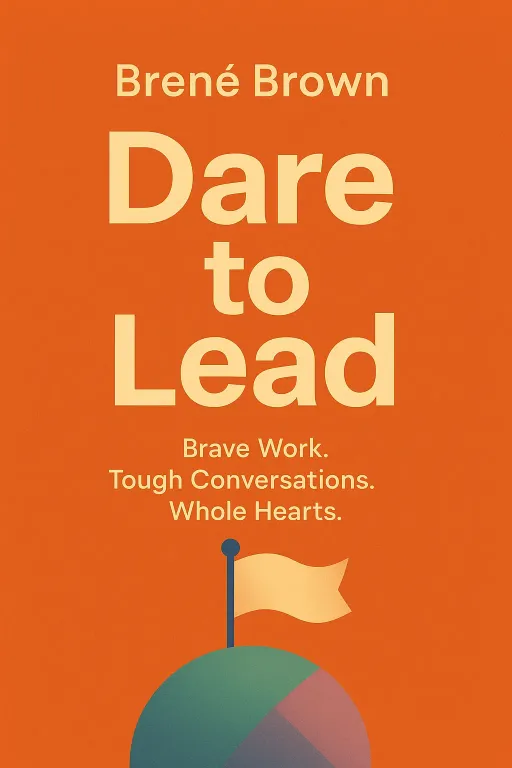
Nova: Well, today, we’re tackling that head-on. We’re diving into two phenomenal books that offer not just comfort, but a roadmap to navigating that very specific kind of anxiety. We’re talking about Brené Brown's "Dare to Lead" and Susan Jeffers’ classic, "Feel the Fear and Do It Anyway."
Atlas: Ah, Brown and Jeffers! Two powerhouses. What I find so fascinating about Brown, specifically, is how she didn't set out to become this global guru on vulnerability. She was a research professor, looking at connection, and kept bumping into this uncomfortable truth: vulnerability was at the heart of meaningful connection and courageous leadership. It wasn’t some soft, touchy-feely concept; it was a hard, empirical finding from her work. She really shifted the conversation around it.
Nova: Absolutely. And that's exactly where we need to start. The core idea that vulnerability isn’t a weakness to be hidden, but the very birthplace of connection and courage.
The Power of Vulnerability in Communication
SECTION
Nova: So, let's unpack that. Brown’s "Dare to Lead" is a masterclass in understanding that true leadership, and by extension, truly effective communication, isn't about being invulnerable. It's about leaning into discomfort. It's about showing up fully, even when you can’t control the outcome.
Atlas: That’s going to resonate with anyone who struggles with wanting to be perceived as 'strong' or 'in control' when they communicate. Especially for those of us who are trying to build bridges and make tangible impacts, the idea of appearing anything less than perfectly composed can feel counterproductive.
Nova: And that’s the myth Brown dismantles. She argues that vulnerability isn't oversharing or weakness. It’s emotional exposure. It’s showing up and being seen when you have no control over the outcome. Think about how often our communication anxiety stems from trying to control how we're perceived, trying to perfectly craft every word.
Atlas: So you're saying that the very act of trying to be perfect is what often makes us anxious and less effective? That’s almost counterintuitive. My instinct is always to rehearse, to sanitize, to make sure there are no chinks in the armor.
Nova: It’s a natural instinct, but it creates a psychological barrier. Brown shares this incredible story from her research, where she asked people what they thought vulnerability was. Many described it as uncertainty, risk, and emotional exposure. Then she asked them to describe a vulnerable moment they witnessed in someone else, and suddenly, it was courage, authenticity, and strength. The disconnect is profound. We admire it in others, but fear it in ourselves.
Atlas: Wow. That’s kind of heartbreaking, but it makes so much sense. We project this ideal of perfection, but what we truly connect with in others is their humanness, their willingness to be seen.
Nova: Exactly. She uses the metaphor of the arena. When you step into the arena to speak your truth, to lead, to connect, you’re going to get messy. You’re going to fall. But if you’re not willing to get in there, you’re choosing comfort over courage. And courage, she argues, is contagious. When a leader, or even just a person in conversation, is vulnerable, it grants permission for others to do the same.
Atlas: So, for someone who wants to bridge gaps and create understanding, this isn't about spilling your deepest secrets, but about being authentic in the moment. It’s about being okay with not having all the answers, or admitting when something is hard.
Nova: Precisely. It’s about saying, "I don't know, but I'm committed to finding out," or "This is hard for me to say, but it's important." Brown's work has been widely acclaimed for its ability to demystify complex human emotions and behavior, making concepts like courage and vulnerability accessible. It’s a book that's highly rated by leaders and communicators alike, praised for its practical application of deep psychological truths.
Atlas: That’s actually really inspiring. So, it's not about being weak; it’s about being real. And that realness is what actually fosters trust and allows your message to land more genuinely, rather than just being heard. It creates a space for mutual understanding, which is what we're all striving for.
Nova: And that brings us to the next layer of this conversation: once you've embraced that mindset of vulnerability, how do you actually move past the fear that inevitably comes with it? How do you 'feel the fear and do it anyway'?
Transforming Fear into Action
SECTION
Nova: That’s where Susan Jeffers’ "Feel the Fear and Do It Anyway" comes in. This book is a classic for a reason. It's a no-nonsense guide that says, look, fear is always going to be there. The goal isn't to eliminate it, but to change your relationship with it.
Atlas: I love that. It’s not about becoming fearless, but about acting despite the fear. My initial thought when I’m anxious is always, 'How do I make this feeling go away?' Jeffers is saying that’s the wrong question.
Nova: She is. Jeffers offers practical strategies to transform that paralyzing fear into power. One of her core tenets is that all fears, at their root, stem from one fundamental fear: 'I can't handle it.' Whether it's fear of public speaking, fear of rejection, or fear of failure, it all boils down to a lack of trust in your own ability to cope.
Atlas: That’s a powerful insight. So, if I believe deep down that I can’t handle the outcome, whether it’s a difficult conversation or a presentation, then the anxiety becomes overwhelming.
Nova: Exactly. And her solution is deceptively simple: change that belief. She encourages taking consistent, small steps to build your "can handle it" muscle. She has this great exercise where you list all your fears, then on another column, list all the positive things that could come from facing them. It reframes the perspective from 'what if I fail?' to 'what if I succeed, and even if I don't, I'll learn?'
Atlas: So it’s about building self-trust through action, even if it’s uncomfortable. Like, instead of waiting to feel confident to speak, you speak to build confidence.
Nova: Precisely! She emphasizes that the only way to get rid of the fear of doing something is to do it. Over and over again. She encourages you to take one courageous step a day, no matter how small. It could be initiating a conversation you've been avoiding, or volunteering to speak up in a meeting. These small wins accumulate.
Atlas: I can see how that would be incredibly empowering for someone who values practical impact and self-expression. It’s not just about thinking differently; it’s about differently. It’s about moving from analysis paralysis to intentional action.
Nova: And it’s about understanding that the fear itself isn't the enemy. The paralysis is. Jeffers' book has had a significant cultural impact, offering a very direct, empowering message that resonated with millions. It’s often cited as a foundational text for personal development, lauded for its straightforward, actionable advice that cuts through psychological jargon.
Atlas: So, if Brown gives us the 'why' – why vulnerability is essential for connection – Jeffers gives us the 'how' – how to actually take that scary step into the arena, even when your knees are knocking. It’s a powerful one-two punch for anyone looking to calm their nerves and speak their truth.
Nova: It truly is. They complement each other beautifully, providing both the mindset shift and the practical toolkit for courageous communication.
Synthesis & Takeaways
SECTION
Nova: So, bringing these two incredible perspectives together, what we really see is a powerful synergy. Brown tells us that vulnerability is the path to true connection and leadership, that it’s the birthplace of trust. And Jeffers gives us the actual mechanism to step onto that path, to feel the fear of exposure, of speaking up, and to do it anyway.
Atlas: It’s like, Brown lays out the architectural plans for a magnificent bridge of communication, and Jeffers gives you the courage to start laying the first bricks, even if your hands are shaking. For anyone who strives for deep understanding and tangible impact in their communication, this is gold.
Nova: It’s about realizing that your unique voice, with all its inherent vulnerability, is your greatest strength. And the only way to truly unlock it is to practice showing up, one intentional conversation, one clear thought at a time, even when it feels uncomfortable.
Atlas: The healing moment, as you put it, is truly understanding that vulnerability isn't weakness; it's the raw material for genuine connection. And when you allow yourself to be seen, your voice naturally becomes clearer, more authentic, and ultimately, more impactful.
Nova: Exactly. It's about daring to lead with your authentic self, and feeling the fear of that exposure, but doing it anyway. Because on the other side of that fear is the truth you want to share, and the connection you crave.
Atlas: That's such a hopeful way to look at it. It transforms anxiety from a barrier into a signal that you're on the edge of something important, something courageous.
Nova: And that's what we want for all our listeners: to calm your nerves, embrace your truth, and speak it anyway.
Atlas: This is Aibrary. Congratulations on your growth!









