Navigating the Evolving Professional Landscape
Golden Hook & Introduction
SECTION
Nova: What if the biggest threat to your career, or even your entire organization, isn't some disruptive new tech or a looming recession? What if it's simply clinging to an outdated playbook?
Atlas: Oh, I like that. It’s like we’re all playing a game with rules that changed last night, but nobody sent out the memo. And we're still wondering why our strategies keep failing.
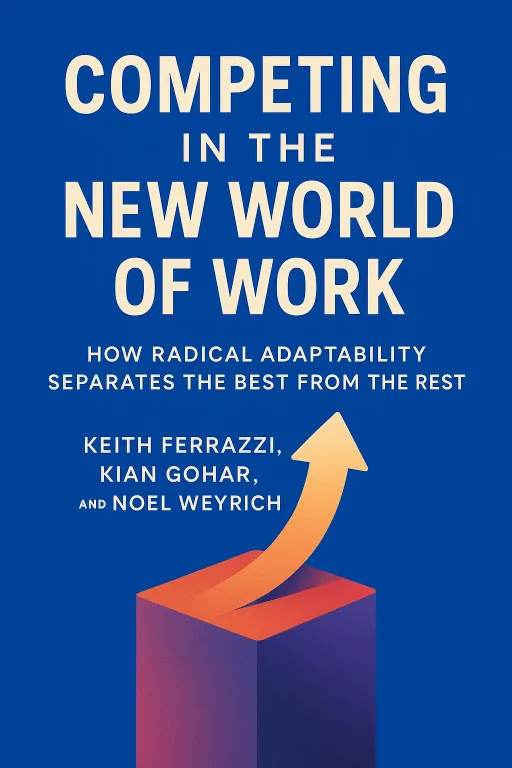
Nova: Exactly! And that’s precisely what we’re dissecting today. We're looking at two powerful books that offer not just memos, but entire new rulebooks for navigating this evolving professional landscape. First up, we have "Competing in the New World of Work" by Keith Ferrazzi, Kian Gohar, and Noel Weyrich. Ferrazzi, known for his groundbreaking work in networking and collaboration, brings that same collaborative spirit to how organizations must fundamentally rethink their structure and culture.
Atlas: Okay, so a guide for the big picture, the organizational shift. What about us, the individuals caught in the crosscurrents?
Nova: That's where Pamela Mitchell's "The 10 Laws of Career Reinvention" comes in. Mitchell, a veteran career strategist, wrote this book to empower individuals to take control of their professional destiny, especially when traditional paths feel blocked or uncertain. It’s less about finding a new job and more about architecting a new future for yourself.
Atlas: That makes sense. For listeners who are pragmatic learners and focused strategists, the question isn't just "what's happening," but "what do I about it?" How do I stay indispensable when the ground is constantly shifting?
Nova: Precisely. The core of our podcast today is really an exploration of how both organizations and individuals can not just survive, but truly thrive and build an indispensable future in our rapidly shifting professional landscape. Today we'll dive deep into this from two perspectives. First, we'll explore the foundational shifts happening in the world of work and how organizations are adapting, then we'll discuss what that means for us as individuals, and how we can proactively reinvent our careers.
The New Paradigm of Work & Organizational Adaptability
SECTION
Nova: So let's start with Ferrazzi, Gohar, and Weyrich's "Competing in the New World of Work." Their central argument is that the hybrid, post-pandemic reality isn't just a temporary adjustment; it's a permanent paradigm shift. And the organizations that win are the ones that embrace "radical adaptability" and "co-elevation."
Atlas: Radical adaptability. That sounds a bit like corporate jargon for "figure it out on the fly." What does it actually mean for a team on the ground?
Nova: It's far more profound than that. Radical adaptability isn't just about being flexible; it's about fundamentally redesigning how work gets done, how teams are structured, and how leaders operate. Imagine a traditional company, let’s say a large manufacturing firm, that’s always operated with strict hierarchies and fixed roles. When a global supply chain crisis hits, their rigid structure crumbles. Radical adaptability would mean they had already built in mechanisms for fluid team formation, rapid iteration on processes, and decentralized decision-making.
Atlas: So, it's about baking agility into the organizational DNA, rather than just reacting to crises?
Nova: Exactly. And a huge part of that is "co-elevation." This concept is particularly powerful. It's about moving beyond mere collaboration to a state where everyone, from entry-level employees to the CEO, is actively invested in each other's success and the collective upliftment of the organization. It's a leadership philosophy where leaders aren't just delegating tasks, but actively coaching, mentoring, and removing obstacles for their teams, fostering an environment of mutual support and shared ambition.
Atlas: That sounds great in theory, but for someone managing a high-pressure team, where resources are tight and deadlines are tighter, "co-elevation" might feel like an idealistic luxury. How does a company that when everyone is already stretched thin? It sounds like it could easily devolve into just more meetings or forced 'team-building' exercises.
Nova: That’s a valid concern, and the book addresses it head-on. It's not about adding more to the plate; it's about fundamentally changing the of interaction. Think of it like this: instead of a project manager simply assigning tasks for a new product launch, a co-elevating leader would bring the entire cross-functional team together, including marketing, engineering, and sales, right from the ideation phase. They'd explicitly ask, "How can we each help each other succeed in this launch?" They'd identify dependencies, potential roadblocks, and skill gaps, proactively offering support and resources. It’s about shifting from a "me vs. them" or "me and my silo" mentality to a "we're all in this together, and your success is my success" paradigm.
Atlas: Ah, I see. It's less about a kumbaya moment and more about a strategic re-alignment of incentives and support structures. It’s about building resilient teams that instinctively look out for each other, which, in turn, makes the organization as a whole more resilient. That makes me wonder, how does this top-down organizational shift then impact the individual career journey?
Individual Agency & Career Reinvention
SECTION
Nova: That’s a perfect bridge to Pamela Mitchell’s "The 10 Laws of Career Reinvention." If organizations are radically adapting and co-elevating, individuals can't afford to stand still. Mitchell’s work is all about taking agency in your own career, especially when traditional paths are disrupted. Her laws equip you to strategically pivot.
Atlas: So, it's not just about finding a new job, but consciously shaping your professional evolution. As a focused strategist, that resonates. But what's the first step for someone who feels stuck, or like their industry is shrinking?
Nova: Her first crucial law is about identifying your "transferable skills." Many people define themselves by their job title or industry, but Mitchell urges us to break down our experience into core competencies. For instance, a laid-off journalist isn't just a "writer." They're a master of research, storytelling, interviewing, and synthesizing complex information – skills highly valuable in content marketing, public relations, or even data analysis.
Atlas: That’s a great way to reframe experience. I imagine a lot of our listeners, especially those aspiring to build solid futures, often focus on what they have, rather than what they. So, once you know your transferable skills, how do you leverage them?
Nova: That leads to another key law: "Leverage Your Network." But not in the old transactional sense. It's about building genuine relationships, connecting with people who can offer insights into emerging fields, and understanding where your unique skill stack can add value. It's a two-way street, offering help as much as seeking it. Imagine Sarah, a mid-career architect, whose industry was hit hard. Instead of looking for another architecture firm, she started attending virtual meetups for urban planning and smart city development. She realized her spatial reasoning and project management skills were highly transferable. Through her network, she connected with a startup developing sustainable infrastructure, and her ability to visualize complex systems was exactly what they needed, even though she wasn't building physical structures anymore.
Atlas: That’s a compelling example. It shows how strategic pivoting isn't just a leap of faith, but a calculated move based on self-awareness and informed connections. For someone looking into skill stacking—building complementary expertise—this approach would be invaluable. How do you identify the skills to stack, though, when everything is changing so fast?
Nova: That’s where the proactive identification of emerging trends comes in, which ties directly back to our deep question. Mitchell emphasizes becoming a "trend spotter" in your own right. It's not about predicting the future, but observing patterns, understanding technological shifts, and listening to the conversations happening at the edges of your industry. If you're in finance, for example, you're not just watching the stock market, you're exploring fintech, blockchain applications, and AI in financial modeling. Then, you strategically invest your learning time – perhaps those 20 minutes a day for focused learning – into acquiring skills that bridge your existing expertise with these emerging areas.
Atlas: So, it’s about anticipating the next wave, not just riding the current one. That's a crucial distinction for building a solid future. It’s about being an active participant in shaping your career, rather than a passive observer.
Synthesis & Takeaways
SECTION
Nova: Absolutely. What both books illuminate is that the future of work isn't about stability in the traditional sense; it's about dynamic stability achieved through constant adaptation and co-creation. Organizations must foster environments of radical adaptability and co-elevation, while individuals must embrace continuous career reinvention, leveraging their transferable skills and networks to strategically pivot.
Atlas: That’s actually really inspiring. It means we have more agency than we sometimes feel. It’s about taking ownership of our professional journey, even when the path ahead seems uncertain. The deep question we started with—how to proactively identify trends and adapt your skill set to stay indispensable—feels less daunting when you have these frameworks. It transforms uncertainty into an opportunity for strategic growth.
Nova: Precisely. The goal isn't to merely react to change, but to become an architect of your own professional evolution. To build that solid future you're aiming for, it means embracing that journey of continuous learning and strategic action. It's the only way to ensure that you, and your teams, aren't just surviving, but truly competing and thriving in this new world. So, whether you're leading a team or navigating your own career, take that first step. Identify one skill you can begin to stack, or one trend you can start observing today.
Atlas: That gives me chills, in a good way. It’s about building momentum, one focused step at a time.
Nova: This is Aibrary. Congratulations on your growth!