Leading with Agility: Mastering Modern Team Dynamics
Golden Hook & Introduction
SECTION
Nova: Atlas, if you had to describe the core idea of "Leading with Agility: Mastering Modern Team Dynamics" in just five words, what would they be?
Atlas: Future-proof your team, or don't.
Nova: Ooh, I love that. Punchy! Mine would have to be: Ditch the hierarchy, get real.
Atlas: "Get real." I like that. It sounds like we're talking about something pretty fundamental here, not just another buzzword.
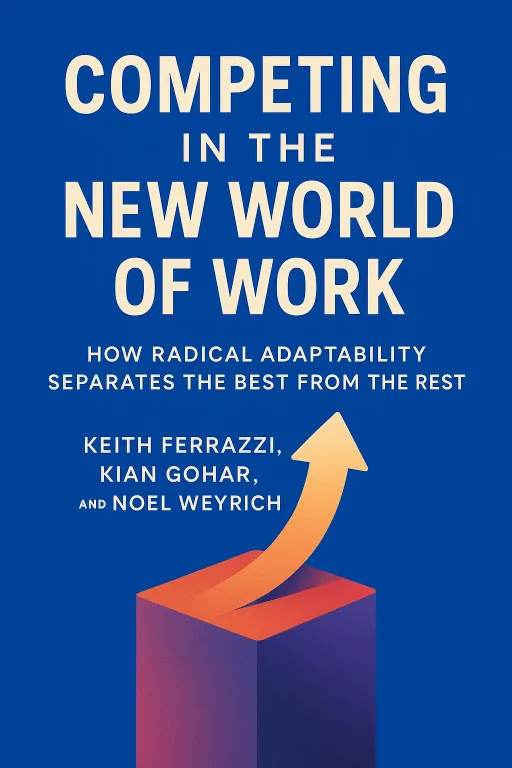
Nova: Absolutely. Today, we're diving headfirst into why the way we’ve always worked is fundamentally broken for the world we live in now, and crucially, how to fix it. We’re drawing insights from two incredibly powerful books: "Competing in the New World of Work" by Keith Ferrazzi, Kian Gohar, and Noel Weyrich, and "Radical Collaboration" by Jim W. Tamm and Ron J. Luyet.
Atlas: Ferrazzi is a name many of our listeners will recognize from his work on networking and connection. It makes sense that he'd be at the forefront of rethinking how teams connect and perform. But why is this shift so urgent? What makes this "new world of work" so different that it demands such a radical overhaul?
The Imperative for Agile, Networked Teams
SECTION
Nova: That’s the golden question, isn’t it? Ferrazzi and his co-authors paint a very clear picture: the traditional, hierarchical, command-and-control structure, the one many of us grew up with in corporate life, it's essentially a dinosaur. It was built for a predictable, slow-moving world.
Atlas: Right, like a well-oiled machine, where each part has a fixed function, and the boss pulls all the levers.
Nova: Exactly. But the modern landscape? It’s less like a machine and more like a constantly shifting ecosystem. We're talking about global markets that change overnight, technological disruptions that redefine entire industries, and a workforce that demands purpose and autonomy. In this environment, that battleship of a company, powerful as it might be, is just too slow to turn. It gets outmaneuvered, outinnovated, and eventually, sunk.
Atlas: So, the old 'command and control' is basically a dinosaur. But what happens to the 'commanders' in this new world? Are they just... gone? Or do they transform into something else?
Nova: They absolutely transform. The "new operating model" isn't about chaos; it's about dynamic, networked teams. Think less battleship, more a fleet of agile speedboats. Each speedboat is empowered, responsive, and connected to the others, all moving towards a shared, deep purpose. Leaders become orchestrators, coaches, and vision-setters, not just order-givers. They foster deep purpose, pushing decision-making to the edges where the work actually happens.
Atlas: Okay, but isn't 'networked teams' just a fancier way of saying 'more meetings' or 'matrix management gone wild'? What does it mean to operate this way, beyond the cool speedboat analogy? Because for a lot of people, that sounds like a recipe for confusion and endless discussions.
Nova: That’s a fair challenge. It's not about adding layers; it's about fundamentally shifting mindsets. It means cross-functional teams that form and disband fluidly, shared accountability for outcomes rather than just tasks, and a relentless focus on adaptability. It’s about empowering individuals at every level to take initiative, connect directly with others who can help, and solve problems in real-time, rather than waiting for approval to trickle down a long chain. The goal is to maximize collective intelligence and speed.
Building High-Trust, High-Performance Through Radical Collaboration
SECTION
Nova: And for those speedboats to work together, to maneuver through those stormy seas without ramming into each other, they need incredible coordination, yes, but fundamentally, they need profound trust. And that brings us squarely to "Radical Collaboration" by Jim W. Tamm and Ron J. Luyet.
Atlas: Radical Collaboration. That sounds intense. What exactly makes it "radical"? Is it just about being brutally honest all the time?
Nova: It’s radical because it challenges the comfort zones we often build around ourselves in professional settings. Tamm and Luyet argue that most teams are held back not by a lack of talent or resources, but by common collaboration blockers: fear, defensiveness, an inability to handle conflict constructively, and a lack of psychological safety. We avoid the tough conversations, we hold back our true thoughts, and we don't hold each other accountable, all to maintain a superficial harmony.
Atlas: Oh, I’ve definitely been there. The unspoken tensions, the passive-aggressive emails, the meetings after the meeting to actually discuss what was going on. It’s exhausting.
Nova: Exactly! Radical Collaboration provides a practical framework to dismantle those blockers. It’s built on five essential skills: self-awareness, candor, conflict resolution, commitment, and accountability. It’s about consciously choosing to build a high-trust, high-performance environment where people feel safe enough to be vulnerable, to challenge ideas, and to truly collaborate.
Atlas: So, candor isn't just "being rude." It's about a specific kind of honesty, backed by self-awareness and aimed at constructive progress. For a curious learner, what's the step someone could take this week to even being radically collaborative? Because "candor" can feel like a high-stakes move.
Nova: That's a brilliant question, because it really is about tiny, intentional shifts. The books suggest you reflect on your current team's biggest collaboration challenge. Then, identify just you could model or encourage this week. Maybe it's actively listening without interrupting. Or, instead of making an assumption, asking a clarifying question like, "Could you tell me more about what you mean by that?" Or even just acknowledging someone's perspective before offering your own. It's about demonstrating the behind candor, which is always to improve the outcome, not to attack the person.
Atlas: I can see how that would start to chip away at those blockers. And the deeper question: how do you for this? It's one thing to say 'be candid,' it's another to create an environment where that's actually safe and encouraged, whether you're remote or in person. Because a lot of environments, frankly, punish candor.
Nova: That’s the profound insight these books offer together. "Competing in the New World of Work" tells us we become networked and agile. "Radical Collaboration" gives us the human blueprint to achieve it. Designing for it means leadership setting the example. It means creating forums for open feedback, establishing clear norms around constructive conflict, and actively celebrating vulnerability and learning from mistakes, rather than penalizing them. It’s about building psychological safety into the very fabric of how teams interact, whether that's through intentional check-ins, transparent decision-making, or even just how meetings are structured to ensure every voice is heard.
Synthesis & Takeaways
SECTION
Nova: So, what we’re really talking about here is a complete re-imagining of the workplace. It's not just about efficiency or new tools; it's about recognizing that the future of work isn't just about technology or new business models; it’s fundamentally about how we relate to each other.
Atlas: That makes sense. The biggest competitive advantage isn't going to be the smartest individual, but the team that can truly communicate, trust, and adapt together. It's the human element, amplified.
Nova: Precisely. The ability to build profound trust, to navigate discomfort, to speak truth with care, and to hold each other accountable – that is the ultimate competitive advantage in this new world. It transforms those agile speedboats from bumping into each other into a synchronized, powerful fleet.
Atlas: So, for our curious listeners, that tiny step this week could be as simple as practicing active listening, or asking a clarifying question instead of making an assumption. It's about starting to build that muscle of genuine connection. And the deeper question for all of us: How can we proactively design our work environments, physical or virtual, to foster that radical collaboration needed to truly compete and thrive?
Nova: It’s a challenge, yes, but it’s also an incredible opportunity to build stronger, more fulfilling, and ultimately, more successful teams. We invite you to take that tiny step this week.
Atlas: And keep asking those deep questions.
Nova: This is Aibrary. Congratulations on your growth!