Leading from the Ground Up: Battlefield Wisdom for Community and Entrepreneurial Success
Golden Hook & Introduction
SECTION
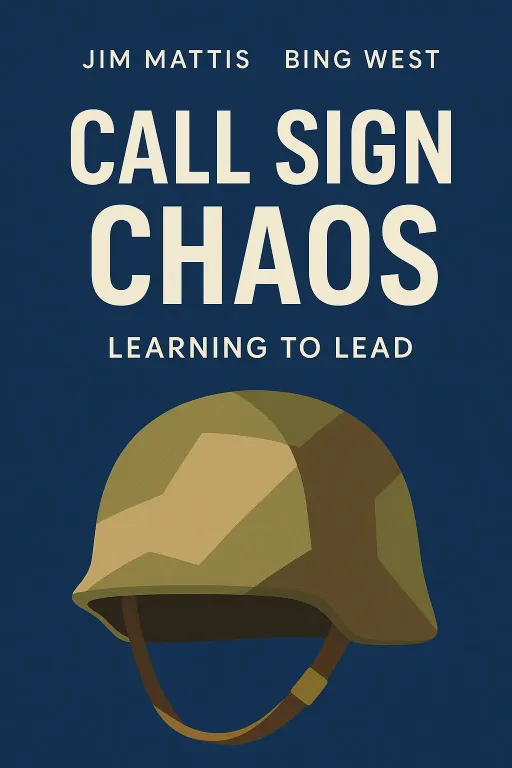
Nova: Imagine sitting at home during a quiet holiday break, and suddenly your phone rings. On the other end is the transition team for the President-elect of the United States, asking you to fly out immediately to interview for Secretary of Defense. You didn't campaign, you didn't ask for the job, and you've never even met the person calling. What do you do? Well, that is exactly how General Jim Mattis begins his incredible memoir, Call Sign Chaos: Learning to Lead. And today, we are going to unpack how these intense, high-stakes military lessons can completely transform how we lead in our schools, our local communities, and our entrepreneurial ventures. I am joined today by Mohamed Kanu, an administrative professional and entrepreneur who knows a thing or two about managing complex systems and organizing teams. Mohamed, welcome!
MOHAMED KANU: Thanks, Nova. It is great to be here. You know, that opening story in the book really resonated with me because it highlights a universal truth about leadership. Often, the call to lead comes when we least expect it. Whether you are being asked to step up in a student government association, organize a local community agricultural project, or manage a major administrative transition, leadership isn't about seeking a title. It is about being prepared, having your systems in place, and answering the call to serve when your community needs you.
Nova: Oh, absolutely! And Mattis has this beautiful metaphor he uses during his flight to that very interview. He hears the standard flight attendant safety briefing and thinks about the line, put your own oxygen mask on first, then help others around you. He realized that to lead effectively, whether it is a nation or a local student club, you have to get your own house in order first. Today, we are going to tackle this book from two distinct angles. First, we will look at direct leadership, which is all about building personal competence and deep trust within small teams. Then, we will shift to strategic leadership, exploring how to use what Mattis calls Commander's Intent to empower people to take initiative without being micromanaged. It is going to be a fast-paced ride!
Deep Dive into Core Topic 1
SECTION
Nova: Let's start with direct leadership. Mattis spent decades in the Marine Corps, and he emphasizes that in the beginning, leadership is entirely face-to-face. It is personal. And he breaks it down into three core pillars: competence, caring, and conviction. Let's talk about competence first. Mattis was trained by Vietnam veterans who tolerated no excuses. He learned early on that trying hard isn't enough; you actually have to deliver results. Mohamed, from an administrative and analytical perspective, how do you see this idea of competence playing out in everyday community or school leadership?
MOHAMED KANU: It is the absolute bedrock, Nova. In my experience with data management and administration, if your basic processes are flawed, the entire system collapses. In a school or college setting, or even a local community group, a leader's competence is demonstrated by their mastery of the basics. Do you know how to run an efficient meeting? Are your project timelines realistic? Are you keeping accurate records? If a student leader doesn't master these operational basics, they lose credibility. Mattis writes about how he had to learn the fine art of fire support on a live-fire range, practicing until it was second nature. In the same way, a community leader has to practice their administrative and organizational skills until they can execute them flawlessly under pressure.
Nova: Yes! He says you have to be brilliant in the basics. And there is this great, gritty quote from his early days where a corporal tells him, Lieutenant, you have to be harder than petrified woodpecker's lips. It sounds funny, but it is about having that mental toughness and resilience. But here is the catch, and I love this about Mattis's philosophy: toughness without care is just bullying. He pairs competence with deep, genuine caring. He quotes Teddy Roosevelt, saying, nobody cares how much you know, until they know how much you care.
MOHAMED KANU: That is a crucial point. In volunteer organizations, school clubs, or local community projects, you don't have the leverage of a paycheck or military rank to make people cooperate. The only currency you have is trust and mutual respect. I think about Mattis's story of Porter Wagner, the fellow inmate he met when he had to spend weekends in jail for underage drinking as a college student. Wagner told him, you can choose to look at the stars in the night sky, or you can look at the mud in the parking lot. That simple lesson in perspective taught Mattis that leaders must choose to see the potential in people, to look at the stars. When you show your team that you genuinely care about their development, their well-being, and their perspective, they will go to the ends of the earth for the mission.
Nova: That story about looking at the stars instead of the mud is so powerful! It is all about attitude. And Mattis applied that directly to his troops. He made sure his officers ate last, after all the enlisted Marines had been fed. He knew their names, their families' situations. In a school or community group, that looks like checking in on your team members, understanding their academic workloads, and supporting them when they are overwhelmed. It is about building a culture where everyone feels valued. But what about that third pillar, conviction? Mattis talks about standing firm on your principles, even when it is incredibly difficult. How do we balance that conviction with the need to be collaborative in a community setting?
MOHAMED KANU: Conviction isn't about being stubborn or refusing to listen. It is about having a clear ethical compass and protecting the integrity of the group. Mattis shares a story from his time in Okinawa where a major malcontent in his platoon threatened him. Instead of ignoring it or reacting emotionally, Mattis and his senior non-commissioned officers dealt with the situation swiftly and decisively, ensuring the individual was discharged. In a community or student group, conviction means maintaining high standards of behavior and accountability. If someone is consistently disrupting the group or failing to meet their commitments, a leader with conviction addresses the issue directly, but fairly, to protect the cohesion of the entire team. You can't look the other way when standards are violated, or you risk degrading the trust of the entire organization.
Deep Dive into Core Topic 2
SECTION
Nova: That leads us perfectly into our second big topic: how do we scale this leadership as our organizations grow? This is where Mattis introduces the concept of executive and strategic leadership, and specifically, the power of Commander's Intent. Now, let's talk about his call sign, CHAOS. It is a legendary story. When he took command of the Seventh Marines, one of his staff officers, John Toolan, wrote the word CHAOS on the whiteboard. When Mattis asked what it meant, Toolan joked it stood for Colonel Has An Outstanding Solution. It stuck! But the irony is that Mattis's actual leadership style was the exact opposite of a centralized, top-down dictator. He wanted to avoid what he called Mother-may-I timidity. Mohamed, explain this concept of Commander's Intent and why it is so revolutionary for decentralized teams.
MOHAMED KANU: Commander's Intent is a beautiful concept because it shifts the focus from command and control to command and feedback. Instead of giving your team a massive, detailed list of instructions on exactly how to do their jobs, you give them a clearly defined end-state and the purpose behind it. You tell them the what and the why, but you leave the how entirely up to them. Mattis argues that on a fast-moving battlefield, or in a dynamic business environment, the people on the front lines can see the situation changing in real-time. If they have to wait for permission for every decision, they will miss fleeting opportunities. By sharing a clear mental model of the goal, every single person can adapt and take initiative autonomously.
Nova: It is like jazz improvisation! Mattis actually uses that metaphor. He says you have to rehearse the basics so thoroughly that when you get on the battlefield, you can improvise like a jazz musician in New Orleans. You know your instrument, you know the key, you know the tempo, but the actual performance is spontaneous and responsive to the moment. I think about how this applies to organizing a community event, like a local environmental cleanup or a school charity drive. If the coordinator tries to micromanage every volunteer, they will quickly become a bottleneck, and everyone will get frustrated.
MOHAMED KANU: Exactly. As an entrepreneur, I see this all the time. If you don't delegate tactical authority to the lowest capable level, your business cannot scale. You end up working in your business rather than on your business. In a community project, if you define the Commander's Intent, say, we want to clear this specific park of trash by three p. m. so families can use it safely this weekend, you don't need to tell people which path to sweep first. They will figure out the most efficient way to do it. And more importantly, they will feel a sense of ownership and pride in the outcome because they were trusted to solve the problem themselves. Mattis says that if a corporal on the front lines cannot tell you what the commander's intent is, then the commander has failed to communicate clearly.
Nova: That is a high standard! If the person at the very entry level of your organization doesn't know the ultimate goal, you haven't done your job as a leader. And Mattis emphasizes that to build this culture of initiative, you have to be incredibly tolerant of honest mistakes. If you punish people when they take a calculated risk and fail, you will quickly end up with an organization of risk-averse, timid people who do nothing without orders. How do we cultivate that tolerance for mistakes in our local communities and student groups, Mohamed?
MOHAMED KANU: It starts with how we conduct our post-project reviews. Mattis talks about learning from mistakes and rewarding initiative in Marine training. In our community groups, we should hold what we can call after-action reviews. When a project doesn't go as planned, instead of pointing fingers and assigning blame, we ask: What was our intent? What actually happened? Why was there a gap? And what did we learn? When you frame setbacks as valuable data points for continuous improvement rather than personal failures, you create a safe environment for innovation. People become willing to propose creative solutions to community challenges because they know the leadership has their back.
Nova: I love that. It is about shifting from a culture of blame to a culture of learning. And speaking of learning, we have to talk about Mattis's absolute obsession with reading and history. In Appendix B of the book, he lists his favorite books, and he famously carried a library of hundreds of books with him on deployments. He has this incredibly sharp quote: If you haven't read hundreds of books, you are functionally illiterate, and you will be incompetent, because your personal experiences alone aren't broad enough to sustain you. He argues that humans have been fighting and organizing for thousands of years, and it is unethical to ignore that accumulated wisdom and wing it at the expense of your team.
MOHAMED KANU: That hit me deeply, Nova. As someone who loves analytical thinking and continuous professional development, I believe reading is like a cheat code for leadership. It allows you to have a conversation with the greatest minds in history. Mattis notes that Alexander the Great would not be perplexed by the challenges we face today because human nature doesn't change. When we study history, biography, and management, we realize we are facing nothing new under the sun. Whether you are dealing with a difficult team dynamic in a college group, managing a budget shortfall in a local non-profit, or navigating an agricultural supply chain issue, someone else has solved a similar problem before. Reading gives you the perspective to make informed, calm decisions instead of panicking and making costly mistakes.
Synthesis & Takeaways
SECTION
Nova: This has been such an incredibly rich conversation. We have covered everything from the icy ridges of Washington State to the deserts of Kuwait, all to find these universal leadership truths. As we start to wrap up, let's synthesize the big takeaways for our listeners who are ready to step up and lead in their own communities, schools, or businesses. Mohamed, if you had to boil down General Mattis's wisdom into a few actionable steps for a student or community leader today, what would they be?
MOHAMED KANU: I would focus on three main things. First, master your craft. Be brilliant in the basics of whatever you are doing, whether it is administrative organization, financial tracking, or public speaking. Competence builds trust. Second, communicate the why, not just the what. When you delegate a task, clearly state your Commander's Intent, the ultimate goal and the purpose behind it, and then trust your team to find the solution. And third, never stop learning. Dedicate time to reading and studying the experiences of those who came before you. It will give you the quiet confidence to lead through chaos.
Nova: That is a perfect roadmap. And I would add: remember to show your team how much you care. Eat last, listen first, and look for the stars in the night sky rather than the mud on the ground. Leadership is a heavy responsibility, but it is also one of the most rewarding things we can do for our communities.
MOHAMED KANU: Absolutely, Nova. As Mattis reminds us, we don't always get to choose the circumstances we find ourselves in, but we always choose how we respond to them. Let's choose to lead with competence, care, and conviction.
Nova: Well said, Mohamed! Thank you so much for sharing your insights with us today. And to all our listeners out there, thank you for tuning in. Go out there, find your call sign, embrace the chaos, and lead your community to success. Until next time, keep learning and keep leading!