High-Velocity Team Dynamics
Golden Hook & Introduction
SECTION
Nova: Everyone talks about speed, right? "Go faster, innovate quicker, outpace the competition." But what if the real secret to sustainable, high-velocity performance isn't just about pushing the gas pedal harder, but about something far more fundamental, and often overlooked?
Atlas: Oh, I like that. It sounds like we're about to uncover a hidden gear in the engine of productivity. Because honestly, Nova, sometimes "faster" just feels like "more frantic."
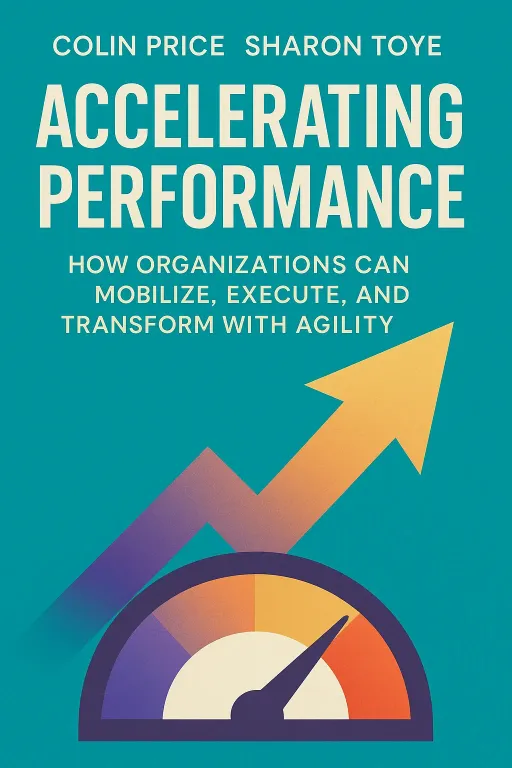
Nova: Exactly! And that's the core tension we're exploring today. We're diving into the fascinating world of High-Velocity Team Dynamics, drawing insights from two brilliant minds. We’ll look at Colin Price and Sharon Toye’s work in "Accelerating Performance," which really zeroes in on engineering speed at an organizational level. And then we’ll complement that with Robert Glazer's "Elevate Your Team," which makes a powerful case for individual capacity building.
Atlas: So, it’s not just about the machine, it’s about the people operating it. That’s a crucial distinction. For anyone in a fast-paced environment, especially in tech where the pace is relentless, the idea of "high velocity" can feel like a recipe for burnout. So, how do we actually that speed without sacrificing the team in the process?
Engineering Organizational Velocity
SECTION
Nova: That’s the million-dollar question, Atlas. Price and Toye argue that organizational speed isn't some happy accident; it's a competitive advantage that must be. And the two pillars of that engineering are crystal clear focus and strategic mobilization.
Atlas: Clear focus and strategic mobilization. Sounds straightforward, but I imagine it’s anything but in practice. What does "clear focus" really look like when every department has its own priorities, and the market shifts every other week?
Nova: That’s where the engineering comes in. Imagine a software development team, let's call them "Team Sprint." They're constantly busy, churning out features, fixing bugs, and responding to every new request that comes in. They fast, right? Lots of activity. But when you look at their overall impact, they often find themselves building things that aren't truly essential, or duplicating efforts, or getting bogged down in endless revisions because the initial vision wasn't sharp enough.
Atlas: Oh, I know that feeling. It’s like running really fast on a treadmill – you’re exerting a ton of energy, but you’re not actually getting anywhere new.
Nova: Precisely. Now, contrast that with "Team Lighthouse." They might initially to define their top three strategic objectives for the quarter, and those three. They invest time upfront in ruthless prioritization. Every new idea, every request, every bug fix is filtered through those objectives. If it doesn't align, it either gets deferred or discarded.
Atlas: So, the "focus" isn’t just about having goals, it’s about having a set of goals. Saying no to a lot of good ideas to say an emphatic yes to the ones.
Nova: Exactly. That clarity then fuels mobilization. Price and Toye emphasize that mobilization isn't just about telling people what to do; it's about empowering them. It’s about removing the red tape, streamlining decision-making, and making sure everyone understands their role in achieving those focused objectives. For Team Lighthouse, this means engineers aren't waiting for three layers of approval to make a minor architectural decision; they're trusted to move forward within clearly defined guardrails.
Atlas: That makes sense. The biggest killer of speed often isn't lack of effort, but friction in the system – endless meetings, bureaucratic hurdles, unclear ownership. So, "mobilization" is about greasing those wheels, making sure the energy people have can actually translate into forward momentum.
Nova: Think of it like a Formula 1 race car. It's not just the engine's raw power, it's the aerodynamics, the pit crew's synchronized movements, the driver's precise navigation. The whole system is engineered for speed. Without clear focus, you're just a powerful engine spinning its wheels. Without mobilization, you’re a well-designed car stuck in traffic.
Atlas: That’s a great analogy. It’s about designing for sustained speed, not just temporary bursts. But wait, looking at this from a team leader's perspective, especially in tech where demands are constant, isn't that incredibly difficult to implement? How do you carve out that "slow down to speed up" time when you're already behind?
Nova: It requires courage and conviction from leadership. It's an investment. The short-term pain of saying "no" or taking a moment to clarify pays dividends in long-term velocity and impact. It’s about being a strategist, not just a taskmaster. And that leads us to the other side of the high-velocity coin... because a Ferrari with a burnt-out driver isn't going anywhere fast, is it?
Building Individual Capacity for High Performance
SECTION
Nova: So, while Price and Toye give us the blueprint for the high-velocity system, Robert Glazer, in "Elevate Your Team," reminds us that the system is only as good as the people within it. He argues that individual capacity building—physical, emotional, and intellectual—is the absolute prerequisite for scaling a high-performance culture.
Atlas: Oh, I know that feeling. It sounds great on paper, but how does "individual capacity" actually translate into "high-performance culture"? For our listeners who are managing high-pressure teams, this concept might feel like another thing to add to an already overflowing plate.
Nova: It's less about adding, and more about foundational support. Glazer breaks it down into three key capacities. First,. This isn't just about going to the gym; it's about sleep, nutrition, and managing energy. If your team is chronically sleep-deprived, relying on caffeine to function, their decision-making, creativity, and resilience will plummet, no matter how well-engineered your processes are.
Atlas: That’s a really pragmatic point. I imagine a lot of our listeners can relate to the pressure to always be "on," sacrificing sleep for that extra hour of work. But you can't pour from an empty cup, right?
Nova: Exactly. Second,. This involves self-awareness, emotional regulation, and resilience. How well can your team members handle setbacks, navigate conflict, and bounce back from pressure? A team with high emotional capacity can weather storms, learn from mistakes without crumbling, and maintain psychological safety.
Atlas: That gives me chills. Especially in a field like tech where failure is often part of the innovation process, emotional resilience is non-negotiable. If every bug or failed sprint sends people into a spiral, your "high velocity" becomes a very bumpy, slow ride.
Nova: Absolutely. And third,. This is about continuous learning, critical thinking, and intellectual curiosity. In a rapidly evolving industry, if your team isn't consistently growing their skills, challenging their assumptions, and seeking new knowledge, they'll quickly become obsolete.
Atlas: So, it's not just about "grinding harder," it's about making sure your people have the, the, and the to grind effectively when it counts. For someone trying to integrate learning into a busy life, this is huge. Are leaders actually responsible for this, or is it purely individual?
Nova: It's a shared responsibility, but leaders play a crucial role in creating the environment where it can flourish. Think of a brilliant engineer, let's call her Maya. She's incredibly talented, but she’s constantly pulling all-nighters, skipping meals, and never taking a moment to step away. Initially, she's productive, but over time, her code quality drops, she makes more mistakes, and her creativity wanes. Eventually, she burns out.
Atlas: That sounds rough, but it's a familiar story.
Nova: Now, imagine another engineer, David. Equally brilliant, but his leader encourages him to take proper breaks, models healthy boundaries, and provides opportunities for learning and skill development. David prioritizes his sleep, manages his stress through exercise, and dedicates 20 minutes a day to learning new frameworks. He comes to work refreshed, consistently innovative, and capable of sustained, high-quality output.
Atlas: So, the leader isn’t just saying "build your capacity," they’re actively supporting it, making space for it, and perhaps even making it a valued part of the team culture.
Nova: Precisely. It’s about understanding that a team's collective capacity is the sum of its individual capacities. You can have the most efficient processes in the world, but if your people are running on empty, emotionally drained, or intellectually stagnant, that "velocity" is an illusion.
Synthesis & Takeaways
SECTION
Nova: So, what emerges from these two powerful perspectives is this: true high-velocity team dynamics aren't achieved by just one lever. You can't just engineer the system for speed and ignore the people, nor can you focus solely on individual well-being if your processes are a mess. It's the powerful synergy of both.
Atlas: That’s a profound insight. It frames "growth" not just as a personal burden, but as a strategic advantage for the whole team. But if I'm leading a team, and I want to apply this, where do I even begin? It feels like a lot to tackle.
Nova: That's where the pragmatic wisdom comes in. Both authors, implicitly and explicitly, point to starting small. The key takeaway is to identify bottleneck in your team's current workflow that limits their growth. Just one.
Atlas: One bottleneck. That's pragmatic. So, if your team is constantly bogged down in approval processes, that’s a system bottleneck. If people are consistently missing deadlines due to stress or lack of new skills, that’s an individual capacity bottleneck.
Nova: Exactly. Don't try to fix everything at once. Pick one area, apply the principles – either of clear focus and mobilization for the system, or nurturing physical, emotional, and intellectual capacity for the individual – and iterate. Small steps, big impact. It’s about designing for sustained speed, not just temporary bursts.
Atlas: That’s actually really inspiring. It means making progress is always within reach, even in complex environments. It’s about embracing the journey and understanding that every step forward counts.
Nova: It truly is. And that journey, that continuous improvement of both the system and the self, is where true, sustainable high velocity is born.
Atlas: Absolutely. A powerful thought to leave our listeners with.
Nova: This is Aibrary. Congratulations on your growth!