Driving Change: Radical Approaches to Sustained Performance
Golden Hook & Introduction
SECTION
Nova: You know, Atlas, there’s a phrase that always makes me chuckle, but it’s deadly serious in business: “sacred cow.”
Atlas: Oh man, a sacred cow! I immediately picture some ancient, untouchable corporate policy, probably guarded by a dragon in a suit, that everyone complains about but no one dares to question. Like, “We’ve always done it this way because… tradition!”
Nova: Exactly! That unexamined assumption, that deeply entrenched process or product that everyone believes is essential, even if it's silently draining resources or stifling innovation. And today, we’re tackling those sacred cows head-on, because we’re diving into the world of radical approaches to sustained performance.
Atlas: That’s a bold promise. I’m already intrigued. We’re talking about shaking things up, not just tweaking the margins, right?
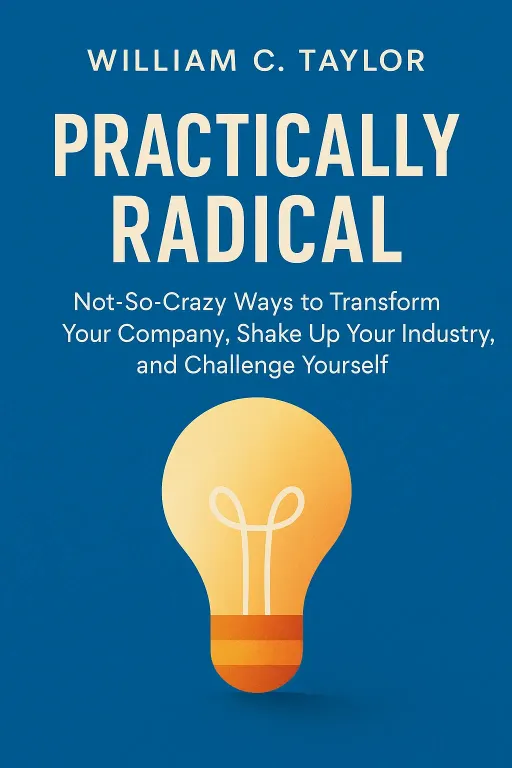
Nova: Absolutely. Our core inspiration today comes from two powerful perspectives. First, seminal work, "Practically Radical." Taylor, who was a co-founder of Fast Company magazine, spent his career observing and championing organizations that dared to be different. His whole ethos is about challenging conventional wisdom and embracing unconventional methods to inspire significant, almost revolutionary, organizational change.
Atlas: So, he’s saying don't just think outside the box, throw the box away and build a new one. I can see how that would resonate with our listeners who are driven by impact and constantly seeking self-growth. But "radical" can feel… well, radical.
Nova: It can, but that's where the "practically" comes in. And complementing Taylor’s vision, we also have the insights from "Accelerating Performance." These authors, drawing from their extensive experience at a global consulting firm like McKinsey, offer a robust framework for achieving sustained high performance. They emphasize mobilizing both an organization's capabilities its collective mindset.
Atlas: Ah, so it’s not just about the big, bold ideas, but also about making sure those ideas land, stick, and actually perform. That’s the sustainability piece, isn’t it? For our entrepreneurial listeners, balancing that need for radical innovation with the imperative for stable, accelerated performance is a constant challenge.
The Power of Practical Radicalism
SECTION
Nova: Precisely, Atlas. Let's start with Taylor's "Practically Radical." He argues that breakthrough results don't come from incremental improvements. They come from radical ideas, but crucially, these ideas must be executed practically. It’s about being audacious, but not reckless.
Atlas: So you're saying it’s not just about some mad scientist in a lab coming up with a wild concept. It’s about taking that wild concept and making it work in the real world, with real people and real budgets?
Nova: Exactly. Think of it like this: Many organizations get trapped in what Taylor calls "the tyranny of the urgent," constantly optimizing the status quo, making things 10% better. But true breakthroughs, the kind that redefine an industry or create entirely new markets, require a different kind of courage. They demand that leaders look at their entire business model and ask, "What if we did the complete opposite?"
Atlas: That’s a huge leap of faith for most businesses. I imagine a lot of our listeners, the curious strategists out there, might be thinking, "How do I even begin to identify what needs to be radically changed, especially when everything feels ‘fine’?"
Nova: That's the beauty of it. Taylor encourages leaders to identify their 'sacred cows.' These aren't just inefficient processes; they're the core beliefs, the foundational assumptions that everyone takes for granted. And often, they’re invisible because they're so deeply ingrained. For example, imagine a traditional publishing house in the early 2000s. Their sacred cow might have been: "Books must be physical objects sold through bookstores."
Atlas: Oh, I see where this is going. And then Amazon came along with Kindle, and suddenly that sacred cow was… well, not so sacred anymore.
Nova: Precisely. Or take the example of an airline. For decades, the sacred cow was "customers will pay for every part of the flying experience, bundled into one ticket." Then a radical idea emerged: "What if we unbundle everything? Charge for bags, for seat selection, for meals, and offer a much lower base fare?" It seemed counterintuitive, even cheap, at first, but it gave birth to a whole new segment of the airline industry.
Atlas: That’s fascinating. It really highlights how radical doesn't always mean technologically complex. Sometimes it's a radical shift in the business model or customer experience. But how do you, as a leader or an entrepreneur, even spot your own sacred cow when you're so immersed in your industry? It's like trying to see the air you breathe.
Nova: That’s where Taylor suggests drawing inspiration from your industry. He advocates for looking at radically different ways others have tackled similar challenges. If you're a software company, don't just look at other software companies. Look at how a restaurant manages customer flow, or how a symphony orchestra rehearses, or how a sports team builds camaraderie.
Atlas: That’s brilliant! It forces you to break free from the echo chamber. So, if my sacred cow is "our product must always be sold directly to consumers," I might look at a B2B company and see how they leverage partnerships, or even a public service organization and how they engage communities. It’s about cross-pollination of ideas.
Nova: Exactly. It's about dislodging your mental models by exposing them to entirely alien, yet effective, approaches. This isn't just about problem-solving; it's about problem-redefining. Because once you redefine the problem, the radical solutions often become clear.
Accelerating Performance for Lasting Impact
SECTION
Nova: So, let's say you've identified your sacred cow, and you’ve brainstormed three radically different ways to tackle it. You’ve got the bold idea. But then, how do you make sure that radical shift actually and leads to sustained, high performance, rather than just being a flash in the pan? This is where Price and Toye's "Accelerating Performance" comes into play.
Atlas: That’s the million-dollar question for any driven explorer. It’s one thing to innovate; it's another to build a machine that consistently innovates and performs. How do they approach that?
Nova: Their framework focuses on mobilizing two crucial elements: the organization's and its. It’s not just about having the right tools or the right skills; it’s equally about having the right psychological and cultural foundation.
Atlas: So, it’s not enough to just tell people, "Okay, we're going radical now!" You have to get them on board, mind, body, and soul. For our empathetic builders, this resonates deeply, because it’s about the human element of change.
Nova: Precisely. Price and Toye emphasize the critical role of leadership in aligning purpose, strategy, and culture to drive rapid and lasting improvement. Imagine a company that decides to radically shift its entire product line. They might have the technical capabilities – the engineers, the manufacturing facilities. But if the isn't aligned – if employees are resistant, or don't believe in the new direction, or feel their past work is being invalidated – that radical idea will crash and burn.
Atlas: That makes perfect sense. I’ve seen that happen. A brilliant new strategy announced, but then it just… peters out because the culture wasn't ready, or people weren't psychologically bought in. So, what does "mobilizing mindset" actually look like in practice? Is it just a fancy way of saying "motivating employees"?
Nova: It’s far more profound than simple motivation. Mobilizing mindset involves creating a shared conviction, a collective belief in the new direction, and a sense of psychological safety that encourages experimentation and learning from failure. It’s about fostering an environment where people feel empowered to contribute to the radical change, not just comply with it.
Atlas: That’s a huge challenge. How do leaders even begin to cultivate that kind of collective mindset, especially when the radical change might initially feel disruptive or even threatening to some?
Nova: Price and Toye would argue it starts with a clear, compelling. Leaders need to articulate not just is changing, but it's changing, and what better future that change will unlock for everyone involved – customers, employees, stakeholders. It’s about connecting the radical idea to a deeper meaning. Then, that purpose needs to be consistently reinforced through strategy and woven into the very fabric of the culture.
Atlas: So, if the radical idea is to, say, completely decentralize decision-making, the capabilities would be training people to make those decisions, giving them the data. But the mindset piece would be: do they in decentralized decision-making? Do they feel making decisions without constant oversight? Do they understand the behind it?
Nova: Exactly. And the magic happens when capabilities and mindset reinforce each other. When people have the skills the belief, that’s when you see truly accelerated and sustained performance. It's the difference between a temporary surge and a lasting transformation.
Synthesis & Takeaways
SECTION
Nova: So, what we've really explored today is a powerful two-part equation for driving change. First, the courage to be "practically radical," to question everything and embrace truly unconventional solutions. And second, the discipline of "accelerating performance" by aligning your organizational capabilities and, crucially, your collective mindset.
Atlas: It’s a compelling combination. For our listeners who are constantly seeking to boost their business acumen and make a real impact, this isn't just about identifying problems; it’s about reimagining solutions and then building the human system to execute them.
Nova: That's right. And it brings us back to our takeaways. The 'Tiny Step' for everyone listening is to identify just one of your business's 'sacred cows' and then, inspired by these ideas, brainstorm three radically different ways to tackle it, looking outside your industry for inspiration.
Atlas: And the 'Deep Question' that resonates with every entrepreneur and leader: How can you truly balance the need for radical innovation – those bold, game-changing ideas – with the imperative for stable, accelerated performance in your entrepreneurial journey? It’s not an either/or; it’s a constant dance.
Nova: It absolutely is. It requires constant self-reflection, a willingness to challenge your own assumptions, and a deep understanding of how to inspire and mobilize the people around you. Breakthroughs aren't just about genius ideas; they're about the guts to pursue them and the wisdom to make them last.
Atlas: That’s a powerful thought to end on. It gives me a lot to ponder, both for my own growth and for how I can better build and impact the world around me.
Nova: This is Aibrary. Congratulations on your growth!