

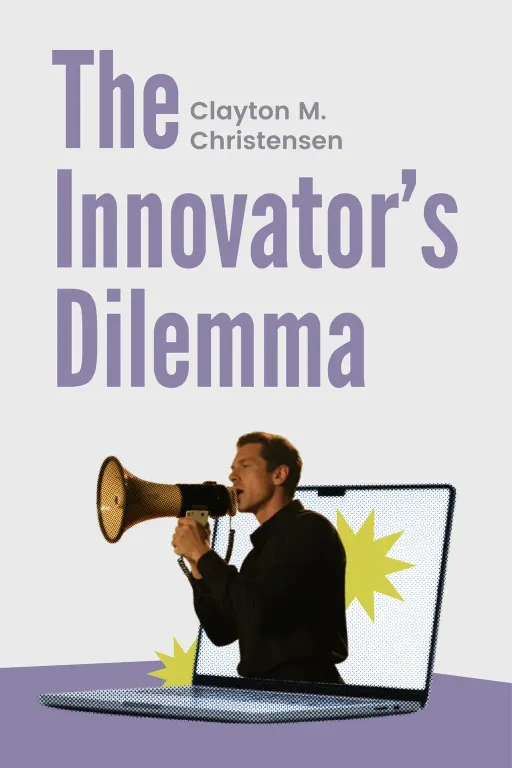
The Innovator's Dilemma
Clayton M. Christensen
An exploration of why successful companies can fail when confronted with disruptive technologies. Clayton M. Christensen examines the disk drive industry and other examples to illustrate how good management practices can inadvertently lead to a company's downfall, and offers strategies for navigating disruptive innovation.
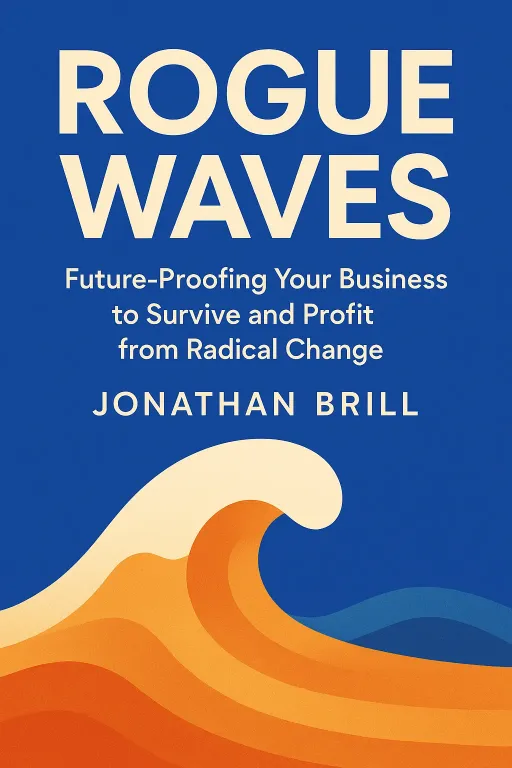
Rogue Waves
Jonathan Brill
Navigate the turbulent waters of modern business with 'Rogue Waves.' Jonathan Brill provides an actionable framework for anticipating and adapting to rapid change, turning potential threats into opportunities for resilient growth. Learn how to future-proof your organization and thrive in an increasingly volatile world.
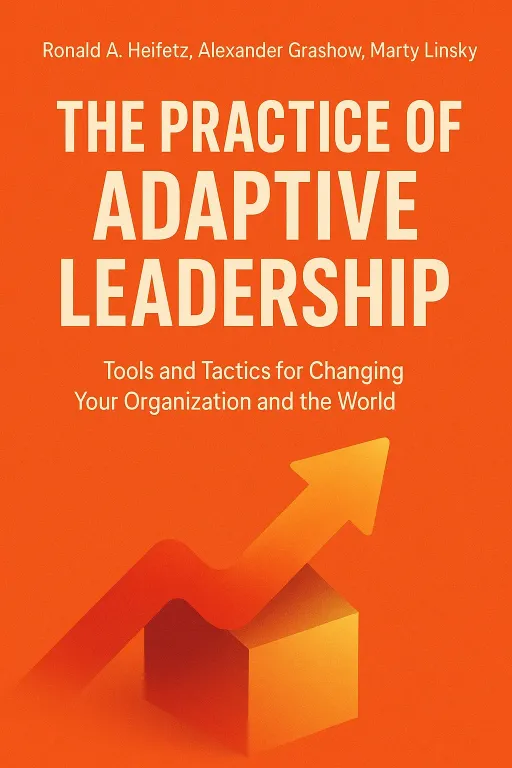
The Practice of Adaptive Leadership
Ronald A. Heifetz
A practical guide to adaptive leadership, providing tools and tactics for mobilizing people to tackle tough challenges and thrive in a changing world. It draws on real-world experiences and offers straightforward, accessible resources to help readers make progress on important issues.
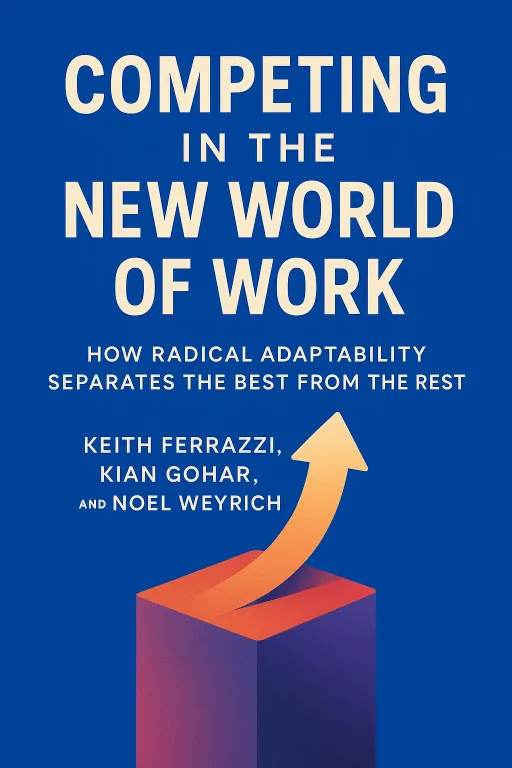
Competing in the New World of Work
Keith Ferrazzi
A timely and powerful guide to help leaders and organizations successfully adapt and compete in the post-pandemic era. It provides research-based methods for maximizing collaboration and inclusion, anticipating change, and making organizations radically adaptable to the future.
The Agile Leader
Simon Hayward
In 'The Agile Leader', Simon Hayward provides a blueprint for creating an agile organization in the digital age. This book explores how leaders can foster innovation, adapt to rapid changes, and drive success by embracing agility, challenging the status quo, and empowering teams. Discover how to navigate the complexities of the modern business landscape and thrive in an era of constant disruption.
The Hard Thing About Hard Things
Ben Horowitz
"The Hard Thing About Hard Things" is a brutally honest guide to the grueling reality of being a CEO. Written by Ben Horowitz, co-founder of the venture capital firm Andreessen Horowitz, the book dispenses with the positive spin common in most management literature. Horowitz argues that while it is exhilarating to start a company, it is excruciating to run one. He focuses entirely on the "struggle"—the moments when the market crashes, the product fails, and you run out of cash. The most famous concept in the book is the distinction between the Peacetime CEO and the Wartime CEO. Horowitz explains that management techniques must change drastically depending on the company's context. A Peacetime CEO focuses on fostering culture, encouraging creativity, and expanding the market. A Wartime CEO, however, has no time for consensus. They must be paranoid, dictatorial, and focused solely on immediate survival. The book warns that most leaders fail because they cannot adapt their style when the context shifts. Horowitz also addresses the intense psychological toll of leadership. He asserts that the most difficult skill for a CEO is managing their own psychology while everyone else looks to them for answers. "The Hard Thing About Hard Things" offers no silver bullets, only "lead bullets." It teaches that there is no secret formula for fixing a broken company, only the hard work of making difficult, often painful decisions to keep the business alive.

Measure What Matters
John Doerr
A behind-the-scenes look at how Objectives and Key Results (OKRs) have driven success at Google, the Gates Foundation, and other organizations. Learn how to implement this powerful goal-setting system to focus efforts, align teams, track progress, and achieve ambitious goals.

Zero to One
Peter Thiel
"Zero to One" is a condensed manifesto on the mechanics of innovation written by legendary contrarian and investor Peter Thiel, with notes from Blake Masters. The book attacks the conventional wisdom of Silicon Valley, arguing that the goal of a startup is not to compete in an existing market but to create a new market entirely. Thiel distinguishes between two types of progress. Horizontal Progress, or going from 1 to n, involves copying things that work. This is globalization. Vertical Progress, or going from 0 to 1, involves doing something nobody has ever done before. This is technology. Thiel posits that the single most important task for an entrepreneur is to find a singular truth that very few people agree with—a Secret—and build a business around it. The most controversial argument in the book is the defense of Monopoly. Thiel asserts that competition is for losers. In a competitive market, profit margins are ground down to zero. A creative monopoly, however, generates such massive profits that it can afford to invest in long-term innovation and the welfare of its employees. The book challenges the reader to build a company that is so unique it has no substitutes.