Beyond the Obvious: How 'First Principles' Thinking Unlocks Breakthroughs.
Golden Hook & Introduction
SECTION
Nova: What if the very way you've been taught to solve problems is holding you back from your next big breakthrough? Forget 'best practices' for a moment.
Atlas: Oh, that's a bold claim, Nova. Are you saying years of experience can actually be a hindrance? Because that's going to resonate with a lot of our listeners who are constantly pushing boundaries.
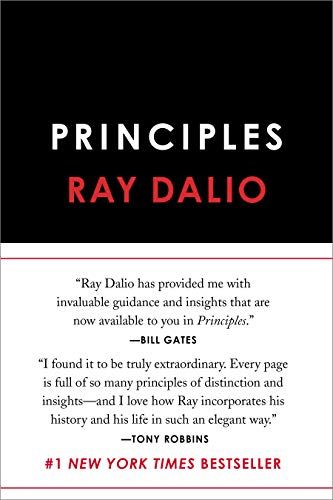
Nova: Well, Atlas, not exactly a hindrance, but perhaps a blind spot. We often default to solving problems by analogy, by looking at what's been done before. But true breakthroughs? They come from something far more radical: thinking from first principles. Today, we're diving into that profound concept, inspired by the powerful insights from Ray Dalio's "Principles" and Peter Thiel's "Zero to One."
Atlas: Okay, so it's not just theory; it's battle-tested. I'm curious, what makes Dalio such a compelling voice on this?
Nova: What's fascinating about Dalio is his journey. He wasn't just an academic theorizing about principles. He built Bridgewater Associates into one of the most successful hedge funds globally by rigorously applying his principles, literally codifying his entire operating system. He took his real-world experiences, failures, and successes, and distilled them into a repeatable framework. It’s a testament to the idea that these aren't just abstract thoughts; they're blueprints for real-world excellence.
Atlas: That makes sense. It sounds like a formula for success forged in the fires of high-stakes finance. But what exactly this 'first principles' magic? It sounds a bit like an esoteric philosophy.
Deconstructing Reality: What First Principles Thinking Really Means
SECTION
Nova: It’s anything but esoteric, Atlas. It's actually a mental superpower. Most of us, when faced with a problem, tend to look at how others have solved similar problems. We use analogies. If someone built a slightly better car, we try to build an even better car. That’s incremental improvement.
Atlas: Right, like optimizing an existing model, which feels like a very practical, strategic approach for a lot of people. It’s about continuous improvement.
Nova: Exactly. But first principles thinking is different. It means breaking things down to their most fundamental truths, to the bedrock assumptions, and then reasoning up from there. It's asking: "What are the absolute, undeniable truths about this situation?" not "How has this been solved before?"
Atlas: So, it's about asking 'why is it this way?' until you hit bedrock, until you can't break it down any further. Can you give an example of how someone actually this?
Nova: Absolutely. Think about Elon Musk and SpaceX. Before SpaceX, rockets were incredibly expensive. The conventional wisdom was that rockets are inherently costly. Most people would try to find ways to make rockets 10% cheaper, make the fuel more efficient, or streamline assembly. That's analogical thinking.
Atlas: I imagine a lot of engineers were doing just that, trying to shave off costs here and there.
Nova: But Musk didn't accept the premise. He didn't ask, "How can we build a cheaper rocket?" He asked, "What a rocket, at its most fundamental level?" And the answer isn't "an expensive piece of technology." The answer is: "A rocket is made of aerospace-grade aluminum alloys, titanium, carbon fiber, and oxygen."
Atlas: Oh, I see where this is going.
Nova: He then looked up the market price of those raw materials. And what he found was astonishing: the raw materials for a rocket cost about 2% of the price of a completed rocket. The cost wasn't in the materials; it was in the assembly, the legacy systems, the entrenched processes.
Atlas: Wow, that's a stark contrast. So it's about realizing the true cost isn't what you're paying, but what the components actually cost at their most basic level.
Nova: Precisely. By breaking it down to those first principles – the raw materials and their intrinsic value – he could then reason up. He realized he could build rockets in-house for a fraction of the cost, leading to reusable rocket designs and a complete disruption of the space industry. It was a radical solution born from radical deconstruction.
Atlas: But isn't breaking things down that far incredibly time-consuming, especially for someone trying to move fast and build? It feels like it could slow you down.
Nova: Initially, yes, it requires a deeper dive. But Dalio would argue that the initial investment in identifying those fundamental principles and building from them actually time and unlocks far greater possibilities in the long run. It prevents you from building on shaky assumptions that will eventually crumble. It gives you unprecedented clarity.
Atlas: So it's not just about being smart, it's about being relentlessly curious to the point of deconstruction. I can see how that challenges assumptions, especially for those of us who value building with purpose. It’s about building the thing, not just thing.
Beyond Incremental: Applying First Principles for 'Zero to One' Breakthroughs
SECTION
Nova: And that naturally leads us to the second key idea we need to talk about, which often acts as the ultimate goal of first principles thinking: achieving "zero to one" breakthroughs, a concept Peter Thiel champions in his book of the same name.
Atlas: Zero to one. That sounds incredibly ambitious. I imagine many of our listeners, as visionaries and strategists, are always aiming for that kind of impact.
Nova: They absolutely are. Thiel argues that true innovation isn't about going from one to N – like making a slightly better smartphone or a slightly more efficient car. That's horizontal progress, copying what works and making incremental improvements.
Atlas: Right, improving on existing ideas, which is what a lot of businesses do successfully.
Nova: But "zero to one" is about vertical progress. It's about creating something entirely new, something that hasn't existed before. It's going from nothing to something. And you can only do that by asking fundamental questions, the kind of questions first principles thinking enables.
Atlas: That's a powerful distinction. So it's not just about efficiency, it's about paradigm shifts. How does that look in practice, beyond rockets?
Nova: Think about the invention of the light bulb. Before Edison, people used candles, oil lamps, gaslights. If you were thinking by analogy, you'd be trying to make a better candle – one that burns longer, brighter, with less smoke. That's one to N.
Atlas: And honestly, a lot of people would have been thrilled with a better candle. It would have been a valuable improvement.
Nova: But Edison didn't try to make a better candle. He questioned the fundamental principles of illumination itself: "What actually produces light? Can we create light using electricity in a vacuum?" He broke down the problem of light to its most basic physics and chemistry.
Atlas: That's a completely different starting point. He wasn't optimizing an existing solution; he was inventing a new one.
Nova: Exactly. He wasn't just improving upon existing light sources; he was creating an entirely new category, a new industry. That's a zero to one moment. It wasn't about a better way to burn fuel for light; it was about a completely different physical process.
Atlas: Wow, that's incredibly clear. But for our listeners who are visionaries, strategists, and builders, how do they know if they're asking the fundamental questions? How do you even begin to identify those 'zero to one' opportunities in their own projects, when they're looking at complex systems?
Nova: It starts with profound curiosity and a willingness to look foolish. The easiest way is to identify one core assumption in your current project or industry – something everyone just as true. Then, just like a persistent child, ask "why?" five times. Why is it done this way? Why is that the constraint? Why is this material so expensive?
Atlas: That sounds like a disciplined form of rebellion against the status quo, which I think a lot of our listeners can relate to. It’s about not just building, but building and perhaps even building a different of future.
Synthesis & Takeaways
SECTION
Nova: That’s it, Atlas. First principles thinking isn't just an analytical tool; it's the method for achieving those "zero to one" breakthroughs. It's about cultivating a mindset that values radical clarity, the courage to challenge every assumption, and the vision to create something truly new.
Atlas: So, it's about empowering visionaries to not just adapt, but to fundamentally redefine their playing field. It unlocks a new level of strategic clarity and impact, and it really connects with that drive for positive change and legacy.
Nova: Absolutely. This isn't just for tech giants or hedge fund managers. It’s for anyone, especially those driven by purpose, who wants to create lasting positive change. It's about building a legacy of true innovation, not just incremental tweaks.
Atlas: It makes me think about that deep question from the book: "What is one core assumption in current project that, if re-evaluated from first principles, could lead to a radically different approach?" That's a powerful challenge to bring to your Monday morning meeting.
Nova: It truly is. Our challenge to you, our visionary listeners, is to identify just one such assumption this week. Ask "why?" five times. Strip away the layers of conventional wisdom and see what fundamental truths emerge. You might just unlock your own zero to one moment.
Atlas: Absolutely. It's about trusting your instincts, challenging the obvious, and building with purpose. Don't just iterate; innovate from the ground up.
Nova: This has been a powerful dive into going beyond the obvious.
Atlas: Indeed. Until next time, keep digging for those first principles.