Designing Your Personal Productivity System
Golden Hook & Introduction
SECTION
Nova: Atlas, I have a challenge for you. We're talking productivity today, and I want your five-word review of the entire genre of productivity books. Go.
Atlas: Oh, that's brutal. Okay. Uh... "More systems, less actual doing."
Nova: Oh, a little cynical, but I feel that! That hits close to home for a lot of people, myself included. It’s exactly why we need to talk about two books today that really cut through that noise.
Atlas: Tell me more, because honestly, the endless parade of "hacks" and "ultimate guides" can be exhausting, especially when you're trying to navigate a dynamic field like tech. You just want something that.
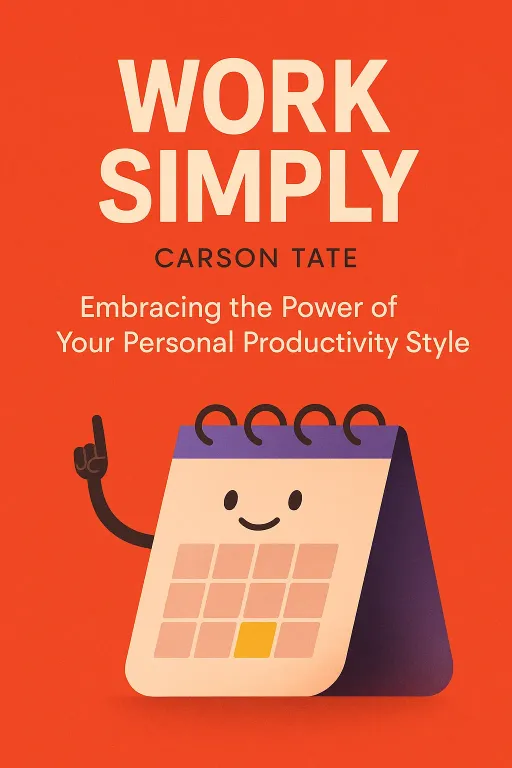
Nova: Exactly. And that's where Carson Tate's "Work Simply" comes in. Tate, a highly respected business consultant, isn't about generic advice. Her book is celebrated for its deeply personal approach, which was quite a refreshing take when it first came out. It's about understanding.
Atlas: So, less "do these ten things" and more "who are you, really?"
Nova: Precisely. And then, complementing that, we have David Allen's "Making It All Work." This book builds upon the foundational principles of his renowned "Getting Things Done," or GTD, methodology. Allen's work has achieved almost legendary status in productivity circles for its systematic, comprehensive approach to managing everything.
Atlas: Right, GTD is practically a household name among high-achievers, though I've heard some find it a bit... intimidating to get started with.
Nova: True, it can seem like a monumental task at first glance, but its enduring power lies in its rigor. Together, these books offer both the 'why'—understand your unique style—and the 'how'—implement a comprehensive system for sustained productivity. Today, we're exploring how to stop chasing generic hacks and instead build a system that genuinely works for.
Understanding Your Productivity Style (Carson Tate)
SECTION
Nova: So, let's start with Carson Tate and "Work Simply." Her core premise is that there's no one-size-fits-all solution for productivity because we all operate differently. She identifies four distinct productivity styles.
Atlas: Four, huh? I'm already trying to guess which one I am.
Nova: Well, let's see. First, you have the. These are people who thrive on deadlines, love to tackle the most important tasks first, and are very results-oriented. Think of a project manager who lives by the critical path, always asking, "What's the single most impactful thing I can do right now?"
Atlas: Oh, I know a few of those. They're the ones who come in, laser-focused, and just knock out the big rocks before anyone else has even finished their coffee.
Nova: Then there's the. Planners love structure, detailed schedules, and breaking down projects into sequential steps. They're the ones with color-coded calendars and meticulously organized task lists. They feel calm when they know exactly what's coming next.
Atlas: That sounds like me when I'm trying to learn a new coding language. I need the roadmap, the curriculum, step-by-step. Otherwise, it's just chaos.
Nova: Exactly. Next, the. Arrangers are all about collaboration, flexibility, and managing multiple projects simultaneously. They're excellent at networking, connecting people, and adapting to changing circumstances. They might not have the most rigid schedule, but they excel at juggling many balls in the air and making sure everyone is aligned.
Atlas: That's probably a lot of people in tech leadership roles, constantly pivoting between teams, stakeholders, and unexpected issues. It's less about a linear path and more about dynamic orchestration.
Nova: And finally, the. These individuals think in big pictures, love brainstorming, and prefer visual tools like mind maps, whiteboards, or flowcharts. They're the creative problem-solvers, often needing to see the whole landscape before diving into details. They can get bogged down by too much text or rigid structure.
Atlas: So, the architect of a new system, sketching out the entire ecosystem before writing a single line of code. I can definitely see how trying to force a Visualizer into a Planner's detailed spreadsheet would be a recipe for disaster.
Nova: Right? Tate's genius, and why her book received such widespread acclaim, is that she doesn't tell you one style is better than another. She provides assessments and observational tools to help you identify dominant style.
Atlas: But how does someone in a demanding tech career, especially one in transition, find the time to figure this out without slowing down? It almost feels like another layer of self-analysis when you're already swamped.
Nova: That's where the insight comes in. It's not about adding more work, but about. If you’re a Visualizer trying to force yourself into a Planner's linear checklist, you're constantly fighting your natural tendencies. Tate suggests subtle shifts: a Prioritizer might use a "top three priorities" list, while a Visualizer might create a project storyboard. It’s about leveraging your innate strengths, not trying to conform to someone else's ideal.
Atlas: That makes perfect sense. So, instead of feeling like a failure because the latest "ultimate productivity app" doesn't click for you, you realize it's just not designed for your brain. That's actually really empowering.
Nova: Absolutely. It’s about self-compassion in productivity, which leads to sustainable habits, not just temporary bursts of efficiency.
Building a Comprehensive Productivity System (David Allen)
SECTION
Nova: Now, once you know you are as a productive individual, that's the 'why.' But then you need the 'how.' How do you actually manage the sheer volume of commitments, information, and ideas that come your way, especially in tech? That's where David Allen's "Making It All Work" and his GTD methodology truly shine.
Atlas: Okay, GTD. I know the acronym, but for those who might find it a bit overwhelming at first glance, what's the core promise here?
Nova: The core promise, the one that has made it a foundational text for so many leaders and innovators, is achieving a "mind like water." Imagine throwing a pebble into a calm pond. The water reacts precisely to the impact, then returns to calm. It doesn't overreact, it doesn't underreact. It simply responds appropriately.
Atlas: That sounds like a dream for anyone juggling a career transition, learning new skills, and trying to stay ahead in tech. My mind often feels more like a boiling cauldron than a calm pond.
Nova: Exactly. Allen provides a five-step framework to achieve this:
Atlas: Let's break that down. Capture sounds like... getting everything out of your head?
Nova: Precisely. Every idea, every task, every commitment, no matter how small or large, goes into an "inbox." This could be a physical tray, a digital note, a voice memo. The key is to get it out of your head, so your brain stops trying to remember it.
Atlas: Okay, so I capture all the random thoughts about a new project idea, a bug report, a training course I need to take, an email I need to send. Got it. What's next?
Nova: Then you. For each captured item, you ask: "What is it?" "Is it actionable?" If not, you either trash it, put it in a reference file, or put it on a "someday/maybe" list. If it actionable, you ask, "What's the very next physical action required to move this forward?"
Atlas: Ah, the "next action." That's a key GTD concept, right? So, for "learn new programming language," the next action isn't "learn language," it's "find beginner's tutorial for language X."
Nova: You've got it! That specificity is critical. It overcomes procrastination by making the first step undeniable. After clarifying, you. This is where you put your "next actions" into appropriate lists. Projects go into a project list. Calendar items go on your calendar.
Atlas: So, it's not just one big to-do list, but context-specific lists. That makes sense for someone who might be switching between deep work on code, then meetings, then research.
Nova: Yes, and the beauty is that it reduces decision fatigue. When you have five minutes between meetings, you look at your "@computer" list, pick the top next action, and just it. No mental overhead.
Atlas: And Reflect? That sounds important.
Nova: It's vital. You regularly review your lists, your projects, your goals. This could be daily, but crucially, a weekly review is non-negotiable. It's where you get perspective, clear out old items, and make sure everything is still aligned with your priorities. It's how you maintain the "mind like water."
Atlas: So, it's the systemic check-up to ensure the engine is still running smoothly and pointed in the right direction. Because in tech, priorities can shift so fast, a weekly review would be essential.
Nova: Absolutely. And finally,. This is simply doing the work, making trusted choices about what to do in the moment, confident that everything else is captured and organized. Allen’s work, while it demands initial effort, is universally praised for its power to bring order to chaos, giving people the mental space to innovate and lead.
Synthesis & Takeaways
SECTION
Nova: So, we've got Carson Tate telling us to understand our unique style, and David Allen giving us a robust system to manage everything. How do these two seemingly different approaches fit together, Atlas?
Atlas: That's what I'm thinking. On the surface, Tate is about internal self-discovery, and Allen is about external structure. But I'm seeing a powerful synergy here. Tate's insights help you Allen's system.
Nova: Exactly! If you're a Visualizer, your GTD "Organize" step might heavily rely on kanban boards or mind maps, not just linear text lists. If you're a Prioritizer, your "Engage" step will naturally gravitate towards tackling the highest-impact next actions first, without getting lost in less critical tasks.
Atlas: So, you use Tate to understand your strengths and preferences, and then you apply those insights to adapt the GTD framework, making it truly. It's about personalizing the "how" based on the "who."
Nova: It transforms GTD from a potentially rigid system into a flexible framework that aligns with your natural way of working. This combination is incredibly powerful, especially for someone navigating a career transition in tech. You need the clarity to learn new things, the system to manage complex projects, and the self-awareness to do it all in a way that doesn't lead to burnout.
Atlas: It's not just about getting more done; it's about getting the things done, efficiently and sustainably, in a way that feels authentic. That’s how you optimize your tech contributions and maintain mental clarity amidst constant change. It's intelligent design for your work life.
Nova: Precisely. The real power isn't in blindly following someone else's rules, but in designing a system that respects your unique cognitive architecture and allows you to truly engage with your most impactful work. So, for our listeners, what's your "next action" in understanding your own productivity, or in designing a system that finally works for you?
Atlas: Yeah, take that first small step towards clarity. It could be as simple as writing down everything that's currently on your mind.
Nova: This is Aibrary. Congratulations on your growth!