Stop Guessing, Start Measuring: The Guide to Data-Driven Talent Success.
Golden Hook & Introduction
SECTION
Nova: What if the most human part of your business, the part that relies on gut feelings and intuition—hiring and talent—is actually where you're making your biggest mistakes by not being scientific?
Atlas: Whoa, Nova. That's a pretty bold statement right out of the gate. I mean, we're talking about people here, not widgets. Isn't there an art to recognizing potential, to building a team that just?
Nova: Absolutely there is, Atlas. And that's precisely the tension we're exploring today. We're diving into how that art, that crucial human connection, can be profoundly enhanced and made more impactful by embracing science and data. Our guide for this journey is "Stop Guessing, Start Measuring: The Guide to Data-Driven Talent Success," and we're pulling insights from two foundational books.
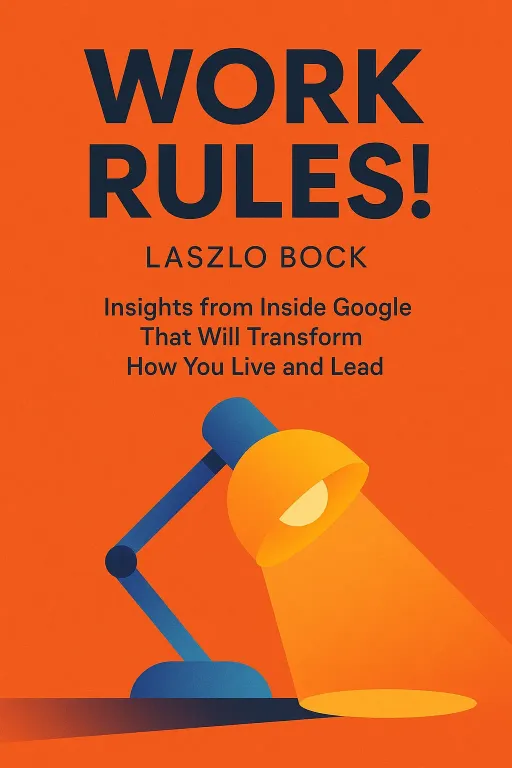
Atlas: Right. First up, we've got Laszlo Bock's groundbreaking book, "Work Rules!" Bock, who was Google's Senior Vice President of People Operations, basically wrote the bible on how a tech giant applied rigorous data science to every single aspect of HR. This isn't just theory; it's what Google. His book, widely acclaimed, really challenged the traditional HR mindset, showing how to demystify complex people problems with hard data.
Nova: And then, we're looking at "The Alliance" by Reid Hoffman, Ben Casnocha, and Chris Yeh. Coming from the heart of Silicon Valley, this book introduced the revolutionary concept of 'tours of duty,' a pragmatic framework for talent development that really shifted how we think about employer-employee relationships in a rapidly changing world. It's about building explicit trust, not just vague loyalty.
Atlas: So, today we're asking: How do we marry the scientific rigor of Google's approach with the trust-building frameworks of 'The Alliance' to move beyond subjective hiring and truly nurture talent? It’s about building stronger, more sustainable teams, not just filling seats.
The Scientific Art of Talent: Google's Data-Driven HR
SECTION
Nova: So, let's talk about Google. Everyone knows them for data in search, in advertising, but applying it to? That's where Bock's brilliance shines. He essentially said, "Let's treat HR like we treat product development: with hypotheses, experiments, and measurable outcomes."
Atlas: That makes sense. For listeners out there who are always looking for strategic ways to build cultures, this could be a game-changer. But how did Google actually that? What's a concrete example of them taking something that felt purely intuitive and turning it into a measurable science?
Nova: One of their most famous initiatives was "Project Oxygen." They observed that their best managers had a huge impact on team performance and retention, but they couldn't quite put their finger on. The conventional wisdom was that technical expertise was paramount for a manager.
Atlas: Oh, I've heard that one. The best engineer makes the best engineering manager, right? That's a common assumption in high-tech environments.
Nova: Exactly! But Google, instead of guessing, collected mountains of data: performance reviews, feedback surveys, interviews. They analyzed over 10,000 observations about managers. And what did they find? The data completely overturned that assumption. Technical expertise ranked dead last among the eight key behaviors of great managers.
Atlas: Whoa. So what matter? What was the surprising insight that came out of all that data?
Nova: The top two traits were being a good coach and empowering your team, not micromanaging. Things like expressing interest in team members' well-being, helping with career development, and being a good communicator. They built training programs around these data-backed insights, and manager quality across Google significantly improved, leading to better team performance and retention.
Atlas: That's fascinating. I can definitely see how that would resonate with anyone trying to build a resilient, high-performing structure. It’s about building trust and connection, but with a data-driven blueprint. But for many organizations, that kind of data infrastructure sounds like a massive undertaking. How can a smaller company, perhaps without Google's resources, apply these "scientific art" principles without getting overwhelmed?
Nova: That's a great question, and it's a common criticism of Bock's work – not everything scales directly. But the core principle is about asking measurable questions. Instead of saying, "We need better managers," ask, "What specific behaviors do our managers exhibit that we can observe and measure, even anecdotally at first?" Then, design small experiments. For example, if you suspect psychological safety is an issue, you could start with anonymous pulse surveys or even just structured feedback sessions, looking for patterns. It’s about starting small, with one key assumption, and designing a measurable experiment.
Atlas: I see. So it's not about replicating Google's entire HR department, but adopting the of continuous experimentation and measurement, even in areas that feel inherently "soft." It’s about bringing that precision to the parts of the business that feel like an art.
Building Trust Through 'Tours of Duty': The Alliance's Framework for Talent Development
SECTION
Nova: Precisely, Atlas. And that naturally leads us to the second key idea we need to talk about, which often acts as a counterpoint or a necessary complement to this data-driven approach: the concept of 'tours of duty' from "The Alliance." Even with all that data, how do you top talent, and more importantly, how do you build trust in a world where lifelong employment is increasingly a myth?
Atlas: That's a critical challenge for anyone trying to build sustainable growth. The traditional idea of a "job for life" is long gone, but the desire for stability and purpose hasn't vanished. How do you bridge that gap without making employees feel disposable?
Nova: That's exactly what Hoffman and his co-authors address. They argue that instead of a vague, open-ended employment contract, companies and employees should enter into "tours of duty." These are explicit, time-bound agreements with clear, mutually beneficial objectives.
Atlas: So, it's like a mission, or a specific project with a beginning, middle, and end, rather than just an indefinite role? Can you give an example of what a "tour of duty" might look like in practice?
Nova: Absolutely. Imagine a software engineer joining a company for a two-year "tour of duty." The explicit agreement might be: "You will lead the development of our new mobile app, and in return, we will provide you with leadership training and mentorship, and help you build your public profile in the tech community." Both sides have clear deliverables and clear benefits.
Atlas: That's a great way to put it. It sounds like it fosters trust because expectations are transparent from the outset. For a strategic leader, this aligns employee growth with company objectives, rather than just hoping for the best. It’s about building trust through clarity, not just good intentions.
Nova: Exactly. It's about investing in an employee's "career capital" – their skills, network, and reputation – in exchange for their dedicated contribution to a specific company goal. It acknowledges that employees will eventually move on, but it ensures that both parties benefit immensely from the time they spend together. It's about making that time as high-impact and mutually beneficial as possible.
Atlas: I can see how that would appeal to the modern workforce, who value growth and clear pathways. But what's the risk here? Couldn't this make employees feel like temporary contractors, rather than valued members of a team, if not implemented carefully?
Nova: That's a valid concern, and it's a common criticism. The authors emphasize that it's crucial for these tours to be defined and truly beneficial to the employee's long-term career. It's not about cutting people loose; it's about making each engagement meaningful and supporting their development, even if that development eventually leads them to another opportunity. It’s about fostering a "network of alliances" rather than just a traditional workforce. The explicit agreement trust because there are no hidden expectations. It's a pragmatic approach to talent that acknowledges reality while still prioritizing human connection and growth.
Synthesis & Takeaways
SECTION
Nova: So, when you bring these two ideas together—Google's relentless data-driven approach to understanding people, and 'The Alliance's' structured, trust-building 'tours of duty'—you get a truly powerful framework for talent success. It's no longer about guessing who to hire or how to develop them.
Atlas: It really is. It’s about combining that keen eye for potential, that intuition we all value, with hard data and clear frameworks. You're not just hoping for the best; you're measuring, adapting, and building trust through transparency. This fundamentally solves the problem of subjective hiring by providing a structured, data-informed approach to talent acquisition and growth.
Nova: Right. It's about moving from "art versus science" to "art science." Your intuition guides the questions, and the data provides the answers, helping you truly identify and nurture potential, building stronger, more resilient teams and cultures. It's about scaling with intention, as someone who builds cultures would understand.
Atlas: Absolutely. For anyone listening who's driven by impact and sustainable growth, this is about making your talent strategy as precise and effective as your product strategy. It's about building trust, but doing it through clear, measurable steps.
Nova: And that brings us to our tiny step for the week. We challenge you to identify one key assumption in your current hiring process—maybe it's about what makes a good candidate, or why people leave—and design a small, measurable experiment to test its validity next week. Don't guess; start measuring.
Atlas: And we'd love to hear about your experiments! Share your insights and what you discover on social media. Let's build this community of data-driven talent whisperers together.
Nova: This is Aibrary. Congratulations on your growth!