The Narrative Instinct: Why Stories Drive All Great Visuals
Golden Hook & Introduction
SECTION
Nova: What if I told you that the most visually stunning image you’ve ever created, the one that stops people in their tracks and makes them linger, could still be fundamentally failing to truly connect? That its power is limited, not by its aesthetics, but by something far more primal it might be missing?
Atlas: Missing what? I mean, for a visual creator, isn't "stunning" the whole point? If it looks incredible, if it's got that perfect composition and color, what else could it possibly need? I imagine a lot of our listeners, who have such a keen eye for beauty, are wondering the same thing.
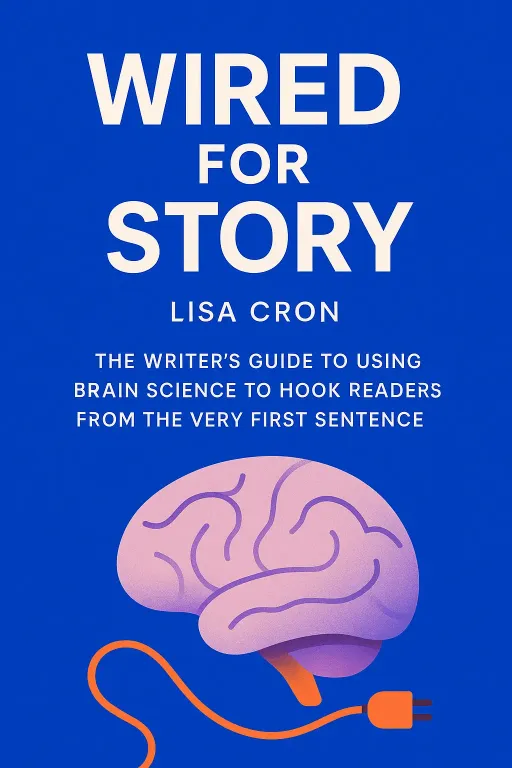
Nova: That’s a fantastic question, Atlas, and it gets right to the heart of what we’re exploring today. Because while aesthetics are absolutely crucial, they’re often just the surface. What’s missing, what’s often the hidden current beneath every truly impactful visual, is story. Pure, unadulterated narrative. We’re talking about insights from brilliant minds like Lisa Cron, author of "Wired for Story," and the legendary Joseph Campbell, who gave us "The Hero with a Thousand Faces." Their work fundamentally changes how we understand visual communication.
Atlas: So, we’re talking about how to make visuals not just, but profoundly? To take that innate aesthetic sense our listeners have and elevate it into something that resonates on a much deeper, almost subconscious level?
Nova: Exactly! It's about moving beyond just creating something beautiful, to creating something unforgettable and deeply meaningful. And it all starts with understanding how our brains are actually built.
The Inescapable Narrative Instinct: Why Our Brains Crave Stories
SECTION
Nova: You see, the human brain isn't primarily a logic processor. It's a story processor. From the moment we wake up until we fall asleep, our brains are constantly constructing narratives to make sense of the world around us. Lisa Cron, in "Wired for Story," makes this incredibly clear. She argues that stories aren't just entertainment; they're our primary way of understanding, remembering, and connecting with reality.
Atlas: Okay, but how does "brain wiring" translate into a better photo or a more impactful design? For someone who spends hours perfecting light, shadow, and composition, understanding neural pathways might feel a bit abstract. It sounds like a lot of extra work, when the goal is a beautiful output.
Nova: That's a fair point, and it’s a common misconception. It’s not about adding "extra work" in the sense of a checklist. It's about a foundational understanding that all that aesthetic work. Think about it this way: imagine I give you a list of ten random facts – say, the average rainfall in the Amazon, the capital of Mongolia, and the chemical formula for water. You might remember a few. Now, imagine I tell you a story about an adventurer who travels through the Amazon, gets lost near the Mongolian capital, and survives by finding fresh water. Which one sticks?
Atlas: Oh, the story, every single time! It’s not even a question. I can already picture the adventurer, the struggle… Wow, that’s such a clear distinction.
Nova: Precisely! The story provides context, emotional connection, and a framework for memory. Without that framework, even the most visually striking scene, if it lacks an inherent narrative, can feel… empty. The viewer might admire it, but they won't it. They'll be left searching for meaning, for that "why" that their story-hungry brain craves. It’s the difference between seeing a beautiful flower and understanding the struggle for survival it represents.
Atlas: So, if my goal as a visual storyteller is to create visuals that truly people, not just impress them, I need to understand this deep-seated human need for narrative first. It’s about giving the eye something beautiful to look at, but giving the brain something meaningful to grasp onto.
Nova: Absolutely. It’s about leveraging that deep-seated need. And once we understand our brains crave stories so much, the next crucial step is understanding stories resonate most deeply, across all cultures and all times.
Unlocking Archetypal Power: Weaving Universal Narratives into Visuals
SECTION
Nova: That's exactly right, Atlas. And once we understand our brains crave stories, the next step is understanding stories resonate most deeply. This is where Joseph Campbell's monumental work, "The Hero with a Thousand Faces," becomes incredibly powerful. Campbell revealed that despite endless variations, all human stories, myths, and legends share a common underlying structure: the monomyth, or the Hero's Journey.
Atlas: The Hero's Journey! I’m familiar with the concept, but it always felt so… grand. Like something for epics or blockbuster movies. How does a visual creator, someone focused on a single image, a logo, or a short sequence, actually a Hero's Journey into their work without making it feel forced or overly complex? It sounds massive.
Nova: That's the beauty of it. It's not about literally depicting every stage of the journey in a single visual. It's about understanding the and that resonate with those stages. Think about a brand logo that subtly implies transformation or aspiration. Or a photograph that captures a solitary figure at a crossroads, symbolizing the "call to adventure" or the moment of decision.
Atlas: Can you give an example? Like, a concrete visual that evokes this without being a full movie storyboard?
Nova: Of course. Consider a product advertisement showing a person struggling with a problem, then discovering the product, and finally, a triumphant, empowered version of themselves. That’s a mini Hero’s Journey right there – the 'ordinary world,' the 'call to adventure', the 'supernatural aid', and the 'resurrection' or 'return with the elixir'. Visually, it’s about conveying that emotional arc. A simple shift in lighting, a change in posture, or the symbolic use of color can communicate these profound stages.
Atlas: So it's about using my intuitive eye, that natural observer quality our listeners possess, but with this deeper understanding of these universal patterns, to create something that feels timeless and deeply resonant, almost instinctively. It’s making the aesthetic sense a powerful vehicle for those stories.
Nova: Precisely! Your aesthetic sense, which is already so finely tuned, can become the perfect medium for these timeless narratives. It's about moving from simply composing an image to. When you tap into these archetypes, you're not just creating a visual; you're triggering something ancient and deeply understood within the viewer's psyche. You're giving them a narrative they already know, but in a fresh, compelling visual language.
Atlas: That’s fascinating. It elevates the craft so much. It's not just about what looks good, but what feels on a human level.
Synthesis & Takeaways
SECTION
Nova: Exactly. Ultimately, the most striking image, the most beautiful design, achieves its true connection when it carries a hidden current of story. It's about remembering that our brains are hardwired for narrative, as Lisa Cron shows us, and that certain narratives, like Joseph Campbell's archetypal journeys, resonate universally. When you, as a visual storyteller, infuse your aesthetic sense with this understanding, you stop just creating pretty pictures and start crafting deeply resonant, unforgettable experiences.
Atlas: It really boils down to making visuals that don't just look good, but something profound. For someone who wants their work to have real impact and foster connection, who cares about growth and well-being, this is huge. It's about using your unique perspective to tell stories that matter to everyone.
Nova: That’s a powerful challenge. So, for our listeners today, recall a visual that has truly stuck with you throughout your life. What story did it tell, implicitly or explicitly? How can you consciously weave more of that narrative magic into your next creation, making your aesthetic sense a powerful vehicle for timeless stories?
Atlas: That’s a wonderful way to put it. Start noticing the stories in the visuals around you, and then, how you can tell your own, with even deeper impact.
Nova: We hope this conversation sparks new insights and inspires your next masterpiece.
Atlas: Thanks for joining us.
Nova: This is Aibrary. Congratulations on your growth!