The Sleep Paradox: Why More Rest Isn't Always Better for Peak Performance
Golden Hook & Introduction
SECTION
Nova: What if I told you that chasing more sleep, without understanding exactly you're sleeping, might actually be making you less sharp, less creative, and ultimately, less effective in your work?
Atlas: Whoa, really? That feels like a direct assault on everything we've been taught about, you know, just getting your eight hours. I mean, we're all constantly told to sleep more, sleep more, but you're saying there's a paradox at play?
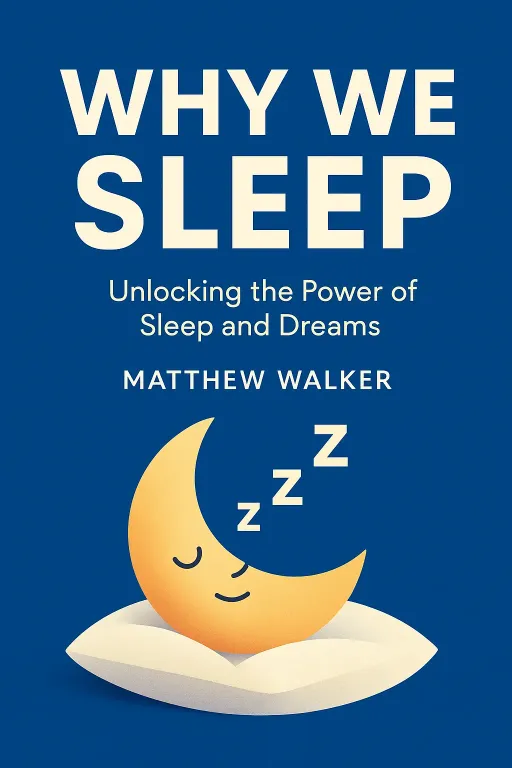
Nova: Absolutely, Atlas. It's the sleep paradox. And today, we're dissecting it, drawing profound insights from two titans in the field. We're looking at the groundbreaking work of Matthew Walker, a neuroscientist whose book "Why We Sleep" has completely reshaped our scientific understanding of rest. And then there's Arianna Huffington, whose personal awakening led to "The Sleep Revolution," advocating for a massive cultural shift in how we value rest, especially in high-performance environments.
Atlas: Right, both coming from such different angles – the rigorous science and the personal, cultural advocacy – yet converging on this absolutely critical truth. So, for our listeners, the scientists, the strategists, the innovators, what's the core misconception we're tackling here? What's the blind spot?
Nova: The blind spot, Atlas, is the almost singular focus on duration. We fixate on getting 'enough' hours, as if sleep is a simple on/off switch where quantity is the only metric. But true understanding reveals that the and of those hours are far more critical for sustained cognitive function, memory consolidation, emotional regulation, and yes, even immune function. Overlooking these nuances doesn't just make you tired; it actively hinders your ability to think deeply, innovate, and achieve peak performance.
The Blind Spot of Sleep Duration & The Power of Neurobiology
SECTION
Atlas: Okay, so it’s not just about hitting eight hours. It’s about happens in those hours. Can you break down what’s actually going on in our brains during sleep that makes it so crucial, beyond just feeling rested? For someone trying to process complex data or brainstorm new product ideas, what does this distinction actually mean?
Nova: Think of sleep not as a passive shutdown, but as an incredibly active, highly orchestrated biological process. Matthew Walker's work meticulously details this. Your brain isn't just idling; it's performing critical maintenance and optimization tasks. We have distinct sleep stages: Non-Rapid Eye Movement, or NREM, and Rapid Eye Movement, REM sleep.
Atlas: NREM and REM. Got it. So, what are they doing?
Nova: During NREM sleep, especially the deep NREM stages, your brain is essentially consolidating memories. It's taking all the new information you absorbed during the day, the data points, the strategic insights, and it's moving them from temporary storage to more permanent archives. It's also critically involved in emotional regulation, literally processing and calming down the day's anxieties. Without sufficient deep NREM, learning is severely impaired.
Atlas: So, if I'm trying to master a new neurobiological concept or analyze a complex market trend, and I skimp on deep sleep, even if I get some hours in, my brain isn't actually cementing that knowledge? It’s like trying to save a massive file to a hard drive that’s only half-connected.
Nova: Precisely! And then there's REM sleep. This is where the magic happens for creativity and problem-solving. During REM, your brain takes all those consolidated memories, all the disparate pieces of information, and starts to weave them together in novel ways. It's like a highly sophisticated neural brainstorming session, connecting seemingly unrelated ideas, leading to those "aha!" moments. This is why you often wake up with solutions to problems you were wrestling with the night before.
Atlas: That's incredible. So, our product development creativity literally depends on REM sleep? It’s not just a nice-to-have; it's a core component of innovative thinking. I mean, we've all pulled all-nighters, thinking we're gaining an edge, but it sounds like we're actively sabotaging our most valuable cognitive assets.
Nova: We are, Atlas. Consider studies where participants were given complex problems. Those who got a full night's sleep, including robust REM cycles, were significantly more likely to solve the problems creatively compared to those who were sleep-deprived. It’s not just about feeling tired; it’s about a profound reduction in your brain's capacity for insight and novel thought. Your brain literally cleanses itself of metabolic byproducts during sleep, reorganizes information, and strengthens neural connections. This isn't passive rest; it's active optimization, vital for deep understanding and genuine insight.
Optimizing Sleep: Timing, Cycles, and Real-World Impact
SECTION
Atlas: Okay, so we absolutely understand quality matters and what our brain is doing. But how do we actually it? You mentioned 'timing' earlier. For someone with a demanding schedule, whether they're a scientist in the lab or a strategist developing a new product, this sounds like another impossible task. How do we respect these intricate biological processes when our lives are anything but regular?
Nova: That's a crucial question, Atlas, and it brings us to the often-overlooked element of timing. Our bodies operate on a sophisticated internal clock, our circadian rhythm, which dictates our sleep-wake cycles, hormone release, and even our cognitive performance throughout the day. The goal isn't just to accumulate hours, but to align those hours with your natural circadian rhythm.
Atlas: So, it's not just I go to bed, but my body is naturally predisposed to go to bed? What happens when that rhythm gets thrown off? And how does this connect to Arianna Huffington's call for a cultural shift?
Nova: Exactly. Think of 'sleep pressure' – the longer you're awake, the more your body craves sleep. But the of when you relieve that pressure matters immensely. If you consistently go to bed at different times, or if you 'sleep in' significantly on weekends to catch up, you're essentially giving your internal clock jet lag every single week. This is often called 'social jet lag'.
Atlas: Social jet lag. I've definitely felt that. That groggy, disoriented feeling on a Monday morning after a late weekend. So, that's not just a minor inconvenience; it's actively disrupting those delicate sleep stages we just talked about?
Nova: It is. Studies show that inconsistent sleep-wake times disrupt your sleep architecture, meaning you get less of that crucial deep NREM and creative REM sleep, even if you're technically in bed for eight hours. This constant disruption can lead to chronic fatigue, impaired decision-making, and a significant drop in cognitive performance. It's a key reason why Matthew Walker describes our modern disregard for sleep as a public health crisis. Arianna Huffington's work comes in here because she emphasizes that for leaders, innovators, and anyone aspiring to peak performance, prioritizing this consistent, high-quality sleep isn't a luxury; it's a strategic imperative. She shares personal anecdotes about how her own burnout led her to understand that pushing through exhaustion ultimately diminishes productivity, creativity, and leadership effectiveness.
Atlas: So, if our brain isn't getting that scheduled 'maintenance' at the right times, and we're constantly fighting our natural biology, our neurobiological insights and product development creativity are literally taking a hit. This explains why so many high-achievers feel perpetually drained, even if they sometimes get enough hours. They're just not getting the of hours, at the.
Nova: Precisely. It's a profound connection between respecting our natural sleep architecture and sustained peak performance. It's not just about energy, but about fostering genuine insight and innovative capacity. When your sleep is consistent and high-quality, your brain functions at its optimal level, making you more adaptable, more resilient, and more capable of complex problem-solving. This is the difference between simply showing up and truly excelling.
Synthesis & Takeaways
SECTION
Nova: So, to synthesize this, the sleep paradox teaches us that it's about respecting the intricate biological dance of sleep, not just logging hours. It's a profound shift from merely counting duration to prioritizing quality and timing. This isn't just about feeling better; it's about unlocking higher cognitive function, deeper insights, and unparalleled creativity.
Atlas: For our listeners, the analytical minds, the strategists, the innovators, what's one immediate, actionable insight they can take from this? How can they start to 'hack' their sleep for deeper neurobiological insights and more creative output, without feeling overwhelmed by all these complex processes you've described?
Nova: The single most impactful step is surprisingly simple: establish a consistent sleep schedule. Go to bed and wake up at roughly the same time every single day, even on weekends. This regular rhythm reinforces your circadian clock, signaling to your brain that it's time for its deep, restorative processes. And complement that with a consistent 'wind-down' routine – dim the lights, put away screens, perhaps read a book. This signals to your brain that the day is ending and deep rest is coming. It's not about adding more to your plate; it's about creating a predictable, supportive environment for your brain to do its best work while you're asleep.
Atlas: It sounds like a small change with a massive ripple effect on our well-being and our ability to make a real impact. It's about working smarter with our biology, not just harder against it.
Nova: Exactly. It's a foundational element for anyone driven by a desire for deep understanding and transformative impact. This is Aibrary. Congratulations on your growth!