The Overlooked Foundation: Why Health Starts Before the Symptoms
Golden Hook & Introduction
SECTION
Nova: You know, Atlas, I've been thinking, we're a species obsessed with fixes. Got a headache? Pop a pill. Feeling sluggish? Down an energy drink. But what if our entire approach to health is fundamentally backward? What if the real secret isn't about fixing problems as they appear, but about building a foundation so strong, problems barely get a foothold?
Atlas: Oh man, that's going to resonate with anyone who's ever felt like they're playing whack-a-mole with their well-being. We're constantly reacting. But are you saying we've been looking at this all wrong, Nova? That all our health goals are just... a response?
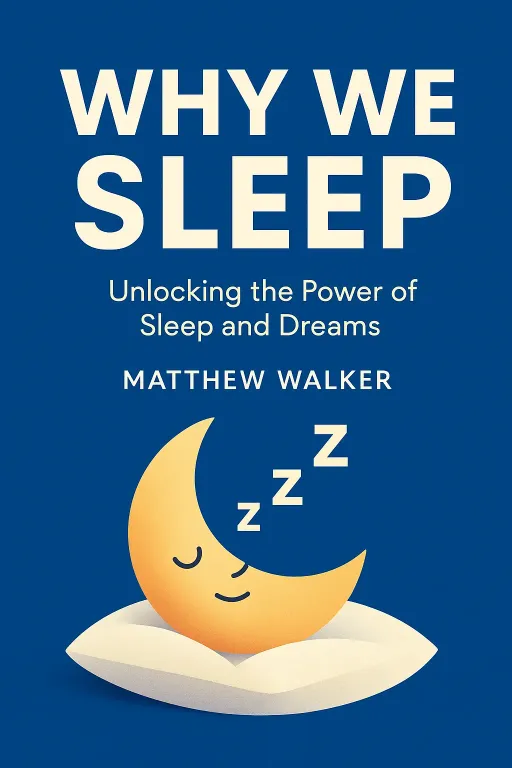
Nova: Precisely. We often wait for the red light to flash before we even check the dashboard. Today, we're diving into a profound shift in perspective, one that argues true well-being is built on daily habits, not reactive cures. And to really understand this, we're going to lean heavily on two absolute titans in the field: first, with the game-changing insights from "Why We Sleep" by the neuroscientist Matthew Walker.
Atlas: Ah, Matthew Walker. The man who made everyone feel guilty about hitting snooze. I mean, his work has become so influential, it's almost a cultural phenomenon. He's practically a sleep evangelist. But for our listeners who might just think sleep is about not feeling tired, what's the deeper, more profound truth Walker unearths? Why does it matter beyond just, you know, being able to function at work?
The Non-Negotiable Power of Sleep: Beyond Just Feeling Tired
SECTION
Nova: That's the perfect question, Atlas. Walker, with his background as a professor of neuroscience and psychology at UC Berkeley and his relentless advocacy for sleep, isn't just saying 'get more sleep.' He's revealing sleep as the foundational pillar of our physical and mental health. He suggests that poor sleep isn't just tiring; it actively your health in ways we're only beginning to understand.
Atlas: Okay, so it’s not just a passive state of rest. It's an active process. Like what? What's actually happening when we sleep that's so crucial?
Nova: Think of sleep as your brain's nightly maintenance crew. During deep sleep, your brain literally washes itself. There's a system called the glymphatic system that kicks into high gear, clearing out metabolic waste products that accumulate during the day—including amyloid-beta proteins, which are strongly linked to Alzheimer's disease. So, skimping on sleep isn't just making you groggy; it's like letting the trash pile up inside your most vital organ.
Atlas: Whoa. That's a powerful image: a brain full of trash. But wait, a lot of our listeners are probably thinking, "I'm busy. I have deadlines, family, a million things to do. Can't I just catch up on the weekend?" Is that a real strategy, or just wishful thinking?
Nova: Walker is pretty unequivocal on this: sleep debt is not like financial debt where you can just pay it back later. You can't truly "catch up" on lost sleep. The damage, especially to cognitive functions like learning and memory consolidation, happens in real-time. He cites studies where even just one night of insufficient sleep can significantly impair your ability to form new memories. It’s like trying to learn a new language while your brain is still trying to process yesterday’s information in a fog.
Atlas: That makes sense, but the idea that it's actively damaging, not just making me tired... that’s a different level of understanding. So, if I'm constantly pushing the limits, ignoring the need for consistent rest, what's the actual, long-term consequence beyond just feeling grumpy?
Nova: The consequences are staggering. Beyond memory and cognitive function, poor sleep weakens your immune system, making you more susceptible to illness. It disrupts your hormonal balance, impacting appetite and increasing the risk of obesity and diabetes. And emotionally, it's a huge factor in anxiety and depression. Walker's work isn't just about feeling better; it's about safeguarding your entire physiological and psychological operating system. It really hammers home that prioritizing sleep isn't a luxury; it's a non-negotiable biological imperative.
Atlas: I guess that makes sense. It's like trying to run a high-performance engine without ever changing the oil. You might get away with it for a while, but eventually, something's going to seize up.
Blue Zones Wisdom: The Simple, Consistent Path to Longevity
SECTION
Nova: Exactly! And that naturally leads us to the second key idea we need to talk about, which often acts as a counterpoint to our modern, quick-fix mentality. Just like sleep, other foundational habits are frequently overlooked. Here, we turn to the incredible work of Dan Buettner and his book, "The Blue Zones." Buettner, as a National Geographic explorer, didn't just read about longevity; he literally traveled the world to find it.
Atlas: Blue Zones? That sounds like a secret society of super-agers! What's their magic potion for living to 100 and beyond, without feeling like they're just waiting to die?
Nova: That's the beauty of it, Atlas: there's no magic potion. Buettner's team identified five distinct regions across the globe—like Okinawa, Japan; Sardinia, Italy; and Ikaria, Greece—where people live significantly longer, healthier lives with a much higher percentage reaching age 100. And their "secrets" aren't extreme diets or rigorous exercise regimes.
Atlas: But wait, in our hyper-connected, high-stress world, aren't these just idyllic, unattainable ideals for most of us? It sounds lovely to live on a Mediterranean island, but I have a commute and a desk job.
Nova: That’s the critical insight. Their longevity isn't about isolated, heroic efforts. It's about consistent, simple lifestyle choices that are deeply integrated into their daily lives. For example, in Okinawa, they practice "Hara Hachi Bu"—eating until they are 80% full. It's not a strict diet; it's a cultural practice. They also have strong social networks, or "moai," which provide lifelong social support. In Sardinia, shepherds are constantly moving, walking rugged terrain as part of their daily routine—it’s not "going to the gym," it’s just living.
Atlas: So it’s not about being a monk or a shepherd, but about finding ways to weave these natural movements and connections into our own lives? Like, moving more without consciously thinking 'I must exercise' or eating better without feeling like I'm 'on a diet'?
Nova: Exactly. Buettner found nine common denominators across all Blue Zones. They move naturally throughout the day, have a strong sense of purpose—what Okinawans call "ikigai"—eat mostly plant-based diets, drink wine moderately, belong to faith-based communities, prioritize family, and have social circles that support healthy behaviors. None of these are revolutionary on their own, but their and create an environment where health is almost an inevitable byproduct. It’s a profound lesson in how our environment shapes our choices, often unconsciously.
Atlas: That's a great way to put it. It's not about willpower; it's about creating a life where healthy choices are simply the easiest, most natural path. That's a very different approach than the one size fits all diet fads we see everywhere.
Synthesis & Takeaways
SECTION
Nova: It absolutely is. And when you put the insights from Matthew Walker's "Why We Sleep" next to Dan Buettner's "The Blue Zones," a powerful message emerges: true well-being isn't a reactive strategy to fix problems after they arise. It's a proactive construction, built on the often-underestimated power of foundational, consistent habits. These books show that these daily choices—whether it's prioritizing sleep or integrating natural movement and purpose into our lives—are far more powerful for long-term health than any single treatment or quick fix.
Atlas: It’s like health isn't a sprint to fix a problem, but a marathon of tiny, consistent steps. It shifts the focus from what's to what we can consistently. That's actually really empowering.
Nova: It is! And the beautiful thing is, you don't need a radical overhaul to start. The "Tiny Step" for today, inspired by these insights, is simply this: tomorrow, try to get to bed 15 minutes earlier than usual. Just 15 minutes. Focus on that consistent, incremental rest.
Atlas: And it’s those small, consistent actions that compound over time, right? It's not about being perfect, but about being persistent. That's a philosophy I can definitely get behind.
Nova: Absolutely. It’s about recognizing that our daily choices are the architects of our future health, long before any symptoms even whisper.
Atlas: What a powerful reminder that our well-being is truly in our own hands, built brick by brick, habit by habit.
Nova: Indeed. This is Aibrary. Congratulations on your growth!