The Hidden Power of Sleep: Rethinking Your Energy Strategy.
Golden Hook & Introduction
SECTION
Nova: You know that badge of honor some leaders wear, the one that says, "I only need four hours of sleep"? Well, consider that badge a subtle form of self-sabotage.
Atlas: Oh, I know that feeling! It's almost a point of pride for some, isn't it? Like, if you're not burning the candle at both ends, you're not really trying. But self-sabotage? That's a strong claim.
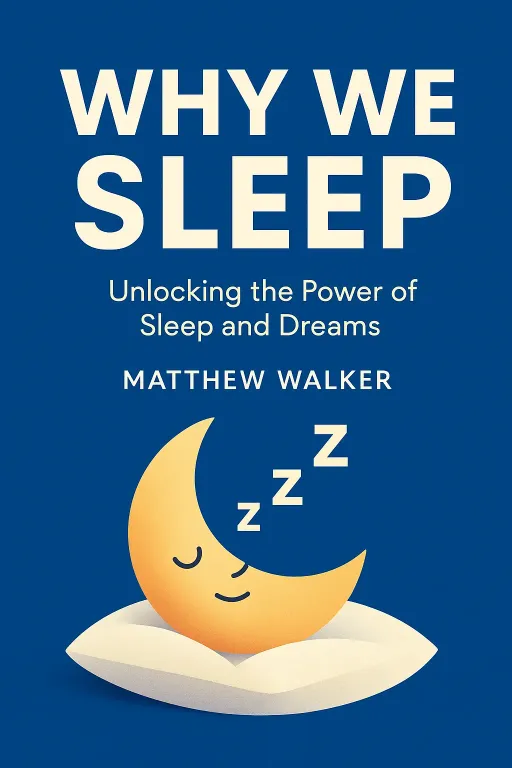
Nova: Absolutely. And it's one we're going to unpack today because we're pulling back the covers, literally and figuratively, on the hidden power of sleep. We’re drawing heavily from two giants in the field: Matthew Walker, the renowned neuroscientist who quite literally wrote the book on why we sleep, and Michael Breus, often known as 'The Sleep Doctor,' who helps us understand our unique sleep rhythms.
Atlas: That’s a powerful duo. Walker’s work, I recall, received widespread acclaim for its comprehensive breakdown of sleep science, though I've seen some discussions questioning the intensity of some of his warnings. Still, the core message is undeniably impactful. And Breus, with his practical, individualized approach, takes that science and makes it actionable.
Nova: Exactly. Walker’s research, from his lab at UC Berkeley, has fundamentally shifted how we view sleep. It’s not just a passive state; it’s an incredibly active, vital process. And Breus then helps us apply that scientific understanding to our incredibly varied lives.
The Unseen Cost of Sleep Deprivation: Beyond Tiredness
SECTION
Nova: So, let's dive into that "self-sabotage" claim. For too long, especially in high-performance cultures, sleep has been seen as a luxury, a negotiable activity you cut back on to gain more time. But the science, as Walker meticulously details, tells a very different story.
Atlas: What does it tell us? I imagine a lot of our listeners, especially those managing high-stakes teams, think they're functioning just fine on less sleep. What are they actually missing?
Nova: What they're missing is subtle but profound. Think of your brain like a computer. During the day, it's processing enormous amounts of data. At night, during sleep, it's not just resting; it's actively consolidating memories, clearing out metabolic waste products, and recalibrating emotional circuits. Without sufficient sleep, your cognitive abilities degrade. Your decision-making becomes impaired, creativity suffers, and emotional regulation goes haywire.
Atlas: Hold on, so it’s not just about feeling tired? You're saying it's actively making us worse at our jobs, especially the strategic, long-term thinking that leaders pride themselves on?
Nova: Precisely. Walker points out that after just one night of insufficient sleep, your reaction time can be comparable to someone who is mildly intoxicated. Imagine a leader making critical strategic decisions for their organization, or navigating complex conflict resolution, with that level of impairment. It's not just a feeling; it's a measurable decline in function.
Atlas: That’s a powerful analogy. For someone who thrives on data, that comparison to intoxication is jarring. But how does this subtle degradation manifest itself in a leader's day-to-day? Like, if I'm a "Strategic Historian" who's always looking for patterns and foresight, what does lack of sleep do to that?
Nova: It erodes your ability to connect those patterns, to foresee consequences, and to innovate. Sleep is crucial for divergent thinking – the kind that leads to creative problem-solving. It's also vital for emotional intelligence. A sleep-deprived leader is more likely to be impulsive, irritable, and less empathetic, which directly impacts team cohesion and resilience. And the body always keeps score; those "microsleeps" you don't even notice—brief lapses in attention—are where critical errors happen.
Harnessing Your Inner Clock: Strategic Sleep for Peak Performance
SECTION
Nova: Once we truly grasp that sleep isn't optional, the next crucial step is understanding how to optimize it. This is where Michael Breus, 'The Sleep Doctor,' comes in with his brilliant framework of chronotypes. It’s not just about getting eight hours; it’s about aligning your most demanding tasks with your natural energy rhythms.
Atlas: Oh, I like that. "Aligning with your natural energy rhythms." So what does that actually mean? Are we talking about early birds and night owls, or is there more to it?
Nova: There's definitely more to it! Breus identifies four main chronotypes, named after animals, to make it super relatable: Lions, Bears, Wolves, and Dolphins. A Lion is your classic early riser, most productive in the morning. Bears are the majority, following a more conventional solar cycle. Wolves are the night owls, peaking later in the day and into the evening. And then Dolphins are often lighter sleepers, with more fragmented sleep, and their energy can be less predictable.
Atlas: That makes me wonder, for a "Resilient Builder" who's trying to cultivate a strong foundation and sustainable growth, how does understanding these chronotypes actually help beyond just personal curiosity?
Nova: It's a strategic superpower! Imagine a leader, a "Wolf" chronotype, forcing themselves to schedule all their critical strategic planning and creative brainstorming for 7 AM because that's what "successful people do." They're fighting their biology, leading to burnout and suboptimal output. If they understood their chronotype, they could shift those demanding tasks to their natural peak in the late morning or afternoon, while delegating earlier tasks.
Atlas: So you're saying it's like matching the right task to the right time for your brain? That's actually really inspiring for a "Data-Driven Leader" who wants to optimize everything, but it sounds a bit… esoteric. How do you figure out your chronotype, and how do you implement this in a real-world, demanding schedule?
Nova: It's less esoteric than it sounds. Breus has simple online quizzes, but generally, it’s about observing your natural tendencies—when you feel most alert and creative, and when you naturally prefer to wake and sleep. The implementation isn't about completely upending your life. It's about making small, strategic adjustments. For instance, if you're a Wolf, maybe you use your early mornings for administrative tasks and save your deep work for later in the day. For a "Resilient Builder," encouraging team members to understand their own chronotypes can lead to more effective collaboration and reduced stress, building that very resilience.
Synthesis & Takeaways
SECTION
Nova: So, what we've really uncovered today is that sleep isn't an indulgence; it's a fundamental pillar of high performance, decision-making, and emotional intelligence. And beyond just getting enough, understanding your unique biological rhythms is a strategic advantage for sustained leadership.
Atlas: That’s a fantastic synthesis. It moves from "sleep is important" to "sleep is strategic." And it brings us back to the deep question from our content: "What is one small change you could make tonight to honor your body's need for restorative sleep?" For our listeners, especially those who are driven by impact and sustainable growth, what's a truly simple, actionable first step?
Nova: Oh, I love that. For a truly simple first step, let's go with this: Commit to a consistent bedtime, even on weekends. Just 15 minutes earlier, or sticking to the same time within an hour. That regularity is incredibly powerful for your circadian rhythm.
Atlas: Consistency. That’s something a "Strategic Historian" can appreciate – establishing a pattern. It’s not about perfection, but about intention and small, repeatable steps. As Matthew Walker himself often says, "Sleep is not an indulgence, it is a biological necessity."
Nova: Absolutely. Prioritizing sleep isn't selfish; it's the ultimate act of self-care and strategic leadership, creating a ripple effect of better decisions, stronger teams, and a more resilient self.
Atlas: That’s actually really inspiring.
Nova: Thank you for joining us on this insightful journey.
Atlas: This is Aibrary. Congratulations on your growth!