The 'Busy Trap' is a Lie: Why Real Productivity Needs Strategic Rest.
Golden Hook & Introduction
SECTION
Nova: What if the very thing you're sacrificing to get ahead—sleep—is actually the secret weapon you need to unlock your next level of achievement?
Atlas: Huh, that's a bold claim, Nova. Most of us, especially those of us deep in the hustle, are taught to push through, to see sleep as downtime, not an upgrade button. It feels almost counterintuitive to suggest sacrificing work for rest.
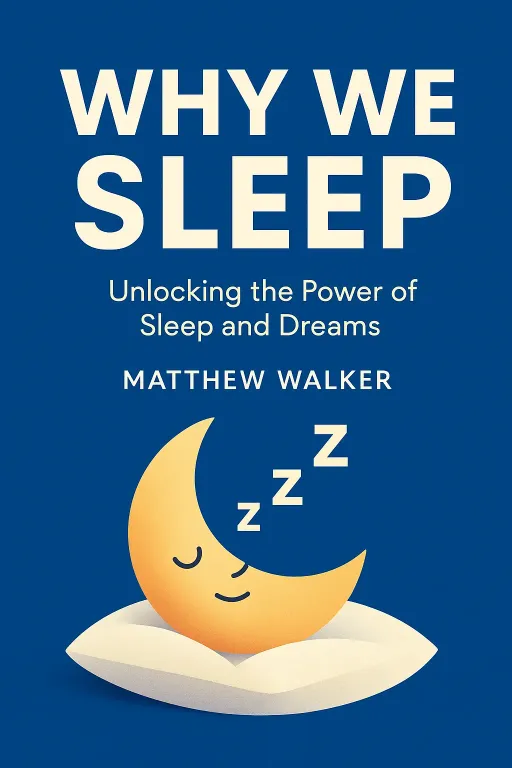
Nova: Exactly. And today, we are absolutely flipping that script. We're diving into two groundbreaking books that, when combined, offer a complete picture: Matthew Walker's "Why We Sleep" and Arianna Huffington's "The Sleep Revolution."
Atlas: Oh, I know Walker's work. He's a neuroscientist, right? His research is pretty hardcore.
Nova: Absolutely. Matthew Walker is a renowned neuroscientist and professor at UC Berkeley. His work is rooted in extensive, rigorous scientific research, making his insights on sleep's biological imperative not just compelling, but highly credible and evidence-based. His book became a global bestseller, sparking a massive public conversation about sleep's importance that we desperately needed.
Atlas: And Arianna Huffington? She's the media titan, if I remember correctly. I think I heard she had a pretty dramatic personal experience with burnout.
Nova: You remember correctly. Huffington famously experienced a severe burnout incident, collapsing from exhaustion, which became the catalyst for her personal transformation and subsequent advocacy for prioritizing sleep and overall well-being. Her journey from neglecting sleep to becoming a champion for it offers such a powerful, relatable narrative for high-achievers who think they can just power through everything.
Atlas: A media mogul collapsing from exhaustion? That sounds like a powerful wake-up call for anyone on the fast track. So, what's the cost of burning the candle at both ends, according to the science? What is Walker telling us we're actually losing?
The Science of Sleep: Why It's Non-Negotiable for Peak Performance
SECTION
Nova: Well, Atlas, Walker's core thesis is revolutionary in its simplicity: sleep isn't passive; it's an incredibly active, essential process. Think of it like your brain and body undergoing a nightly, highly sophisticated maintenance routine.
Atlas: A nightly maintenance routine? I usually just think of it as my off switch.
Nova: That's the common misconception! During sleep, your body is actively repairing cells, consolidating memories, boosting your creativity, and even physically clearing out metabolic waste from your brain. He likens it to a nightly 'brain detox' system. Without sufficient sleep, that detox doesn't happen effectively.
Atlas: Wow. A brain detox. So, it's like my phone updating overnight, but for my brain? And if I skip it, I'm just running on old, buggy software, accumulating junk?
Nova: Exactly! If you skip it, you're not just running on old software; you're also accumulating cognitive 'junk' that impairs function. Walker cites countless studies where chronic sleep deprivation leads to significant declines in cognitive function, decision-making, and emotional regulation.
Atlas: But I feel fine on five hours of sleep. I've been doing it for years. What's the big deal? I can still get my work done.
Nova: That's the insidious part, Atlas. Many high-achievers they're fine, but studies show their performance is measurably impaired, even if they don't perceive it themselves. It's like driving a car with bald tires—you might feel okay until you hit a patch of ice. For example, he talks about studies showing how doctors, working long shifts with minimal sleep, make significantly more errors. Or how just one night of insufficient sleep can make you as cognitively impaired as if you were legally drunk.
Atlas: Whoa. Legally drunk? That's a strong comparison. So, those late-night pushes to finish a project, thinking you're gaining an edge, you're actually… making yourself less effective?
Nova: Precisely. You're sacrificing accuracy, creativity, and long-term memory for short-term, often compromised, output. REM sleep, for instance, is critical for problem-solving and making novel connections, which is where true innovation happens. Deep sleep is when your body physically repairs itself and consolidates declarative memories. Skip those, and you're not just tired; you're fundamentally undermining your ability to learn, adapt, and innovate.
Atlas: That's incredible. So, ignoring sleep isn't some badge of honor for productivity; it's actively sabotaging it. It's not about being 'tougher' than others; it's about being less effective.
Nova: Absolutely. It's a foundational pillar. And that notion of 'running on old software' and actively sabotaging your own performance leads us perfectly into the other side of this coin: the crucial mindset shift. Because even if we know the science, why is it so hard for high-achievers to actually prioritize sleep?
The Mindset Shift: Reclaiming Strategic Rest as a Growth Hack
SECTION
Atlas: That's the million-dollar question, Nova. We know it's good for us, but the culture constantly pushes "more, faster, always on." How do we break free from that?
Nova: That's where Arianna Huffington's insights from "The Sleep Revolution" are so powerful. She lived that 'always on' culture, and it nearly broke her. Her personal story of collapsing from exhaustion is a stark, undeniable testament to the dangers of the "sleep is for the weak" mentality.
Atlas: I remember hearing about that incident. It sounds terrifying.
Nova: It was. But it became her profound wake-up call. She realized that chasing success by sacrificing well-being is a false economy. She started advocating for sleep not as a luxury, but as a powerful tool for productivity and well-being. She reframed it entirely.
Atlas: Reclaiming it as a tool for productivity... As a new mom, "strategic rest" sounds like a foreign language, but "growth hack" for energy? Now you have my attention! I'm constantly looking for ways to optimize my time and energy.
Nova: And that's exactly what it is. Huffington's transformation wasn't about doing less; it was about doing more effectively and sustainably. By prioritizing sleep, she found increased creativity, sharper decision-making, and sustained energy that allowed her to achieve even greater things without the constant threat of burnout. It wasn't a dip in productivity; it was an exponential leap.
Atlas: So, it's not about working, it's about working by literally taking a break? That goes against so much of what we're taught in the startup world.
Nova: It champions working smarter, absolutely. It's recognizing that there are diminishing returns to pushing past a certain point. Your brain simply cannot maintain peak performance indefinitely. By integrating strategic rest, you're optimizing your "awake" hours by ensuring they are of the highest quality. It's about sustainable energy, not just bursts of frantic, unsustainable activity.
Atlas: That’s a fundamentally different way of looking at it. Instead of seeing sleep as something that steals time from my to-do list, it's actually supercharging the time I have. It's like a competitive advantage.
Nova: It is a competitive advantage! Walker's science proves the biological necessity, and Huffington's journey illustrates the personal and professional liberation that comes from embracing it. It's about moving from a mindset of pushing through exhaustion to one of cultivating sustained wellness for sharper decision-making and enduring impact.
Atlas: This is such an important message for anyone feeling the pressure to constantly perform. It's not just about avoiding burnout; it's about unlocking a higher level of functioning.
Synthesis & Takeaways
SECTION
Nova: Precisely. The synthesis here is clear: true peak performance for high-achievers, especially when navigating new demands like growing families or demanding careers, requires rest. It's the ultimate growth hack for sustained energy and sharper decision-making, not a sign of weakness or a luxury you can't afford.
Atlas: That's a powerful reframing. It's not just about surviving, it's about thriving. So, for our high-achieving, often sleep-deprived listeners, what's one tiny, actionable step they can take this week to start reclaiming this 'growth hack'? Something that doesn't feel overwhelming.
Nova: The tiny step is simple but powerful: commit to a consistent bedtime for the next three nights. Even if it's just 15 minutes earlier than usual. It's about building that consistent habit, that respect for your body's non-negotiable needs. It's a small nudge that can create a ripple effect.
Atlas: Just 15 minutes earlier. That sounds achievable. It's like gently nudging the system back into alignment without a complete overhaul. I'm taking that challenge.
Nova: Absolutely. Because ignoring this isn't leading to breakthroughs; it's leading to burnout. And true growth, true strategic wellness, starts when you stop seeing sleep as a luxury and start treating it as a foundational pillar for everything you want to achieve.
Atlas: That's a mic drop moment. Sustainable energy, sharper decision-making... it all begins with that intentional rest. Nova, thank you for shining a light on this critical, often overlooked, aspect of high performance.
Nova: My pleasure, Atlas. It's all about empowering our listeners to thrive, not just survive.
Nova: This is Aibrary. Congratulations on your growth!