Stop Chasing Quick Fixes, Start Building Lasting Wellness: The Guide to Real Health.
Golden Hook & Introduction
SECTION
Nova: Stop me if you've heard this one: "Eat this, not that! Exercise more! Meditate daily!" It's a cacophony of health advice, isn't it? But what if the secret to lasting wellness isn't about doing more of the latest trend, but understanding a few profoundly simple, often overlooked, fundamentals?
Atlas: Oh man, it’s like trying to navigate a dense jungle of conflicting information. One guru says keto, the next swears by intermittent fasting. My brain feels overwhelmed just thinking about it.
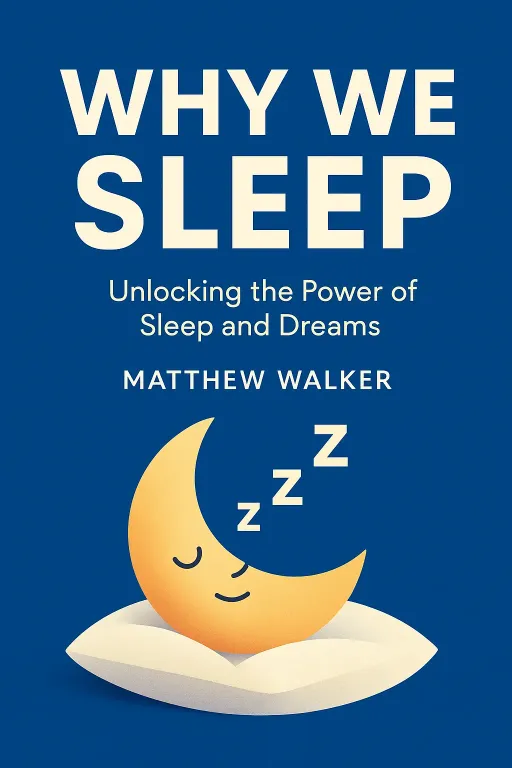
Nova: Exactly! That feeling of overwhelm is precisely what drives us to chase those quick fixes, leading to that frustrating cycle of starting and stopping. Today, we're cutting through the noise, inspired by the insights in "Stop Chasing Quick Fixes, Start Building Lasting Wellness: The Guide to Real Health." We’re diving into the wisdom of Matthew Walker's groundbreaking book, "Why We Sleep," and Dan Buettner's illuminating work, "The Blue Zones." Walker, a neuroscientist and professor of neuroscience and psychology at UC Berkeley, didn't just write a book; he essentially launched a global sleep revolution, challenging decades of cultural neglect around this fundamental biological need.
Atlas: A sleep revolution? That’s a bold claim. I mean, we all sleep, right? It seems so basic. But how could something so seemingly simple cut through all that complex health noise?
Nova: That's the brilliance of it, Atlas. Walker reveals that sleep is not a luxury, not some optional extra we can skimp on when life gets busy. It is a non-negotiable biological necessity. Think of it as the foundational operating system for your entire body and mind. Without it, everything else quickly breaks down.
Sleep as the Non-Negotiable Foundation of Wellness
SECTION
Nova: He explains that sleep impacts everything: your cognitive function, your emotional regulation, your immune health, and even your long-term disease prevention. It’s like trying to run a high-performance computer on a dying battery. You might get some output, but it’ll be slow, glitchy, and eventually, it’ll crash. That’s what we’re doing to our bodies and brains when we consistently shortchange sleep.
Atlas: Wow. That’s a powerful analogy. I think a lot of us, myself included, have definitely subscribed to the "sleep when you're dead" mentality at some point. But what are the immediate, tangible impacts that listeners might not even realize are linked to their sleep? Beyond just feeling tired?
Nova: Oh, the list is staggering. For instance, memory consolidation. During deep sleep, your brain literally replays and files away the day's experiences, moving them from short-term to long-term storage. Skip sleep, and you’re essentially hitting delete on those memories. Emotionally, a lack of sleep makes your amygdala—the brain’s fear center—hyperactive. So, you’re more prone to anxiety, irritability, and irrational responses.
Atlas: That makes so much sense! I know that feeling of being overly sensitive or just generally "off" after a bad night’s sleep. I always just blamed the coffee wearing off, but it’s actually a deeper neurological response.
Nova: Absolutely. And it's not just about feeling grumpy. On the disease front, Walker points to startling research linking chronic sleep deprivation to increased risks of cancer, heart disease, diabetes, and even Alzheimer's. Your immune system, for example, produces natural killer cells that fight off viruses and cancer cells. Even one night of poor sleep can drastically reduce their activity.
Atlas: That’s incredible. So, it’s not just about performance, it’s about fundamental survival and protection. What’s actually happening when we sleep that makes it so restorative? It feels like we just shut down.
Nova: Far from shutting down, your brain is incredibly active, undergoing two distinct phases: non-REM and REM sleep. During non-REM, it’s like a deep cleaning cycle. Your brain literally flushes out metabolic waste products that build up during the day, including beta-amyloid, which is linked to Alzheimer’s. Then, in REM sleep, your brain is processing emotions, consolidating complex memories, and even boosting creativity. It’s a nightly tune-up, a crucial repair and reset button that our modern lives constantly try to override.
The Holistic Blue Zones Approach: Lifestyle Over Regimen
SECTION
Nova: So, while sleep is this foundational biological necessity, a truly vibrant and long life requires more than just good slumber. And that naturally leads us to the second key idea we need to talk about, which often acts as a beautiful counterpoint to what we just discussed: the wisdom of Dan Buettner's "The Blue Zones."
Atlas: Ah, the Blue Zones! I’ve heard whispers about these places where people live to be a hundred, healthy and happy. Is it just good genes, or is there something we can actually learn from them?
Nova: Buettner, a National Geographic Fellow, didn't just stumble upon these places; he meticulously identified five regions around the world—like Sardinia, Okinawa, and Nicoya—where people live exceptionally long, healthy lives, often well into their nineties and beyond, free from chronic disease. And what he found wasn't a secret pill or a magic diet. It was a commonality of integrated lifestyle choices.
Atlas: Okay, so what are these common threads? What are they doing differently that we're missing?
Nova: He boils it down to three main pillars, which are elegantly simple. First, natural movement. These aren't people hitting the gym for an hour a day; they live in environments where movement is built into their daily lives – walking to the market, gardening, tending to their homes. It’s constant, low-intensity physical activity. Second, strong social connections. They live in tight-knit communities, valuing family and friends, which provides a profound sense of belonging and purpose. And third, plant-based diets. Not necessarily strict veganism, but diets rich in legumes, whole grains, and vegetables, with meat consumed sparingly.
Atlas: But for someone like me, or many of our listeners, living in a bustling modern city, how do you just "naturally move" or build "strong social connections" without it feeling forced or like another item on a never-ending to-do list? It sounds idyllic, but almost impossible to replicate.
Nova: That's a brilliant question, Atlas, and it gets to the core of the Blue Zones' lesson. They don't to be healthy; they healthy because their environment makes it the easiest choice. Their villages are walkable, so walking is default transportation. Community meals are routine, so social interaction and healthy eating are built-in. It's "health by design," not "health by willpower." They’ve engineered their lives so that the default path is the healthy path.
Atlas: That’s a complete paradigm shift from the "quick fix" mentality, isn't it? Instead of constantly trying to fix individual problems, they’re preventing them by creating a holistic system. So, about the diet specifically – is it about deprivation or abundance? Because "plant-based" can sound restrictive to some.
Nova: It’s absolutely about abundance! Their diets aren't about what they eat, but what they eat: a rich variety of fresh, local produce, hearty beans, lentils, and whole grains. They often grow their own food, too, which adds another layer of natural movement and connection to their environment. It’s food that nourishes not just the body, but also the soul, often shared in communal settings.
Synthesis & Takeaways
SECTION
Nova: So, bringing it all together, we see this beautiful synergy. Matthew Walker teaches us that we must respect the profound biological necessity of sleep – it’s the non-negotiable foundation. And Dan Buettner shows us that a truly vibrant, long life emerges when healthy choices are woven seamlessly into our daily existence, supported by community and natural environments. Both fundamentally reject the idea that lasting wellness comes from chasing the latest fad or extreme regimen.
Atlas: It’s almost like they're telling us that lasting wellness isn't about adding more to our plate, but about optimizing the foundational elements and simplifying our approach to life. It’s about being intentional with the basics, rather than constantly seeking a silver bullet. So, for our listeners who are feeling overwhelmed, what’s one tiny step they can take right now to begin this shift towards lasting wellness?
Nova: The "tiny step" is deceptively simple, yet incredibly powerful. Commit to a consistent bedtime for just one week. Even if it's only 15 minutes earlier than your usual, try to go to bed and wake up at roughly the same time every day, including weekends. This consistency is key for regulating your circadian rhythm, which is your body's internal clock.
Atlas: Just 15 minutes earlier, consistently, for a week. That feels incredibly achievable, and it taps into that foundational sleep wisdom we just discussed. It’s not a drastic overhaul, but a gentle nudge towards a more harmonious routine.
Nova: And that’s the journey to real health – not a sprint towards a quick fix, but a thoughtful, consistent building of habits that honor your body’s profound design. It’s a journey of self-discovery, fueled by genuine wellness.
Atlas: This has been incredibly insightful, Nova. It’s a powerful reminder that sometimes, the most profound changes come from mastering the fundamentals.
Nova: Absolutely, Atlas. This is Aibrary. Congratulations on your growth!