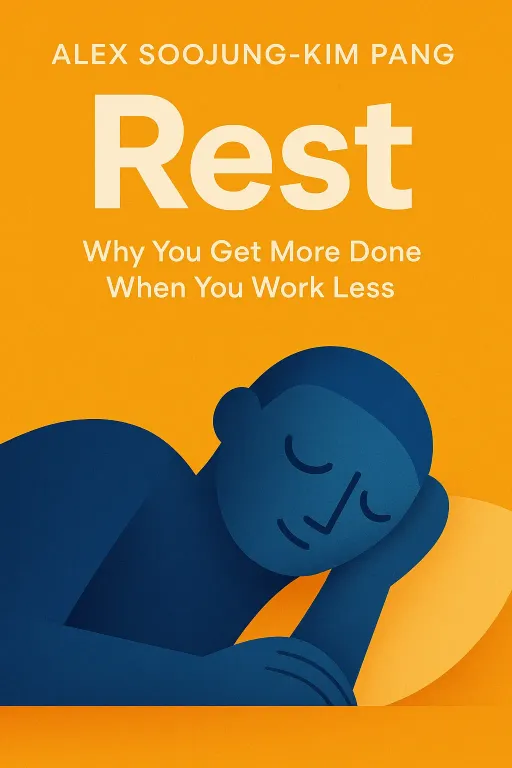
Rethinking Rest: Why True Recovery is Essential for Peak Performance
Golden Hook & Introduction
SECTION
Nova: You know, Atlas, there's this pervasive myth in our society, this whisper that tells us the harder and longer we work, the more successful we'll become. It's almost gospel.
Atlas: Oh, I know that feeling. It's like a badge of honor to say you're "always on," burning the midnight oil, sacrificing sleep for that next big thing. You feel productive just by busy.
Nova: Exactly! But what if I told you that very mindset, that relentless pursuit of constant hustle, is actually sabotaging our potential? That it’s not just inefficient, but actively detrimental to our creativity, our health, and our long-term impact?
Atlas: Hold on. That sounds a bit out there. We’re taught that pushing through is how you get ahead. Are you saying the secret to peak performance isn't more hours, but… less?
Nova: In a way, yes. Today, we're diving into a fundamental re-evaluation of what 'rest' truly means, drawing insights from two groundbreaking books. We'll explore Alex Soojung-Kim Pang's illuminating work,, which challenges our very definition of productivity. And then we'll turn to neuroscientist Matthew Walker's seminal book,, which lays bare the undeniable, scientific truth about our most basic need.
Atlas: Pang, an academic who spent time in Silicon Valley, offers such an interesting blend of perspectives, bringing a fresh take to the hustle culture. And Walker, a titan in sleep research, delivers his insights with an urgency that really captivated a global audience.
Nova: Absolutely. These aren't just self-help books; they're profound re-examinations of human potential. And what they reveal is that rest isn't a luxury you earn after hard work; it's the engine that the work itself.
The Myth of Constant Hustle & The Power of Deliberate Rest
SECTION
Nova: So, let's start with Alex Soojung-Kim Pang. His central argument in is profoundly counter-intuitive: rest is not idleness, but an active skill. It's a deliberate practice that actually enhances creativity and productivity.
Atlas: Okay, but what do you mean by "active skill"? When I think of rest, I think of collapsing on the couch, binging a show. How is that active?
Nova: That's precisely the misconception Pang addresses. He delves into the lives of some of history's most creative and productive minds – people like Charles Darwin, Albert Einstein, and even modern figures – and he found a common thread: they all practiced what he calls "deliberate rest."
Atlas: Give me an example. What did Darwin do? Was he just napping all day?
Nova: Far from it! Darwin, for instance, had a strict schedule. He worked intensely for a few hours in the morning, then took a long walk, often followed by reading novels or playing backgammon with his wife. He wasn’t just "taking a break"; he was engaging in activities that allowed his mind to wander, to process information subconsciously. Einstein famously played the violin; he called it "thinking in music."
Atlas: Wow. So, it's not about working; it's about engaging in something completely different that still stimulates you, but without the pressure of your main task. That’s a fascinating reframe. How does that actually cognitively?
Nova: It taps into what psychologists call "diffuse mode thinking." When you're intensely focused on a problem, your brain is in "focused mode." But when you step away and engage in low-stakes, enjoyable activities – like a walk in nature, playing an instrument, or deep play – your mind can make connections it couldn't see before. It's where breakthroughs happen.
Atlas: I can definitely relate to that. Sometimes the answer to a complex historical problem only comes to me when I'm doing something completely unrelated, like cooking or gardening. But I always dismissed it as a coincidence.
Nova: It’s no coincidence. Pang highlights that many great thinkers understood this intuitively long before neuroscience confirmed it. They saw these periods of deliberate rest as integral to their creative process, not as time away from it. It's why they were so fiercely protective of their "downtime."
Atlas: That makes me wonder, then, if this was so well-understood by historical figures, where did we lose this wisdom? It seems like modern society, especially since the industrial revolution, has steadily eroded our capacity for this kind of active, deliberate rest, replacing it with endless demands.
Nova: That's a profound observation, Atlas. The industrial era, and certainly the digital age, have conditioned us to equate constant activity with value. We've lost touch with the art of strategic disengagement, viewing any non-productive moment as wasted time. But Pang’s work reminds us that this isn't just about personal well-being; it’s about rediscovering a fundamental strategy for sustained excellence.
Sleep: The Non-Negotiable Foundation of Human Potential
SECTION
Nova: And if deliberate rest is the secret sauce for creativity and insight, then sleep, as Matthew Walker so powerfully argues in, is the non-negotiable bedrock for everything else. Walker, a neuroscientist and director of the Center for Human Sleep Science, reveals sleep's critical, often-ignored role in memory consolidation, emotional regulation, and our physical health.
Atlas: I mean, we all know sleep is important, right? But it often feels like the first thing to go when deadlines loom. What makes Walker’s argument so compelling? Is it just "sleep more"?
Nova: It's far more than that. Walker calls sleep "the single most effective thing we can do to reset our brain and body health each day." He doesn't just say it's important; he presents overwhelming scientific evidence of the catastrophic impact of sleep deprivation on every single aspect of our being.
Atlas: Give me an example. What happens when we don't get enough sleep that's truly surprising?
Nova: Well, consider this: after just one night of four or five hours of sleep, your natural killer cells—the immune cells that target cancer cells—drop by 70%. That's not just feeling a bit tired; that's a profound impairment of your body's defenses. Or how about memory? During deep sleep, your brain literally transfers short-term memories into long-term storage. Without enough sleep, you simply can't learn effectively.
Atlas: Wow, whoa. So, pulling an all-nighter for an exam is actually counterproductive? You're not just tired; you're actively impairing your ability to retain information?
Nova: Precisely. And it gets darker. Walker highlights that sleep deprivation seriously impairs our emotional regulation. We become more irritable, more prone to anxiety, and our ability to handle stress plummets. He even draws parallels between sleep deprivation and being legally drunk in terms of impaired cognitive function and reaction time.
Atlas: That’s incredible. So those late nights you think are making you more productive are actually making you dumber, sicker, and more emotionally volatile. It’s like we’re intentionally handicapping ourselves in the name of productivity.
Nova: It’s a silent epidemic. Walker’s research reveals that the World Health Organization and the CDC have both declared a sleep loss epidemic across industrialized nations. It’s not just a personal failing; it’s a societal health crisis with profound implications for public health, safety, and productivity. Our culture has normalized sleep deprivation, treating it as a badge of honor, when in reality, it's a profound act of self-sabotage.
Atlas: And for those of us who are driven by truth and civic impact, understanding this isn't just about personal well-being. It's about recognizing a systemic issue that impacts everything from economic output to public safety. The truth is, we need to fundamentally re-evaluate our relationship with sleep.
Synthesis & Takeaways
SECTION
Nova: So, bringing these two powerful ideas together, we see that rethinking rest—both through deliberate, active forms of downtime and through prioritizing essential sleep—isn't about being lazy. It’s about being strategic. It’s about understanding the deep biological and cognitive needs that underpin peak performance.
Atlas: It’s like we've been running on an empty tank, thinking if we just push the pedal harder, we'll get there faster. But what Pang and Walker show us is that true speed and endurance come from intelligent refueling.
Nova: Exactly. Deliberate rest cultivates the creative insights and mental resilience needed to solve complex problems, while sleep provides the non-negotiable biological foundation for memory, health, and emotional stability. They are two sides of the same coin: active strategies for a flourishing, high-performing life.
Atlas: So, for our listeners who are constantly striving for understanding and impact, what’s one tangible, tiny step they can take this week to start integrating this profound wisdom?
Nova: Here’s a tiny step from our main content today: schedule one 30-minute block of 'deep play' this week. Make it an activity you genuinely enjoy, something that fully engages you without pressure. It could be playing an instrument, sketching, going for a mindful walk, or engaging in a hobby you love. The key is engagement, not obligation.
Atlas: Not just scrolling, then. Something that truly recharges the soul and sparks the mind. That sounds like a powerful investment in oneself, not a frivolous indulgence. Prioritizing this isn't weakness; it's a strategic move for anyone who wants to sustain excellence and make a real difference.
Nova: Absolutely. It’s about reclaiming what’s fundamentally human.
Atlas: This is Aibrary. Congratulations on your growth!