Building the Sustainable Mind: How Early Love Shapes Our Global Future
Golden Hook & Introduction
SECTION
Nova: What if I told you that the single most powerful investment we can make in global sustainability, in building a society that can tackle climate change and inequality, isn't a new technology or a financial policy... but how we hold a baby in its first two years of life? It sounds radical, almost poetic, but the hard science is backing it up.
Anaiah: It really does sound radical, but when you look at the data, it's also profoundly logical. It forces us to think about sustainability not just in terms of ecology or economics, but in terms of human development.
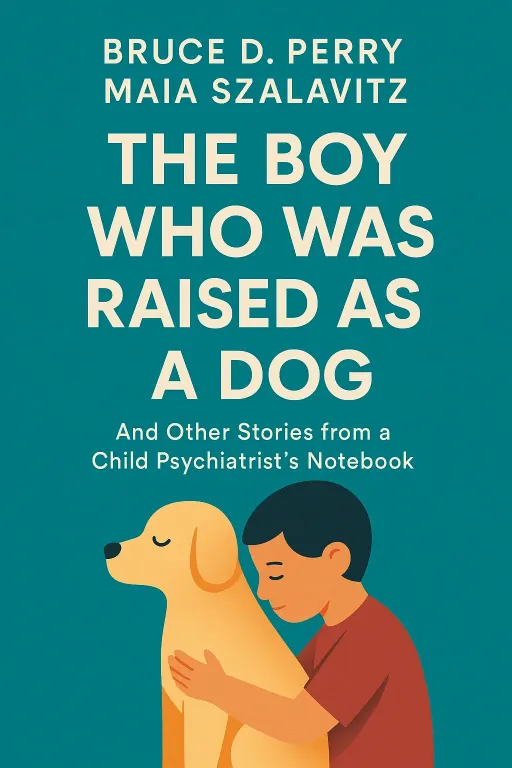
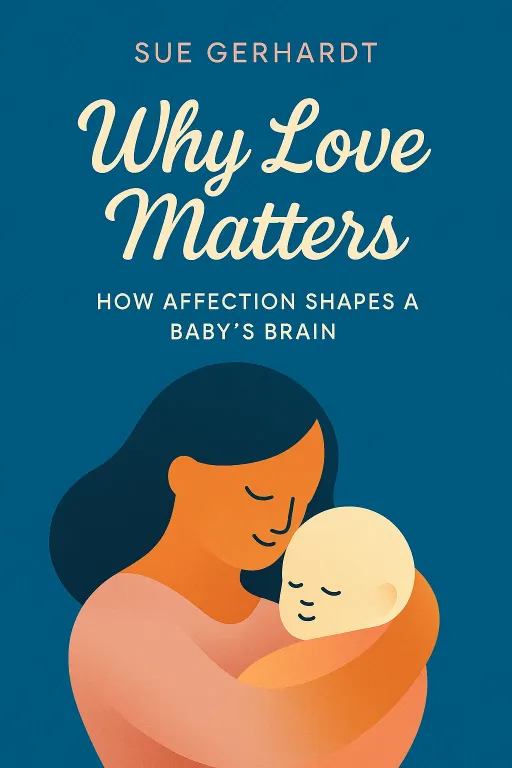
Nova: Exactly. And that's the journey we're going on today, guided by Sue Gerhardt's groundbreaking book, "Why Love Matters: How Affection Shapes a Baby's Brain." We have the perfect person to explore this with us, Anaiah. You've got this incredible background from Harvard in both Psychology and now Environmental Science and Global Development. You live at this exact intersection.
Anaiah: It's an intersection that I find more and more critical. For a long time, these fields felt separate. But this book really connects them, arguing that the micro-environment of a family shapes the macro-environment of our world. I'm so excited to dig into it.
Nova: Me too. In her book, Gerhardt lays out the neurological blueprint for this very idea. So today, we're going to tackle this from two powerful perspectives. First, we'll explore the hard science of 'The Social Brain,' looking at how early relationships literally build our biological hardware. Then, we'll zoom out to discuss 'Social Sustainability,' connecting the dots from dysregulated individual brains to the dysfunctions we see in society at large.
Deep Dive into Core Topic 1: The Social Brain
SECTION
Nova: So let's start with that biological hardware. Anaiah, in psychology, we often talk about nature versus nurture, but this book argues it's not a battle; it's a collaboration. Early experiences don't just influence the brain; they it. Can you talk a bit about that from your perspective?
Anaiah: Absolutely. The old idea was that our genes give us a fixed blueprint. But what neuroscience now shows us, and what this book explains so well, is that our genes provide a set of possibilities. It's our early experiences, our relationships, that tell our genes which of those possibilities to express. So a loving, responsive environment literally tells the brain: "The world is safe. Grow circuits for trust, for empathy, for calm." A neglectful environment tells it the opposite.
Nova: And Gerhardt gives us such a stark, heartbreaking example of what happens when that loving environment is absent. She talks about the Romanian orphans discovered in the 1990s after the fall of the Ceaușescu regime. These weren't just sad children; they were neurologically different. They had been left in their cots all day, with almost no human touch or interaction. When researchers scanned their brains, they found what they described as a virtual "black hole" where the orbitofrontal cortex—a key part of the social brain—should have been developing.
Anaiah: It's a horrifying natural experiment, isn't it? It shows us that the 'social brain' isn't a given. It's a structure that requires social input to grow, just like muscles need exercise. Without that input, the capacity for empathy, for self-regulation, for connecting with others, literally fails to materialize. These children often grew up to be incredibly impulsive, emotionally detached, and unable to form lasting relationships.
Nova: And it's not just the absence of good things; it's the presence of a bad thing: stress. Gerhardt calls cortisol, the primary stress hormone, "corrosive." When a baby is left to cry, when it's in a state of fear or distress without a caregiver to soothe it, its body is flooded with cortisol.
Anaiah: And that cortisol does real, physical damage. From my pre-med studies, I remember learning how chronic high cortisol is toxic to the brain. Gerhardt points out that it particularly damages the hippocampus. And that's so critical because the hippocampus isn't just for making memories. It's also the 'off-switch' for the stress response.
Nova: So it creates a vicious cycle.
Anaiah: Exactly. The stress of neglect damages the very part of the brain that's supposed to turn the stress response off. So you're creating individuals who are biologically wired to be in a constant state of high alert. And we know from a public health perspective, that chronic stress is a precursor for a whole cascade of later problems—everything from heart disease and diabetes to a weakened immune system. You're embedding social failure at a biological level.
Deep Dive into Core Topic 2: Social Sustainability
SECTION
Nova: Embedding social failure at a biological level. Wow. And this is where the book makes a breathtaking leap. It's not just about individual tragedy. Sue Gerhardt uses this powerful analogy of a 'Poorly Built House.' She says society keeps pouring money into fixing the problems of dysfunctional families—crime, addiction, mental health crises—which is like constantly patching up a house with crumbling foundations. But the real solution is to build the foundation correctly in the first place.
Anaiah: That analogy is perfect. It's the definition of being reactive instead of proactive. And it's incredibly expensive.
Nova: It is. And we have the data to prove it. Gerhardt points to the landmark Adverse Childhood Experiences study, or ACEs study. Researchers asked thousands of adults about their exposure to ten types of childhood trauma—things like abuse, neglect, and household dysfunction. What they found was a stunning 'dose-response' relationship.
Anaiah: Meaning the more ACEs someone had, the worse their outcomes were.
Nova: Precisely. A person with an ACE score of four was twice as likely to have heart disease and seven times more likely to be an alcoholic. A person with a score of six or more had their life expectancy shortened by an average of 20 years. The study makes the societal cost of these 'poorly built foundations' terrifyingly clear.
Anaiah: And this, for me, is the absolute core of social sustainability. We can't build a resilient, forward-thinking global society on a foundation of traumatized individuals. The ACEs study is the data that proves it. A population with a high average ACEs score has a lower collective capacity to deal with complex, long-term problems like climate change or economic instability, because so much of its energy and resources are spent just managing the fallout from early trauma. It's a systemic vulnerability.
Nova: And the book is careful to say this isn't just about severe trauma. It also discusses the idea of 'Orchid and Dandelion' children. Most kids are dandelions—they're resilient and can thrive almost anywhere. But some, the 'orchids,' are genetically more sensitive. In a supportive, loving environment, they can flourish spectacularly and become incredibly creative and empathetic adults. But in a harsh or neglectful environment, they wither.
Anaiah: That's such an important point. It moves the conversation away from blaming 'bad parents' and towards creating a supportive environment for parents. It's not about fixing people; it's about building a better ecosystem. This is why the book highlights initiatives like the Oxford Parent Infant Project, or OXPIP, which provides psychotherapeutic support for parents and babies who are struggling.
Nova: It's a community-based solution.
Anaiah: Exactly. It's creating a social safety net. In my work with ASEZ, we focus on youth engagement and creating positive community projects. But this book makes me realize that the most impactful work might start even earlier. By creating a social ecosystem—a sustainable environment—where all parents have the resources and support they need, we help them build those strong foundations for their children, whether they're orchids or dandelions.
Synthesis & Takeaways
SECTION
Nova: It's just so powerful. In the space of a ten-minute conversation, we've gone from the neurons in a single baby's brain, to the devastating impact of neglect on brain structure, and all the way to a framework for social sustainability on a global scale.
Anaiah: It reframes everything, doesn't it? The personal becomes political, and the political becomes biological. The health and resilience of our society are literally written into the developing brains of our children. It's not a metaphor; it's a biological reality.
Nova: So, as we wrap up, what's the one big idea or takeaway you want to leave our listeners with, especially thinking from your unique perspective on global development and sustainability?
Anaiah: I think it's about expanding our definition of 'sustainability.' When we think about creating a sustainable world, our minds often jump to solar panels, recycling, or protecting biodiversity. And those things are critically important. But perhaps the most profound and long-lasting sustainable practice is fostering human connection.
Nova: I love that.
Anaiah: It means that supporting a new parent in your community, advocating for family-friendly workplace policies, or even just having this conversation and understanding that the emotional well-being of the youngest members of our society is the bedrock of our shared future... that is climate action. That is global development. It's not a 'soft' issue; it's the most critical infrastructure project we could ever undertake.
Nova: The most critical infrastructure project. Anaiah, that is the perfect place to end. Thank you so much for sharing your insights today.
Anaiah: Thank you for having me. This was a fantastic conversation.