The Cognitive Foundations of Instruction
Golden Hook & Introduction
SECTION
Nova: Forget 'learning by doing.' The fastest way to master anything new might be the most boring: building a giant library of facts.
Atlas: Boring? Nova, that goes against everything I've ever heard about learning! We're always told to dive in headfirst, get our hands dirty, and learn through experience. Building a 'library of facts' sounds like… well, like homework from the dark ages. How can that possibly be the fast track?
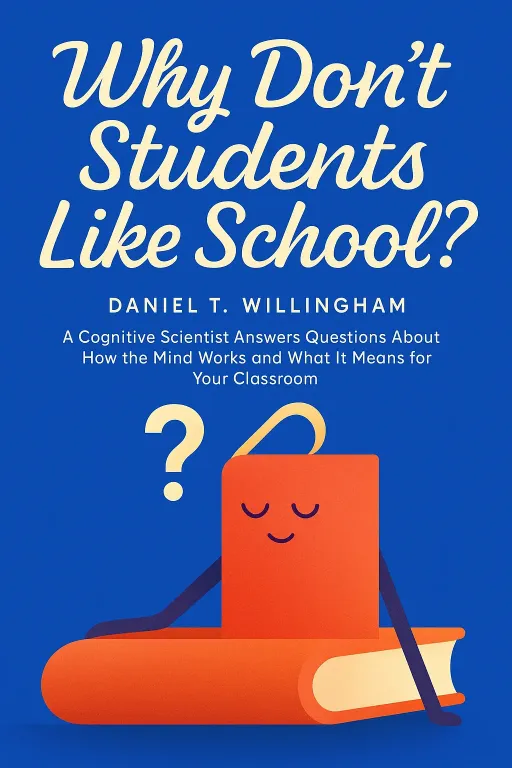
Nova: It sounds counterintuitive, I know! But the core idea we're exploring today, drawn from some fascinating research on the cognitive foundations of instruction, suggests that this seemingly mundane step is actually the most critical launchpad for genuine expertise. We're looking at ideas from Daniel T. Willingham, a cognitive psychologist who argues in "Why Don’t Students Like School?" that factual knowledge must precede skill. And then we’ll layer on the insights from Mirjam Neelen and Paul A Kirschner in "Evidence-Informed Learning Design," who talk about the crucial concept of scaffolding.
Atlas: So, we’re talking about how our brains actually process new information and skills? And you’re saying that before we even try to something complex, we need to a lot about it? That’s a bold claim, especially for anyone trying to make the most of their time and learn efficiently.
The Primacy of Facts: The Bedrock of Understanding
SECTION
Nova: Exactly, Atlas. Willingham’s argument is rooted in a simple, yet profound, observation about how our minds work. He points out that critical thinking, that magical ability we associate with experts, doesn't just appear out of nowhere. It requires a foundation of stored information – a rich mental library, as he puts it. Think about it like building a house. You wouldn't start framing the roof before you've even laid the foundation, would you?
Atlas: No, that would be disastrous. The whole structure would collapse. But for learning a new skill, say, mastering a complex software for my job or understanding a new industry, it feels like the pressure is always on to just the software or start analyzing the industry reports immediately. Are you saying that’s the wrong approach? That I should spend weeks just reading manuals and industry histories?
Nova: Not necessarily weeks, but dedicating focused time to absorb the fundamental facts is key. Willingham argues that without that foundational knowledge, our attempts at critical thinking are often just superficial. We might be able to parrot back jargon or follow a pre-set procedure, but we lack the deep understanding to adapt, innovate, or troubleshoot when things go wrong. It’s like trying to write a novel without knowing the alphabet or basic grammar. You can string words together, but it won't be a coherent story.
Atlas: Okay, I’m starting to see the parallel. So, for our listeners who are constantly seeking clarity and want to know what truly matters, this means identifying the core facts of a new field is step number one. But how do we do that efficiently? If I only have my targeted 20 minutes a day for focused learning, how do I ensure I’m building this 'mental library' and not just collecting trivia that won’t stick?
Nova: That’s where purposeful navigation comes in. It’s about being strategic. Instead of just passively consuming information, you actively seek out the foundational principles, the key definitions, the historical context, the established theories that underpin that field. For example, if you’re learning about leadership, the foundational facts might include established theories of motivation, historical examples of influential leaders, or basic organizational structures. It’s about building a robust mental map, not just memorizing random landmarks.
Atlas: So, it’s about understanding the behind the facts, and how they connect, rather than just accumulating isolated data points. Because I can see myself getting lost in endless Wikipedia rabbit holes and feeling like I’m busy but not actually progressing. How do I avoid that feeling of being busy but not productive?
Nova: It’s about asking yourself: "What are the absolute essential building blocks here?" What information would someone to know to even begin to have an intelligent conversation about this topic? This is where the 'focused achiever' in you comes into play. It’s not about absorbing, but absorbing the first. Think of it as gathering your essential toolkit before you start building. Without the right tools – the foundational facts – your attempts at complex construction, or critical thinking, will be clumsy and ineffective. This initial investment of time in knowledge acquisition is what makes subsequent skill development exponentially faster and more effective. It’s a shortcut in the long run.
Atlas: That’s a powerful reframing. So, this 'mental library' isn't about being a walking encyclopedia; it's about equipping yourself with the core components that allow you to then analyze, critique, and create. It’s the prerequisite for intelligent action. But what happens you’ve built this foundation? How do you then move from knowing the facts to actually the thing, especially if it’s complex?
The Art of Scaffolding: Gradual Ascent to Mastery
SECTION
Nova: That’s the perfect segue, Atlas, because that’s exactly where the work of Neelen and Kirschner comes in. Once you have your foundational 'mental library' – your alphabet, your grammar, your essential tools – you need a structured way to build complex skills. This is where 'scaffolding' becomes indispensable. Imagine learning to ride a bike. You don’t just get on and pedal downhill immediately. There are training wheels, perhaps someone holding the back of the seat, a gentle slope. These are forms of scaffolding.
Atlas: Ah, scaffolding. I’ve heard that term, but it always felt a bit abstract. So, it’s about providing support? Like a mentor guiding you, or a step-by-step tutorial?
Nova: Precisely. But the crucial part, and this is where it gets really insightful, is that scaffolding isn't permanent. As the learner gains competence, this support is. The training wheels come off, the person holding the seat lets go for longer periods, you graduate to slightly steeper hills. The support is tailored to the learner's current ability, pushing them just enough to grow without overwhelming them. It’s about providing just enough assistance to allow success, and then systematically withdrawing that assistance as competence increases.
Atlas: 'Gradually removed.' That’s the key, isn't it? Because I think many of us, when we're trying to learn something new, especially for career advancement or leadership development, we either get too much help for too long, becoming dependent, or we get no help at all and get stuck feeling incompetent. So, how do you, as a learner, or as a mentor, know when and how to remove that scaffolding? What’s the diagnostic?
Nova: That’s the art of it. A good mentor, or a well-designed learning process, is constantly observing the learner. They're looking for signs of growing confidence, of independent problem-solving, of smooth execution. If a learner is consistently struggling with a particular step, the scaffolding might need to be re-introduced or adjusted. If they're executing flawlessly, it's time to raise the bar or remove a layer of support. It’s a dynamic process, not a static one. Think about learning a complex software for a job. Initially, you might have a cheat sheet, regular check-ins with a colleague, or access to detailed help files. As you become more proficient, you rely less on the cheat sheet, your check-ins become less frequent, and you start navigating the help files only for obscure issues. The support fades as your skill grows.
Atlas: That makes so much sense for someone like me, who’s always trying to refine focus and output. It means learning isn't just about absorbing information, but about a carefully managed process of building confidence and capability. It’s about empowering yourself to eventually stand on your own two feet, or two wheels, as it were. So, if I'm applying this to my daily 20 minutes of learning, it means I shouldn't just read a chapter; I should perhaps try to apply a concept from that chapter, get feedback, and then refine?
Nova: Exactly! It’s about active engagement and iterative growth. The foundational facts give you the 'what' and the 'why.' Scaffolding provides the guided pathway to master the 'how.' Without the facts, the scaffolding has nothing solid to attach to. Without the scaffolding, you might never build the complex skills on top of those facts. They are intrinsically linked. Willingham provides the blueprint for the materials, and Neelen and Kirschner provide the construction plan for the building itself.
Synthesis & Takeaways
SECTION
Nova: So, when we put these two powerful ideas together, the message becomes incredibly clear for anyone looking to accelerate their growth, whether in their career, leadership, or communication. The cognitive foundation of instruction tells us that true mastery isn't about shortcuts or brute force; it's about a deliberate, two-stage process.
Atlas: And for me, as someone who values clarity and making the most of my time, this framework provides an incredibly actionable roadmap. It tells me to focus my energy first – building that solid 'mental library' of foundational facts for any new field I want to conquer. That’s the clarity I’ve been seeking. It’s not about trying to do everything at once, but about strategically acquiring the essential knowledge.
Nova: Absolutely. And then, once you have that bedrock of understanding, you can then intentionally seek out or create opportunities for scaffolded learning. This means finding mentors, structured courses, or even self-designed challenges where support is provided but designed to be withdrawn as you grow. It’s about embracing the journey of discovery, as our growth recommendations suggest, but doing so with purpose and efficiency. It ensures that your 20 minutes of daily learning aren't just spent; they're invested in building a robust foundation that will pay dividends for years to come.
Atlas: That’s incredibly empowering. It shifts the focus from feeling overwhelmed by the vastness of what we don't know, to having a clear, phased approach to mastering it. It’s about building competence intentionally. So, the takeaway is: before attempting complex analysis in your new field, dedicate time to building a solid 'mental library' of its foundational facts. Then, seek out learning experiences where support is provided but gradually withdrawn as you gain competence. It’s a powerful combination for anyone aiming for impactful learning.
Nova: It truly is. It’s the cognitive science behind becoming an expert, distilled into actionable wisdom. It respects the learner's time and drive for growth by providing a logical, evidence-based path forward.
Atlas: This has been fantastic, Nova. It really helps demystify the learning process and gives me a much clearer strategy for my own development. It makes me wonder, for all our listeners out there, what new skill or field are you looking to master? Have you been focusing on building that factual foundation first?
Nova: That's a great question to ponder as you head into your next learning endeavor.
Atlas: This is Aibrary. Congratulations on your growth!