

The Overlooked Power of Rest: Why Self-Care Isn't Selfish
Golden Hook & Introduction
SECTION
Nova: Here’s a thought that might feel like heresy to anyone dedicated to service, to anyone who believes in putting others first: your relentless self-sacrifice, that 'noble' act of always giving, always doing, always pushing... it's not noble at all. It's a blind spot. A dangerous one.
Atlas: Whoa. Dangerous? That's a pretty strong claim, Nova. For so many of us, especially those in leadership or ministry, we're taught that self-sacrifice the virtue. It's how you show dedication, how you earn your stripes. How can something that feels so right, so altruistic, actually be a blind spot?
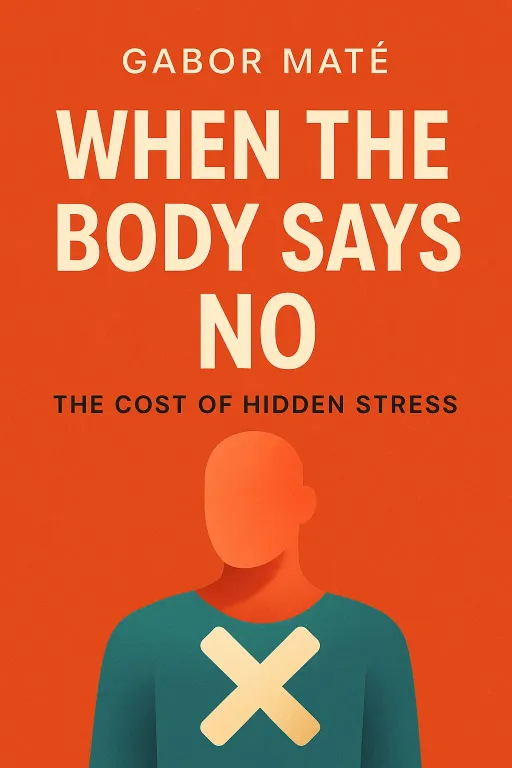
Nova: Because it diminishes your capacity to serve and lead effectively. It’s like believing you’re a hero for driving a car until it runs completely out of gas, leaving everyone stranded. Today, we're diving into this profound truth, guided by two incredible thinkers. First, Gabor Maté, with his groundbreaking work, "When the Body Says No." Maté, a Hungarian-Canadian physician renowned for his work on addiction, trauma, stress, and childhood development, gives us a medical-scientific lens into how our unacknowledged emotional stress literally manifests as physical illness.
Atlas: That’s fascinating. So, it's not just a feeling of being tired; there's a real biological cost to pushing through? I imagine for a lot of our listeners who are deep thinkers, scholars, or servants in their communities, this idea of internalizing stress until it breaks you down physically is a stark warning.
The Blind Spot of Self-Neglect: When Duty Leads to Depletion
SECTION
Nova: Exactly, Atlas. Maté eloquently argues that chronic stress and the suppression of emotions – often driven by an excessive sense of duty, by that very 'noble self-sacrifice' we just challenged – these don't just make you bad. They manifest as physical illness, from autoimmune disorders to cancer. He pulls back the curtain on the profound biological consequences of ignoring your limits.
Atlas: That's a powerful statement. Can you give us an example? Because it's easy to say 'stress causes illness,' but Maté really drills down into the mechanism, right?
Nova: He does. Think of Sarah, a hypothetical but very real composite of many of Maté's patients. She was a brilliant community organizer, always the first to volunteer, the last to leave. She believed deeply in her cause, often working 80-hour weeks, fueled by coffee and an unwavering sense of responsibility. She’d push down her own fatigue, her own anxieties about funding, her own need for connection, telling herself, "This isn't about me; it's about the mission."
Atlas: I can already hear so many of our listeners nodding. That's the narrative for so many high-achieving, service-oriented individuals.
Nova: Exactly. But after years of this intense, unceasing giving, Sarah starts getting persistent migraines. Then chronic fatigue. Then, something more serious, an autoimmune condition that slowly begins to erode her ability to work at all. Maté would explain that her body, having been ignored and overridden for so long, finally said "no" in the most definitive way possible. Her immune system, constantly under the physiological assault of stress hormones, began to attack itself. The cause: an unrelenting internal pressure to always be 'on,' to always prioritize external demands over internal signals. The process: chronic emotional suppression and physiological stress. The outcome: a severe physical breakdown that ultimately forced her to step away from the very work she loved.
Atlas: Wow. That's kind of heartbreaking. It’s like the very thing she was trying to achieve, serving others, was undermined by her own approach to it. So, it’s not just about feeling run down; it's about the body literally turning on itself when we ignore our deepest needs. What does Maté mean by 'profound biological consequences'? Is it just feeling tired, or something deeper?
Nova: It’s far deeper. He talks about the impact on the immune system, the nervous system, hormonal regulation. When we constantly override our body's signals for rest, for emotional processing, for connection, our stress response system stays activated. That chronic activation leads to inflammation, impairs immune function, and over time, can trigger or exacerbate serious illnesses. It's a biological betrayal, in a way, born from a psychological pattern of self-neglect.
Rest as a Radical Act: Reclaiming Capacity and Deepening Resilience
SECTION
Nova: So, if that's the blind spot, what's the path forward? And that's where John Mark Comer steps in with "The Ruthless Elimination of Hurry." Comer, a pastor and author who challenges the cultural addiction to busyness in our modern world, frames rest and spiritual disciplines not as optional extras, but as foundational practices for a healthy soul and sustainable leadership.
Atlas: Ruthless elimination of hurry? Nova, for a leader with a packed schedule, for someone running a busy household, or leading a community, that sounds like a fantasy, not a strategy. It feels utterly impossible to ruthlessly eliminate hurry when the world around you demands constant speed.
Nova: Oh, I totally get that initial reaction. Comer isn’t suggesting we all quit our jobs and move to a monastery. He’s challenging the to busyness, the belief that our worth is tied to our productivity, and that more speed equals more success. He shows how intentional slowing down actually your capacity, rather than diminishing it.
Atlas: I'm curious how. Because I think many of our listeners, especially those who are deep thinkers and service-driven, might equate slowing down with being less effective, or even irresponsible. How does taking time for oneself, for rest, actually make one effective in their ministry or leadership?
Nova: Think of it like this: if you're a carpenter, you don't just keep sawing away with a dull blade until the wood is ruined and you're exhausted. You pause, you sharpen your saw, and then you work more effectively. Comer uses spiritual disciplines—like silence, solitude, Sabbath, and simplicity—as ways to 'sharpen the saw' of your soul.
Atlas: Can you give an example of someone who actually did this? Someone who was in the thick of it, feeling that pressure, and then slowed down and saw their impact grow?
Nova: Absolutely. Consider another composite, Michael, a leader of a growing non-profit. He was constantly overwhelmed, feeling like he was always putting out fires and never truly leading. His team felt his stress, and his vision was getting lost in the daily grind. Inspired by Comer, Michael started taking one hour, twice a week, completely unplugged. No phone, no emails, just a walk in nature or quiet reflection.
Atlas: Just one hour? That doesn’t sound like "ruthless elimination of hurry," more like a coffee break.
Nova: Ah, but this hour was. It became sacred. In that quiet time, he started to gain clarity, to see patterns he’d missed, to connect dots. He realized his team meetings were inefficient, that he was micromanaging, and that his own anxiety was creating a bottleneck. The outcome? By creating space for rest and reflection, he became a more present, strategic, and calm leader. His team thrived because he was leading from a place of clarity and abundance, not depletion. He didn’t work; he worked and with greater impact, because he was giving from a full well, not an empty bucket. His resilience deepened, and his capacity to genuinely serve his community grew exponentially.
Synthesis & Takeaways
SECTION
Nova: So, what we're really seeing here, from both Maté and Comer, is a profound truth: true resilience in leadership—in life—comes from a deep respect for your own physical and emotional boundaries. It enables you to give from a place of abundance, not depletion. That mindset shift, from viewing personal well-being as selfish to seeing it as essential fuel for your ministry, is absolutely critical.
Atlas: It’s powerful. And it directly challenges that ingrained belief that to be a good shepherd or servant, you must constantly sacrifice yourself. What you’re saying is, that constant sacrifice actually makes you a less effective shepherd. So, when we talk about a 'non-negotiable hour,' it's not just about taking a break; it's about making a strategic investment in the very source of our capacity to give?
Nova: Precisely. It’s an act of wisdom, a spiritual discipline, and a profound commitment to sustainable impact. It’s about understanding that your well-being isn't a luxury; it's the foundation of everything you hope to achieve for others.
Atlas: That resonates deeply. It redefines what 'strength' truly means. So, for our listeners, if prioritizing your well-being is a spiritual discipline, what is one non-negotiable hour you can reclaim for yourself this week? That question feels less like a suggestion and more like an imperative now.
Nova: Indeed. Give from your overflow, not your deficit.
Atlas: This is Aibrary. Congratulations on your growth!









