Stop Guessing, Start Healing: The Guide to Reclaiming Your Inner Balance.
Golden Hook & Introduction
SECTION
Nova: What if I told you that treating your physical symptoms without looking at your emotional past is like trying to fix a leaky roof by painting over the water stains? You might feel better for a bit, but the real damage is still there, quietly getting worse.
Atlas: Oh, I know that feeling. That’s probably how most of us approach health, isn't it? We get a headache, we pop a pill. We feel tired, we drink more coffee. It's all about symptom management.
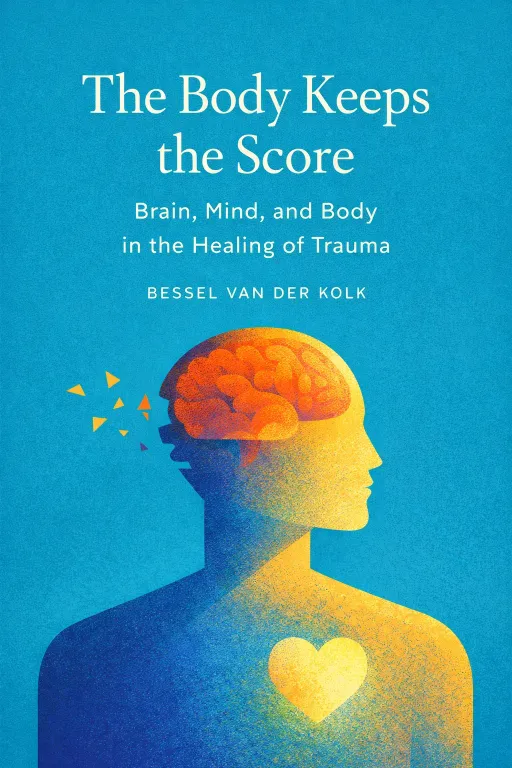
Nova: Exactly! And that's precisely the blind spot we're exploring today. We often treat physical health as entirely separate from our emotional world, but some groundbreaking work shows just how deeply intertwined they are. We’re diving into two truly transformative books: "The Body Keeps the Score" by the pioneering psychiatrist Bessel van der Kolk, and "When the Body Says No" by the incredibly insightful physician, Gabor Maté.
Atlas: Ah, van der Kolk and Maté. Their names come up so often when we talk about holistic health. I know Maté is renowned for his work on addiction and childhood development, bringing a deeply compassionate view to how our early experiences shape our health. And van der Kolk has been at the forefront of trauma research for decades, really pushing the medical community to recognize the profound biological impact of trauma.
Nova: Absolutely. These aren't just academic texts; they're essential guides to understanding ourselves. They reveal a fundamental truth: ignoring emotional wounds can actually hinder true healing and overall well-being. Today, we're going to unpack how our bodies silently hold onto our past, and what that means for our inner balance.
The Body Remembers: Trauma's Physical Footprint
SECTION
Nova: So, let's start with van der Kolk's revolutionary work. He reveals how trauma literally reshapes the brain and body. Imagine a highly decorated veteran, let's call him Mark, who returns from deployment with severe, unexplained chronic back pain. Doctors can't find a physical cause, and traditional treatments offer little relief. Mark also experiences debilitating fatigue and sudden, intense anxiety attacks.
Atlas: So you're saying his back pain might not just be from carrying heavy gear, but from something deeper? That sounds almost unbelievable. How does the body 'remember' something when the mind has suppressed it?
Nova: It's fascinating. Van der Kolk's research shows that Mark's nervous system, after prolonged exposure to life-threatening situations, got stuck in a perpetual 'fight or flight' mode. His brain’s alarm system, the amygdala, is constantly overactive, signaling danger even when he's safe at home. This chronic activation floods his body with stress hormones like cortisol and adrenaline, leading to constant muscle tension, inflammation, and eventually, that chronic pain. His body is literally bracing for an attack that isn't coming.
Atlas: Wow, so it’s like his body is still on the battlefield, even if his mind knows he's safe. That's a powerful image. But wait, how do we differentiate between just everyday stress and this kind of deep-seated trauma that reshapes the body?
Nova: That's a great question, and it's a crucial distinction. Everyday stress, while taxing, is usually transient. We experience it, and then our bodies can return to a state of calm. Trauma, however, especially repeated or early-life trauma, fundamentally alters the physiological baseline. It's not just a temporary reaction; it's a recalibration of the entire system. Mark's body isn't just stressed; it's living in a constant state of emergency preparedness. This can manifest not just as pain, but as fatigue, digestive issues, or even autoimmune disorders, because the immune system itself becomes dysregulated.
Atlas: That gives me chills. So, for our listeners who might be experiencing chronic physical symptoms without a clear diagnosis, you're suggesting they might need to look beyond just the physical.
Nova: Exactly. It's about recognizing that the body is not just a collection of parts; it's an integrated system where physical sensations are often messengers from our emotional past. Understanding this connection is the first step to comprehensive healing. It's about moving from "what's wrong with me?" to "what happened to me?"
When Emotions Become Illness: The Hidden Stress-Disease Connection
SECTION
Nova: Building on that, Gabor Maté takes us even further into the insidious ways our emotional lives and personalities can contribute to a wide range of illnesses. He explores the hidden stress-disease connection, showing how our emotional authenticity is vital for health.
Atlas: So it's not just big, obvious traumas, but also our everyday patterns of emotional suppression that can make us sick? That's actually pretty unsettling.
Nova: It really is. Maté highlights how certain personality traits, often developed as coping mechanisms in childhood, can lead to chronic stress. Think of someone like Sarah, a highly empathetic and responsible executive who always puts others' needs before her own. She never expresses anger, always says yes, and prides herself on being the rock for everyone around her. Internally, she's constantly suppressing her own desires and emotions, especially any negative ones.
Atlas: Oh, I’ve been there. I imagine a lot of our listeners feel that pressure, especially in high-demand roles. We're taught to be selfless, to be strong.
Nova: Precisely. For Sarah, this constant suppression creates an immense internal pressure cooker. Her body is flooded with stress hormones because she's never truly at rest, emotionally. Over time, this chronic stress starts to chip away at her immune system, making her susceptible to illnesses like chronic fatigue syndrome or even certain autoimmune conditions. Maté argues that her body is, in a way, saying 'no' to the emotional demands she can't articulate herself. Her true self is being denied, and her body pays the price.
Atlas: That makes me wonder, how do we even begin to identify these 'hidden' emotional patterns if we've been doing them our whole lives? It feels so ingrained, almost like part of our identity.
Nova: That's the challenge, and it's why Maté emphasizes the importance of emotional truth and authenticity. It starts with self-awareness. It's asking: Am I truly expressing what I feel? Am I honoring my own boundaries? For Sarah, it would involve learning to say 'no,' to express her needs, and to allow herself to feel and process emotions like anger or frustration, rather than constantly pushing them down. It’s a journey towards congruence between our internal experience and our external expression.
Atlas: For our listeners who are constantly juggling demands and perhaps recognizing some of these patterns in themselves, how can they start to listen to what their body is saying, especially when it's just 'whispering' at first?
Nova: It's about cultivating a deeper somatic awareness. Pay attention to those subtle cues: the persistent tension in your shoulders, the knot in your stomach before a difficult conversation, the unexplained fatigue. These aren't just random physical sensations; they're signals. They're telling you something about your emotional state, about unmet needs, or unexpressed feelings.
Synthesis & Takeaways
SECTION
Nova: So, bringing it all together, Nova's Take is clear: true health requires acknowledging and addressing the emotional burdens our bodies carry, not just their physical manifestations. We can't just treat the symptoms; we have to go to the root.
Atlas: It really makes you rethink what 'being healthy' even means, doesn't it? It's far more than just diet and exercise. It's about emotional honesty, about listening to those whispers before they become shouts.
Nova: Absolutely. It's about understanding that our bodies are not just passive containers for our minds, but active participants in our emotional stories. So, the deep question for all of us today is: What emotional experiences might your body be silently holding onto, and how could acknowledging them begin your healing journey?
Atlas: That's a powerful question to sit with. And it’s not about judgment, it’s about gentle curiosity, right? Just noticing.
Nova: Exactly. Start by simply paying attention, without judgment. Your body has been speaking to you all along. It’s time we started listening.
Nova: This is Aibrary. Congratulations on your growth!