Stop Guessing, Start Healing: The Guide to Mind-Body Connection.
Golden Hook & Introduction
SECTION
Nova: Atlas, give me your five-word review of a really common health belief. Go.
Atlas: My body? Just a meat suit. That's five.
Nova: Oh, that's good! And it perfectly sets up our conversation today because that idea—that our bodies are just separate vessels, divorced from our minds and emotions—is exactly the blind spot we're talking about. We often treat our physical symptoms like car trouble, just needing a mechanic, completely missing the driver's emotional state inside.
Atlas: You mean like my car's check engine light isn't just about the engine, but also about me stress-driving it through too many potholes?
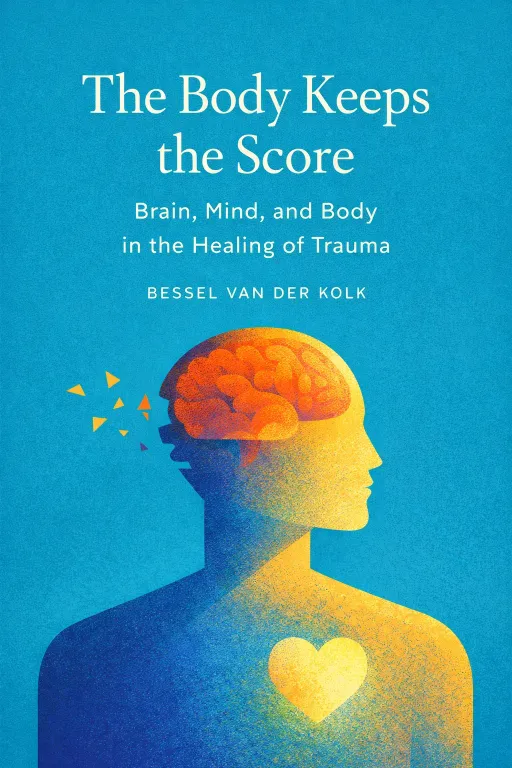
Nova: Precisely! And two brilliant minds have spent their careers illuminating this. Today, we're diving into the powerful insights from Bessel van der Kolk's groundbreaking work, "The Body Keeps the Score," and Gabor Maté's profound exploration in "When the Body Says No."
Atlas: Maté, isn't he the doctor who worked extensively in addiction and palliative care? That's quite a unique lens to view health from.
Nova: Absolutely. Maté's experience on the front lines of human suffering, witnessing how ignored trauma and chronic stress manifest, gave him an unparalleled perspective on the mind-body connection. And van der Kolk, as a pioneering psychiatrist, fundamentally shifted how we treat trauma by showing us that it's not just in our heads; it's literally held within our physiology. Their work compels us to stop guessing and start healing by truly understanding this intricate link.
Atlas: So, we're not just talking about feelings here, we're talking about biology. This isn't just touchy-feely stuff; it's deep-rooted science, right?
The Body as a Traumatic Record-Keeper
SECTION
Nova: Exactly. And that naturally leads us to our first core idea: the body as a traumatic record-keeper. Van der Kolk’s work, which is widely acclaimed and has had a massive cultural impact, shows us that trauma isn't just a bad memory. It's an event that gets physically imprinted.
Atlas: Physically imprinted? What does that even mean? Is it like a scar on your soul that shows up on your skin?
Nova: It's even deeper than that. Imagine a veteran, years after combat. He might consciously believe he's moved on. But he experiences inexplicable chronic back pain, or he flinches violently at sudden loud noises, even if it's just a car backfiring. Every night, his sleep is disturbed by nightmares, and he constantly feels on edge. His doctors can't find a purely physical cause for the pain or the hyper-vigilance.
Atlas: And the pain isn't just in his head?
Nova: It’s absolutely real, but its origin is in his body's memory of the trauma. When he was in combat, his body went into fight-or-flight mode. His muscles tensed, his heart pounded, his nervous system was on high alert. That physiological state, that complete system overwhelm, gets encoded. It's not just his brain remembering the event; his entire organism remembers the of terror and prepares for it to happen again, constantly.
Atlas: So, his body is still living in the war zone, even if his mind is trying to be at home. That's intense.
Nova: It is. His nervous system gets stuck in a state of hyper-arousal. This isn't a conscious choice. It's his amygdala, the brain's alarm center, constantly firing. This leads to chronic inflammation, muscle tension, digestive issues, and even changes in gene expression. His body is literally keeping the score of every terrifying moment, manifesting as physical symptoms and an inability to fully relax or feel safe.
Atlas: That gives me chills. So, his pain isn't a weakness; it's his body trying to communicate something that his conscious mind has suppressed or simply can't process alone.
Nova: Precisely. It’s a profound insight that challenges the traditional medical model. The body isn't just a machine that breaks down; it's an intricate record-keeper of our life experiences, deeply influencing our health. Many readers have found this perspective incredibly validating, finally understanding why they've struggled with seemingly unexplainable physical ailments.
Atlas: And I imagine this isn't just about big, dramatic traumas like combat, right? Could everyday stresses or smaller, repeated emotional hurts also get stored?
Nova: That’s a brilliant question, Atlas, and it leads us directly into our second core idea, heavily explored by Gabor Maté.
Emotional Repression and Chronic Illness
SECTION
Nova: Maté reveals the profound connection between emotional repression, chronic stress, and illness. He argues that our unexpressed feelings aren't just benign; they can manifest as physical symptoms and even chronic diseases.
Atlas: So, if I'm always holding back my frustration, it's not just making me grumpy; it could be making me sick?
Nova: Potentially. Maté, whose work is highly rated and widely praised for its compassionate yet incisive analysis, often highlights individuals who are "too nice," or who consistently put others' needs before their own, suppressing their authentic anger, sadness, or boundaries. He calls these individuals "people-pleasers."
Atlas: I know a few of those. Probably am one myself sometimes.
Nova: Many of us are. Imagine Sarah, a highly capable professional who always says "yes" to every request, even when she's overwhelmed. She avoids conflict at all costs, swallows her anger, and rarely expresses her true needs, believing it's her duty to be accommodating. Internally, her stress levels are through the roof, but externally, she maintains a calm, composed facade.
Atlas: So she's basically living in a constant state of internal turmoil, but nobody sees it?
Nova: Exactly. Her body, however, feels every bit of that turmoil. When she suppresses her anger or anxiety, her nervous system remains in a low-grade stress response. Her immune system becomes constantly activated, leading to chronic inflammation. Over time, this can manifest as an autoimmune condition, or chronic fatigue, or even digestive disorders like Irritable Bowel Syndrome. Her unexpressed emotional truth becomes a physical disease.
Atlas: Wow. So, her body is essentially screaming what her voice can't or won't say. That’s a powerful analogy.
Nova: It’s like a pressure cooker, Atlas. If you don't release the steam in healthy ways, eventually the pressure builds up and the cooker itself starts to crack. Maté's argument isn't that emotions all illness, but that chronic emotional repression and the resulting stress profoundly compromise the immune system, making us far more susceptible to illness.
Atlas: So both van der Kolk and Maté are essentially saying that our bodies are not just passive recipients of disease, but active participants in our health narrative, shaped by our emotional experiences. It's just that van der Kolk focuses on the big traumatic shockwaves, and Maté looks at the persistent, subtle emotional currents.
Nova: That’s a perfect synthesis. Both authors, though from slightly different angles, converge on the idea that our bodies are not just vessels; they are intricate record-keepers of our life experiences, deeply influencing our health. Ignoring this connection is, quite literally, a blind spot to our own healing.
Synthesis & Takeaways
SECTION
Nova: So, to bring it all together, what we learn from "Stop Guessing, Start Healing," through the lenses of van der Kolk and Maté, is that we have to bridge the gap between our minds and bodies. We can't just treat symptoms in isolation. The hidden archives of our physical self, the unexpressed emotional truths – they're all playing a role in our current health.
Atlas: It's like our bodies are constantly sending us messages, and we've just been ignoring the mail. So, what's one small step someone listening could take to acknowledge this connection?
Nova: Acknowledging is the first step. It could be as simple as taking a moment each day to check in with your body without judgment. Ask yourself, "What am I feeling right now, physically and emotionally?" Or perhaps, if you're struggling with a chronic physical issue, consider if there are any unresolved emotional experiences or patterns of emotional repression that might be contributing. It’s about cultivating curiosity, not blame.
Atlas: That's powerful. It's about shifting from viewing our bodies as problems to be fixed, to viewing them as wise storytellers that need to be heard.
Nova: Exactly. Your body isn't working against you; it's trying to communicate with you. Learning its language is the path to truly holistic healing.
Atlas: What an insightful journey into the depths of our own being. Thank you, Nova.
Nova: My pleasure, Atlas. This is Aibrary. Congratulations on your growth!