Beyond Pills: How Your Mind Shapes Your Body's Health
Golden Hook & Introduction
SECTION
Nova: What if I told you that your chronic back pain, your persistent migraines, or even that autoimmune flare-up might not be just bad luck, but a whispered message from your past, from emotions you never allowed yourself to feel?
Atlas: Wait, are you seriously suggesting my perpetually stiff neck isn't just from staring at a screen all day, but from some ancient, unexpressed frustration? That sounds… intriguing, and a little terrifying.
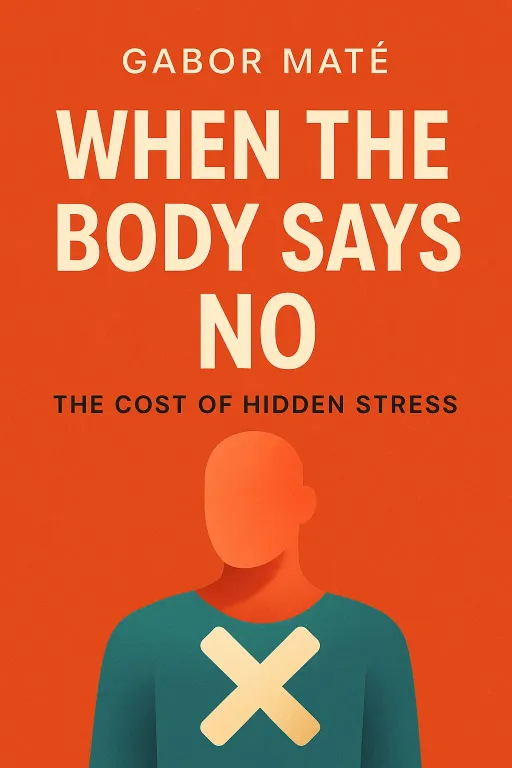
Nova: Intriguing and terrifying is a perfect description, Atlas. Because that’s exactly the radical but profoundly validated idea at the heart of by Dr. Gabor Maté. What’s fascinating about Maté is that he's not just some academic theorist; he’s a physician who has worked with patients suffering from addiction, chronic illness, and trauma, and he’s also openly shared his own struggles with ADHD and addiction. His personal journey gives him this incredibly unique lens, making his insights not just clinical, but deeply human and relatable. He argues that our emotional history, especially the parts we've repressed, profoundly shapes our physical health.
Atlas: So he’s saying our biography truly becomes our biology, not just metaphorically, but literally? That's a huge claim, especially in a world that often treats the body like a machine with interchangeable parts.
Nova: Precisely. And that brings us to what he calls "The Blind Spot."
The Blind Spot: Unveiling the Mind-Body Link in Illness
SECTION
Nova: For centuries, especially in Western medicine, we've operated under this almost surgical separation of mind and body. You go to a specialist for your heart, another for your gut, another for your brain. It's incredibly effective for acute issues, but it creates this massive blind spot when it comes to chronic illness. We treat symptoms, often brilliantly, but we rarely ask, "What emotional landscape is this body navigating? What stories are being suppressed?"
Atlas: But isn't that just "stress" we're talking about? Everybody has stress. It’s unavoidable in modern life. How is this different, or deeper, than just saying, "Oh, you're stressed, so your stomach hurts"?
Nova: That's a great question, Atlas, and it gets to the core of Maté's distinction. It's not just about the surface-level stress of a tough day. It's about chronic, often unconscious, emotional repression. Think of it as unexpressed feelings – anger, sadness, fear – that we've learned to swallow, perhaps since childhood, because expressing them felt unsafe or unacceptable. When you consistently override your authentic emotional responses, your body pays the price.
Atlas: Can you give an example? Because "swallowing feelings" sounds like something we all do to some extent.
Nova: Absolutely. Maté shares numerous case studies. One that always sticks with me is the story of a woman with a severe autoimmune condition, let's call her Sarah. Sarah was the quintessential "giver," always putting everyone else's needs first, never saying no, always agreeable. She’d suppressed her own anger and resentment for decades, believing it was her duty to be pleasant and accommodating. Her body, however, was in a constant state of internal war. Her immune system, designed to protect her, turned against itself.
Atlas: Wow. So, it's not just about 'thinking positive thoughts'; it's about acknowledging the negative ones that we've buried? I imagine a lot of our listeners, who are constantly pushing forward, achieving, and probably suppressing any perceived 'weakness,' might really relate to that kind of suppression.
Nova: Exactly. It's about authenticity, not forced positivity. Maté argues that when we deny our authentic emotional needs, our biological stress response gets stuck in the 'on' position. Our cortisol levels remain elevated, our immune system becomes dysregulated, inflammation increases. It's a continuous internal emergency, and over time, that lays the groundwork for physical disease. The body literally manifests the 'no' that the person couldn't express verbally or emotionally.
Atlas: That's wild. It's like our emotional system is constantly trying to communicate, and if we shut it down, it finds another outlet, a physical one. That's a profound re-evaluation of illness.
The Shift: Emotional Repression as a Root Cause of Physical Disease
SECTION
Nova: And this leads us directly to Maté's profound shift in understanding: that emotional repression isn't just a to illness, but can be a direct. He posits that illnesses like autoimmune diseases, cancer, and even neurodegenerative conditions, aren't just random genetic misfortunes or environmental hits, but often have deep roots in our emotional lives, especially in early childhood experiences.
Atlas: Whoa, that's a radical idea. So, being 'too nice' or 'too selfless' could actually be physically dangerous? That goes against so much of what we're taught about being good people, about being successful and accommodating. What’s the mechanism there?
Nova: It's a fundamental biological imperative of authenticity. Maté points out that from a very young age, we learn to adapt to our environment. If a child's environment demands they suppress their anger, sadness, or need for comfort to gain love or safety, they will. They become 'good' children, but at the cost of disowning parts of themselves. This pattern often continues into adulthood. The body, designed for connection and authentic expression, is then constantly trying to manage this internal conflict.
Atlas: So it's like our body is sending us a memo, but we've been ignoring the mailbox. How do we even begin to read those memos, especially if we've been expertly ignoring them for decades? Because for many, those emotional patterns are so deeply ingrained, they feel like 'just who I am.'
Nova: That's the crux of it, Atlas. It requires a journey of self-awareness and emotional literacy. Maté encourages us to explore our personal histories, to understand the patterns of our emotional repression. It's about grieving what needed to be grieved, expressing what needed to be expressed, and reclaiming our authentic selves. He cites patients who, upon understanding and beginning to process deeply buried emotions, experienced significant improvements in their physical conditions. Not a magic cure, but a profound shift in their healing trajectory.
Atlas: That makes me wonder, for someone who identifies with that "too nice" or "too selfless" pattern, how do they even start to differentiate between genuine kindness and a self-sacrificing pattern that's actually harming them?
Nova: It's a nuanced process, but a good starting point is noticing where you feel resentment. If you're constantly doing things for others out of obligation rather than genuine desire, and then feeling drained or resentful, that's a red flag. It's about checking in with your body's signals – the tension, the fatigue, the subtle aches – and asking what emotion might be linked to them.
Atlas: It sounds like a re-education of our entire internal compass. Not just what we think, but what we feel, and what our body is trying to communicate.
Synthesis & Takeaways
SECTION
Nova: Absolutely. Maté's work is a powerful reminder that true healing requires integrating our emotional and physical selves. It's about recognizing that our biography, our life story, becomes our biology. Our cells remember what our conscious mind often tries to forget or suppress.
Atlas: So, the deep question isn't just 'how do I fix this symptom?' but 'what is my body trying to tell me about my life, my relationships, my past?' It really challenges our entire paradigm of health, moving beyond just diet and exercise.
Nova: Precisely. It’s about cultivating emotional honesty and self-compassion. It's a demanding path, but one that promises not just symptom relief, but a deeper, more integrated sense of well-being.
Atlas: That gives me chills. For our curious listeners today, what’s one immediate, actionable thing they can do to start listening to their body's whispers, even if they’ve been ignoring them for decades?
Nova: Start a 'feeling journal.' Not just what happened in your day, but how you about it, especially the feelings you pushed down or dismissed. Just observe, without judgment. See what patterns emerge. It's a simple, yet profoundly powerful step towards bridging that mind-body gap.
Atlas: A feeling journal. Simple, yet profoundly challenging. A perfect start for anyone looking to bridge that gap and really understand what their body is saying. This has been incredibly insightful, Nova.
Nova: Absolutely, Atlas. A powerful reminder that genuine healing begins when we stop seeing ourselves as separate parts.