The Silent Language of Influence: Decoding Nonverbal Cues for Leadership
Golden Hook & Introduction
SECTION
Nova: Atlas, I want you to close your eyes for a second. Imagine you're in a crucial negotiation. What's the most powerful weapon in your arsenal?
Atlas: My perfectly crafted PowerPoint slides, naturally. Or maybe my dazzling wit.
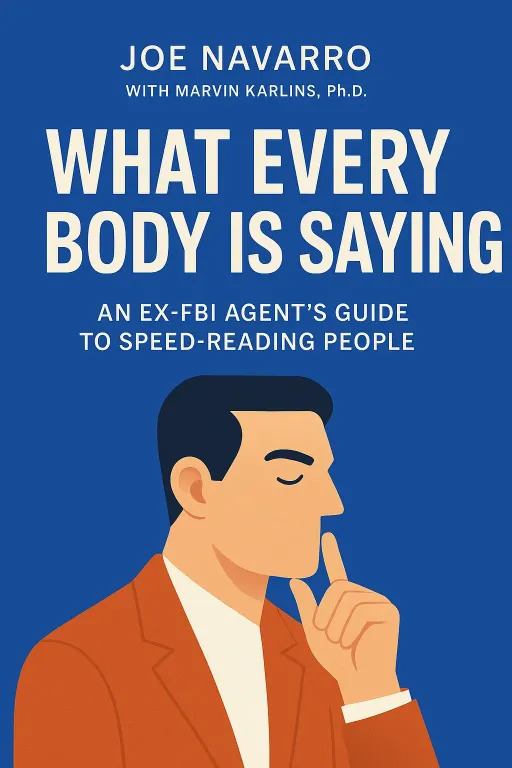
Nova: Wrong! It's the silent conversation happening beneath the surface, the one you're probably ignoring. Today, we're diving into the silent but mighty world of nonverbal communication, drawing insights from powerful works like "What Every BODY is Saying" by former FBI agent Joe Navarro, whose unique career gave him an unparalleled perspective on human deception and genuine emotion, and "Presence" by Dr. Amy Cuddy, a social psychologist whose groundbreaking research revealed how our bodies shape our minds. These aren't just academic texts; they're tactical guides for anyone who wants to lead with more impact.
Atlas: Huh. So we're talking about more than just a firm handshake, then, aren't we?
The Blind Spot: Unspoken Messages
SECTION
Nova: Absolutely. We're talking about "The Blind Spot" – the profound, often-missed reality that as leaders, we're obsessed with our words, our carefully constructed arguments, our brilliant strategies. But we're often completely blind to the powerful, unspoken messages we and others are constantly conveying.
Atlas: Okay, but isn't that just... common sense? Like, you know if someone's fidgeting, they're nervous. What's the 'blind spot' part?
Nova: It goes so much deeper than that. Navarro, from his FBI days, gives incredible examples. He talks about how suspects, even when verbally denying everything, would display 'gravity-defying' behaviors – their feet might point towards the exit, or their hands would subconsciously move to cover their neck or torso, classic signs of discomfort or deception. These aren't just 'nervous ticks'; they are deeply ingrained limbic system responses. If a leader misses these cues in a team meeting, they might misinterpret dissent as agreement, or a critical concern as minor hesitation.
Atlas: Whoa, so you're saying someone could be nodding along to my brilliant new strategy, but their feet are literally pointing for the door? That's... unsettling. I imagine a lot of our listeners in high-stakes environments, where data drives decisions, might find this a hard pill to swallow. They want numbers, not feelings.
Nova: Exactly. And that's the blind spot. We're so focused on the verbal data, we miss the rich, often more honest, nonverbal data. It profoundly impacts trust, perception, and influence. Ignoring it is like trying to navigate a complex battleground with only half a map. You're missing critical intelligence.
Atlas: So, if I'm leading a remote team, this is even harder, right? Are we just doomed to misinterpret each other over Zoom?
Nova: Not doomed, but it requires conscious effort. Even over video, micro-expressions, posture, even the direction of someone's gaze – or lack thereof – can tell you a lot. The blind spot isn't just about missing cues; it's about not even realizing those cues exist and are constantly broadcasting information.
The Shift: Mastering Nonverbal Influence
SECTION
Nova: And that naturally leads us to "The Shift" – how we move from being blind to becoming fluent in this silent language. Navarro's work helps us decode others, but Amy Cuddy's "Presence" brings in the other crucial half: how your body language shapes you.
Atlas: Okay, now you're going to tell me that standing like Superman before a presentation will magically make me smarter, aren't you?
Nova: Well, not smarter, but certainly more confident and less stressed! Cuddy's research, which has been widely acclaimed and sparked significant public discussion, shows that adopting 'power poses' – expansive, open postures – for just two minutes can actually change your body chemistry. It increases testosterone, the dominance hormone, and decreases cortisol, the stress hormone.
Atlas: So you're saying if I'm about to walk into a tough client pitch, instead of hunched over my laptop, I should be doing my best superhero impression in the bathroom?
Nova: Precisely! This isn't about faking it until you make it; it's about 'faking it until you become it.' Your body language isn't just an outcome of your internal state; it's a cause. This is a game-changer for leaders. If you can consciously shift your internal state through your posture, you can walk into that room with genuine confidence, not just a forced smile.
Atlas: That’s actually really inspiring. I can imagine a lot of our listeners, especially those in high-pressure roles, struggling with imposter syndrome. This gives them a tangible, immediate tool. But does it actually work? Like, is there a real, measurable impact beyond just feeling better?
Nova: Absolutely. Beyond the internal chemical shifts, projecting confidence through open, powerful body language makes others perceive you as more authoritative, more trustworthy, and more influential. It's a feedback loop. You project confidence, you feel more confident, and others respond to that perceived confidence, reinforcing your influence. It’s about leading with greater empathy and authority, building stronger relationships because you're more attuned to others, and making your messages resonate more deeply because you embody them.
Synthesis & Takeaways
SECTION
Atlas: So, what I'm hearing is that leadership isn't just about what you say, or even what you do, but also about how you are – how you present yourself, and how you perceive others, all through this silent language.
Nova: Exactly. The deep insight here is that influence is a two-way street, constantly broadcasting and receiving. By mastering nonverbal communication, you're not just adding a skill; you're unlocking a deeper understanding of human nature itself. It's about becoming a truly impactful leader who can connect on a fundamental, primal level. And the cost of ignoring it isn't just missed opportunities; it's a fundamental disconnect from the people you aim to lead.
Atlas: That gives me chills. So, for our listeners who are ready to stop navigating with half a map, what's one practical step they can take today?
Nova: Here's a simple, actionable challenge: Observe a conversation today – maybe at work, or even at home. Pay attention to the nonverbal cues. What did you notice? How did they align with or contradict the spoken words? Just becoming aware is the first, most powerful step towards mastering this silent language.
Atlas: I love that. It’s a powerful way to start. And if you found this conversation insightful, share your observations with us. We'd love to hear how these silent messages play out in your world.
Nova: This is Aibrary. Congratulations on your growth!