The 'Great Man' Fallacy: Why Individual Heroes Aren't Enough to Explain History
Golden Hook & Introduction
SECTION
Nova: Most of us grew up with history lessons filled with singular heroes, the 'great men' who shaped empires and decided wars. We love those stories, don't we? But what if those figures were actually just puppets of larger, unseen forces? What if our heroes are a magnificent, yet ultimately blinding, spot in our collective historical vision?
Atlas: Whoa. Hold on. Are you saying our history books are, dare I say, fudging the truth? That's a bold claim, Nova. It feels almost sacrilegious to question the idea of the singular, powerful individual driving events.
Nova: Not lying, Atlas, but perhaps oversimplifying. We have this deep-seated human need for narrative, for cause and effect, for a protagonist. And it's a powerful lens. But what if that lens blinds us to the deeper, often chaotic, currents that truly shape events? What if we're overlooking the collective, anonymous forces, the sheer unpredictability of it all?
Atlas: I mean, that sounds incredibly complex. My brain immediately goes to all the leaders I learned about – Caesar, Napoleon, Washington. You're telling me they weren't the main characters in their own stories?
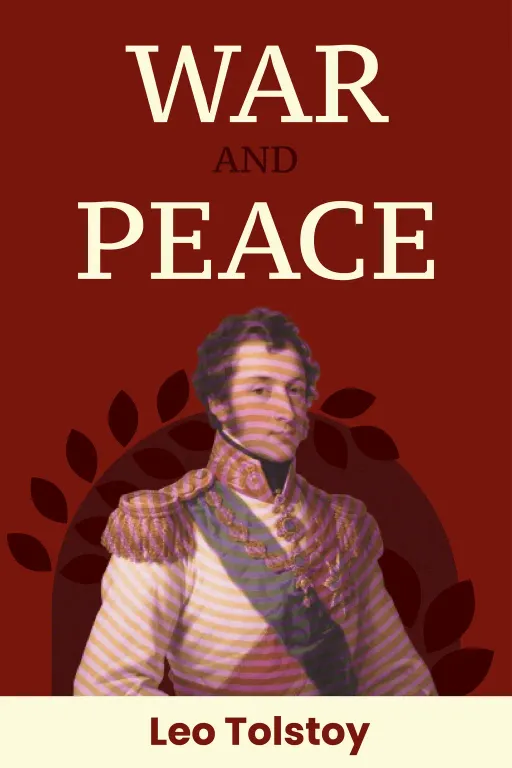
Nova: Not in the way we often imagine. And it's not a new idea. We're drawing insights today from some truly powerful thinkers who've wrestled with this. On one hand, we have Leo Tolstoy, the literary giant, who used his epic novel “War and Peace” to meticulously dismantle the prevailing historical theories of his time. And then, surprisingly, Nassim Nicholas Taleb, a former options trader turned philosopher, who brought a rigorous perspective on randomness and unpredictability to the forefront.
Atlas: Tolstoy and a financial trader? This is going to be good. I'm already seeing the connections between literature and the wild world of market dynamics. So, where do we begin to unravel this historical blind spot?
Deconstructing the 'Great Man' Fallacy
SECTION
Nova: We start by looking critically at what we call the 'Great Man' fallacy. It's our human tendency to look for single causes and singular figures to explain history. It makes for good stories, it's neat, it's tidy. But it misses the vast, interconnected web of societal forces and individual wills that truly shape events. Take Napoleon, for instance. A figure who epitomizes the 'Great Man' in popular imagination.
Atlas: Exactly! He conquered half of Europe, crowned himself emperor, redefined warfare. If anyone was a 'Great Man,' it was Napoleon. How can you argue against his individual impact?
Nova: And that's precisely where Tolstoy comes in with his monumental "War and Peace." He essentially wrote an entire novel as a philosophical treatise against this very idea. He shows that leaders like Napoleon, despite their grand pronouncements and strategic genius, are often products of circumstances, not their sole drivers. Their decisions are limited by logistical realities, the weather, the sheer unpredictability of battle, and crucially, the individual choices and actions of hundreds of thousands of ordinary people.
Atlas: So, it's not that Napoleon didn't anything, but his individual will was just one thread in a massive, overwhelming tapestry? That really makes you rethink those iconic historical moments where one person seemingly changed everything.
Nova: Precisely. Imagine the chaos of a battlefield, the fog of war. Tolstoy depicts generals issuing orders that are misunderstood, troops getting lost, unexpected resistance, acts of individual bravery or cowardice totally outside a leader's control. The cause might be a general's command, but the process involves myriad individual actions, miscommunications, environmental factors, and the outcome is an event far removed from the original intent. It's a symphony of countless, often anonymous, actions.
Atlas: That's a powerful image. It makes me think about how we simplify history for textbooks, creating these clean lines of cause and effect driven by one person. But what you're describing is a kind of historical emergent property, where the whole is far greater, and far messier, than the sum of its 'great' parts.
Nova: Exactly. It's about recognizing that blind spot. Our desire for a hero, for a clear narrative, makes us overlook the collective, anonymous forces at play. We attribute an entire victory or defeat to one person, when in reality, it was a complex dance of countless factors.
Atlas: For those of us who tend to look for clear lines of cause and effect, especially when trying to understand societal change, this is a real challenge. It means we have to dig deeper than the headlines or the historical biographies.
The Power of Unpredictable Events and Complex Systems
SECTION
Nova: And speaking of those massive tapestries, sometimes a single, unexpected thread can rip through the whole thing, changing its pattern entirely, often in ways no 'great man' could have ever foreseen or controlled. That naturally brings us to another powerful idea that challenges our linear view of history and the illusion of control.
Atlas: Are we talking about pure randomness here, or something more profound, something with a pattern we just can't see yet?
Nova: We're talking about what Nassim Nicholas Taleb famously calls 'Black Swans' from his book of the same name. These are unpredictable, high-impact events that, in hindsight, seem explainable, but were impossible to predict beforehand. They emerge from complex systems, defying easy explanation or the foresight of any single leader.
Atlas: So, the 'Great Man' can't even predict the biggest curveballs heading their way. That must be incredibly frustrating for someone trying to 'steer the ship' of a nation or an empire. It makes a lot of sense for our listeners interested in geopolitical dynamics – how do you plan for the truly unthinkable?
Nova: You really can't. Think about the Black Death in the 14th century. A truly unforeseen pandemic that wiped out a third of Europe's population. No king, no general, no 'great man' could have predicted it, let alone controlled its impact. Its consequences were profound: it reshaped labor markets, challenged religious authority, led to social upheaval, and ultimately contributed to the end of feudalism. It was a Black Swan event that fundamentally altered the course of history, not through the will of a leader, but through a biological, systemic shock.
Atlas: Wow. That's a powerful example. It makes all those grand strategies and heroic narratives seem almost quaint in the face of such overwhelming, uncontrollable forces. It means our linear view of cause and effect is constantly being challenged by these seismic, unpredictable shifts.
Nova: Exactly. Taleb highlights how these events challenge our ingrained assumption that we can predict and control everything, especially when dealing with complex systems. Recognizing these 'black swans' and the inherent complexity helps you see patterns beyond the obvious. It means understanding that history isn't just a series of deliberate choices, but a complex dance of countless factors, often punctuated by the utterly unforeseen.
Atlas: It sounds like a much more humble, yet ultimately more accurate, way to look at the world. It shifts the focus from who's in charge, to what forces are truly at play.
Synthesis & Takeaways
SECTION
Nova: And that's the profound insight when we bring these two ideas together: the 'Great Man' fallacy and the power of Black Swans. History isn't a straight line dictated by a few powerful individuals. It's a complex, chaotic dance of countless factors, often punctuated by the utterly unforeseen. It's a dynamic system where collective action and unpredictable events often hold more sway than any single hero.
Atlas: So, if we focus less on the individual heroes, and more on the collective and embrace the chaos, what does that teach us about societal change today? For those of us trying to understand current global power plays, how does this shift our perspective?
Nova: By focusing less on individual 'heroes' and more on the collective, the systemic, and the unpredictable, we gain a more nuanced, realistic, and ultimately more empowering view of societal change. It means understanding that change is often bottom-up, emergent, and can be profoundly influenced by small, seemingly insignificant shifts or truly random events. It means looking for leverage points in systems, not just charismatic leaders. It empowers us to see that everyone plays a part, and that the collective will, even when anonymous, has immense power.
Atlas: That's actually really inspiring. It means we all play a part, and even small, collective actions can have unforeseen, massive impacts. It shifts the power from a few 'great men' to the distributed agency of many. It challenges us to look beyond the obvious narrative and seek out the deeper currents.
Nova: Exactly. It's about seeing the dance, not just the dancers. And that's a much richer, more complex, and ultimately more accurate way to understand our world, and our place within it. It makes you a more informed perspective-taker, a true societal architect of understanding.
Atlas: What a powerful reframe. It makes me want to look at every historical narrative with a fresh, more critical eye. Thank you, Nova, for shedding light on such a fundamental blind spot.
Nova: My pleasure, Atlas. Always a joy to explore these deep currents with you.
Nova: This is Aibrary. Congratulations on your growth!