Beyond the Battlefield: What War Teaches Us About Human Nature
Golden Hook & Introduction
SECTION
Nova: We're often told that war is hell, a chaotic mess. A simple clash of forces, brute strength against brute strength. But what if the most brutal, destructive force humanity has ever unleashed is also its most profound, albeit unwelcome, teacher?
Atlas: Oh, I like that. It immediately flips the script on how we typically view conflict. We tend to see it as something to avoid, a breakdown of order, not a source of wisdom.
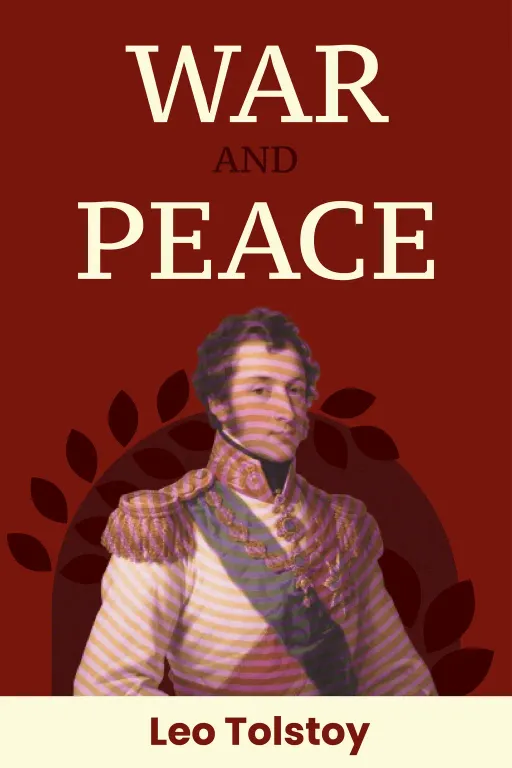
Nova: Exactly! Today, we're going 'Beyond the Battlefield,' exploring what war truly teaches us about human nature, strategy, and society. We’re drawing insights from two titans who, separated by millennia, each offered an unparalleled lens: Leo Tolstoy's sprawling epic,, and Sun Tzu's ancient masterpiece,.
Atlas: That’s a powerful pairing. These aren't just historical texts or dusty military manuals; they're enduring philosophical treatises that have shaped thought across millennia, still incredibly relevant today. It's fascinating how a book written about 19th-century European conflicts or ancient Chinese skirmishes can still resonate with someone navigating, say, a complex corporate merger or even personal dilemmas.
Nova: Absolutely. And that timelessness is precisely why ignoring their lessons means missing vital insights into culture, power, and, most importantly, ourselves. Because when you strip away the uniforms and the politics, you find the raw essence of humanity.
The Human Tapestry of War: Tolstoy's Unflinching Gaze
SECTION
Nova: So let's start with Tolstoy and. When most people think of it, they imagine grand battles and epic pronouncements. But Tolstoy masterfully explores the human experience those grand historical events. He shows how individual choices, sometimes seemingly insignificant, and the sheer unpredictability of chance intertwine with the sweeping currents of history, often beyond anyone's control.
Atlas: That makes me wonder, how does that perspective challenge our modern obsession with control and planning, especially in incredibly complex systems like, say, geopolitical shifts or large-scale societal reforms? If individual choices and chance are so paramount, what's even the point of a grand strategy?
Nova: It’s a brilliant question, and it’s where Tolstoy is so revolutionary. He essentially argues against the 'Great Man' theory of history, suggesting that even the most brilliant general or emperor is just one thread in an immense, chaotic tapestry. Imagine a pivotal moment in a battle: a general has a meticulously crafted plan, perfect on paper. But then, a low-ranking officer makes a spontaneous decision, a messenger gets lost, or a sudden downpour turns the battlefield into mud. These small, human, unpredictable elements can completely derail the most brilliant strategy.
Atlas: Right? Like, you have this perfectly orchestrated campaign, but then one soldier trips, drops his rifle, and that somehow triggers a chain reaction that shifts the entire front. It feels almost absurd, but also incredibly human.
Nova: Exactly! Tolstoy’s genius is in showing us the 'fog of war' not just as a lack of information, but as the overwhelming, almost spiritual, confusion that permeates human conflict. He delves into the inner lives of his characters – the fear, the courage, the vanity, the patriotism, the sheer exhaustion – and demonstrates how these internal states profoundly impact outcomes, often more than any strategic genius. The individual soldier, terrified and disoriented, might be driven by something as simple as the desire to protect a comrade, completely overriding tactical orders.
Atlas: So he’s saying that beneath the grand narratives of victory and defeat, there's always this messy, deeply personal human story, full of irrationality and unexpected moments. It’s not a chessboard; it’s a living, breathing, unpredictable organism. That’s actually really inspiring, because it suggests that even in the most overwhelming circumstances, individual actions retain their significance, even if not in the way we expect.
Nova: Precisely. It's a reminder that no matter how much we plan, how many algorithms we run, or how many data points we collect, the human element – with all its flaws and brilliance – will always introduce an irreducible level of uncertainty. It's the ultimate lesson in humility for anyone who believes they can fully control a situation.
Atlas: Huh. That’s a tough pill to swallow for anyone who thrives on analytical rigor and wants clear, predictable outcomes. It’s like, you can analyze all the variables, but then a butterfly flaps its wings, and suddenly, the entire system shifts.
Nova: And that's the beauty of it. It forces us to acknowledge the limits of our understanding, and perhaps, to find a different kind of wisdom in accepting that complexity. It’s about understanding the of events, rather than trying to rigidly direct every single current.
Strategic Mastery: Sun Tzu's Timeless Blueprint for Life's Battles
SECTION
Nova: Now, if Tolstoy shows us the limits of control, Sun Tzu, in, offers us a blueprint for how to exert control, or at least influence, within that chaos. He provides timeless principles of strategy, not just for battle, but for any competitive endeavor.
Atlas: Okay, so if Tolstoy is about embracing the messy reality of human nature in conflict, Sun Tzu is about imposing order on it. But how do you reconcile that with the sheer unpredictability we just discussed? Isn't often seen as a cold, calculating, almost ruthless guide? For someone trying to understand, say, comparative political systems and the dynamics of power, it seems almost too simplistic, or perhaps even dangerous.
Nova: That’s a common misconception, Atlas. While it is certainly calculating, it’s not about brute force or endless aggression. Sun Tzu's core emphasis is on knowing yourself, knowing your enemy, and knowing the terrain. And crucially, achieving victory fighting is the supreme excellence. It’s about leveraging psychology, information, and positioning.
Atlas: So you're saying the ideal Sun Tzu victory isn't a bloody battle, but a strategic maneuver that makes the battle unnecessary? Like winning before the fight even begins?
Nova: Exactly. Imagine a company planning to launch a new product into a crowded market. A Sun Tzu approach wouldn't be about just outspending the competition in advertising. It would involve meticulously understanding their competitors' strengths and weaknesses, their supply chains, their customer loyalty. It would also involve understanding their internal capabilities, their unique selling propositions, and their team's morale. And then, it would be about positioning their product in a niche, or with a feature set, that makes direct, costly competition unnecessary – essentially, finding the 'uncontested ground.'
Atlas: That’s a powerful reframing. It’s not just about winning; it’s about winning, with minimal expenditure of resources. So it translates directly to business strategy, negotiation, even personal goal setting. Like, if you know your own strengths and weaknesses, and you understand the 'terrain' of your career path, you can strategically position yourself for advancement without having to fight every single battle.
Nova: Precisely. Sun Tzu talks about "subduing the enemy without fighting." This means creating such an overwhelming strategic advantage, or such a clear understanding of the situation, that your opponent either concedes or is rendered ineffective before a direct confrontation. It's about deception, yes, but also about foresight, adaptability, and an almost Zen-like detachment. It’s about seeing the whole board, not just your next move.
Atlas: I guess that makes sense. It's like, in geopolitical shifts, you're not just looking at military might, but at economic leverage, cultural influence, technological advantage. A nation that truly understands its own position and its rivals' can achieve its objectives without ever firing a shot. It's a much more sophisticated view of power.
Nova: It is. Both Tolstoy and Sun Tzu teach us that conflict is a mirror to our deepest strengths and flaws. Sun Tzu gives us the tools to analyze and act, while Tolstoy reminds us of the unpredictable human heart that beats beneath all strategy.
Synthesis & Takeaways
SECTION
Nova: So, bringing these two giants together, what emerges is a powerful, almost paradoxical lesson. Tolstoy shows us the profound chaos and human element that no strategy can fully tame, while Sun Tzu offers us the most elegant frameworks for navigating that very chaos.
Atlas: It's like, you need to understand the fundamental unpredictability and human messiness of any situation, but you also need a rigorous, analytical framework to act effectively within it. Otherwise, you're just flailing. For our listeners who are constantly dissecting complex systems, whether it’s in post-war reconstruction or understanding market dynamics, this dual perspective is invaluable.
Nova: Absolutely. The deep question these classics pose is: how might these timeless strategies and human insights inform current challenges? Are you so caught up in the strategic game that you're forgetting the irrational, emotional human element? Or are you so overwhelmed by the chaos that you're failing to apply fundamental strategic principles?
Atlas: That’s the real insight here. It’s not one or the other. It’s the dynamic interplay between the two. The best leaders, the most effective strategists, are the ones who understand both the meticulous plans and the sudden, unpredictable human choice that can unravel everything. They embrace the paradox.
Nova: They do. They understand that while you must plan with precision, you must also execute with an awareness of the human spirit's boundless capacity for both brilliance and folly. And that’s a lesson that extends far beyond any battlefield.
Atlas: It provides such incredible clarity. It's about recognizing that there’s no absolute control, but there are always principles you can apply to increase your odds and navigate uncertainty.
Nova: This is Aibrary. Congratulations on your growth!