The Architecture of Trust: Re-centering the Human Spectrum
Golden Hook & Introduction
SECTION
Socrates: When we look at a person whose behavior puzzles us, why is our first instinct so often to suppress the behavior rather than to understand the source? Why do we focus on the shadow on the wall instead of the fire that casts it?
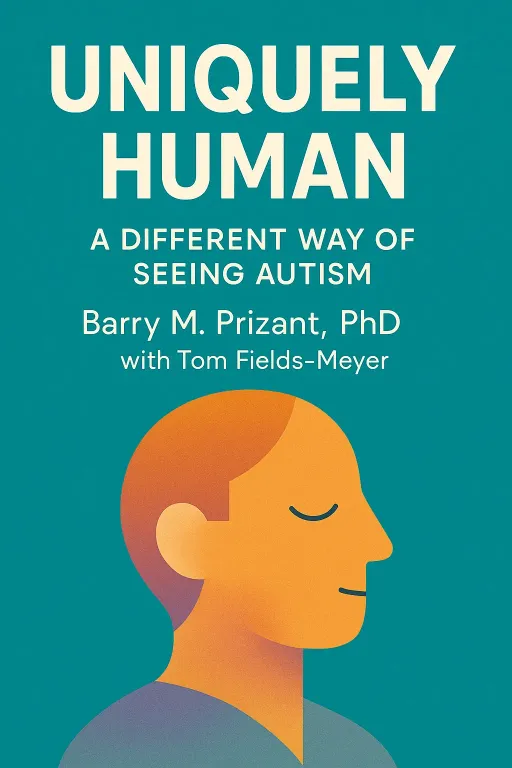
Aibrarygg82f7: It is the classic human trap, Socrates. We mistake our discomfort with another person's expression for a defect in their nature. In the realm of neurodiversity, and specifically autism, this is the tragedy of the "fix-it" mentality. We see a child fluttering their fingers, or repeating a phrase, or melting down in a crowded space, and our immediate, almost Machiavellian impulse is to enforce compliance. But as Epictetus reminded us, people are disturbed not by things, but by the principles and notions which they form concerning things. When we look at autism through the lens of Barry Prizant’s, we are forced to confront a deeper truth: these behaviors are not random, meaningless pathologies. They are logical, adaptive, and deeply human responses to a world that often feels overwhelmingly chaotic.
Socrates: If these behaviors are indeed adaptive, how do we begin to decode them? What does it mean to truly shift our gaze from the surface to the depths?
Aibrarygg82f7: It means we must construct a new map of understanding. Today, we are going to tackle this paradigm shift from three distinct angles. First, we will explore the power of asking "Why?"—reframing so-called "deficits" as vital coping mechanisms for emotional regulation. Second, we will dissect the fundamental architecture of trust, fear, and control, examining how a "disability of trust" shapes an individual's interaction with their environment. And finally, we will look at the indelible power of emotional memory, exploring how we can help overwrite past traumas by actively energizing the spirit rather than merely training the mind.
Deep Dive into Core Topic 1: The Socratic 'Why' and the Illusion of Pathology
SECTION
Socrates: Let us begin with that first step. Why is the question "Why?" so revolutionary in a field dominated by behavioral modification?
Aibrarygg82f7: Because "Why?" is the ultimate tool of empathy. Traditional behavioral therapies often operate on a simple stimulus-response model. If a child does something disruptive, stop it. But Prizant shares the story of Michael, a nine-year-old boy who habitually fluttered his fingers in front of his eyes. Teachers and parents spent years trying to force his hands down, viewing it as a useless "autistic" tic. But after Michael’s grandfather passed away—his first real experience of loss—Michael asked a question that shattered this assumption. He asked, "In heaven, are people allowed to look at their hands?"
Socrates: A question that reveals an entire inner world, does it not? What did his hands represent to him?
Aibrarygg82f7: Precisely. For Michael, looking at his hands was not a random malfunction; it was his sanctuary. It was a source of profound comfort, grounding, and self-regulation in a world that felt unstable. When we ask "Why?", we realize that what we call "autistic behaviors" are actually coping strategies. Consider the story of Jesse. When Jesse transferred to a new school district, his previous records labeled him the "worst behavior problem" they had ever seen. He was highly anxious, non-speaking, prone to self-harm, and completely uncooperative. The old school’s solution was isolation and punishment—trying to force compliance. But the new school team did something different. They asked Jesse was reacting this way. They realized his behavior was a desperate attempt to communicate his extreme sensory overload and his terror of losing control. By introducing visual schedules, picture symbols, and sensory breaks, they gave him a voice and a sense of predictability. The result? Jesse didn't just stop acting out; he thrived. He went on to excel in high school chemistry, work as a teacher's assistant, and hold down a job. His "behavior problem" was actually a communication problem.
Socrates: If behavior is communication, then what are we communicating when we try to suppress it without understanding? Are we not telling them that their survival mechanisms are invalid?
Aibrarygg82f7: Yes, we are inadvertently telling them, "Your experience of the world is wrong, and your attempt to keep yourself safe is a threat to my order." It is an exercise in intellectual arrogance. Take the case of four-year-old Dylan. He was walking outdoors with a consultant when he suddenly dropped to the ground and refused to move. To an outside observer, this looks like stubbornness, defiance, or "uncooperative" autistic behavior. The consultant tried to pick him up, but Dylan dropped again. It was only when the consultant paused, quieted his own mind, and listened, that he heard a very distant dog barking. Dylan had hypersensitive hearing. To him, that distant bark was a terrifying, physical threat. Dropping to the ground wasn't defiance; it was a paralysis of fear.
Socrates: So the child was not resisting the adult; he was resisting the threat. How often do we misinterpret fear as rebellion?
Aibrarygg82f7: Constantly. And when we do, we escalate the trauma. Look at Lucy, an eleven-year-old non-speaking girl who was labeled "extremely aggressive" because she would lunge and claw at her teachers. One day, during a simple matching exercise, her therapist abruptly changed the activity without warning. Lucy instantly lunged, grabbing and pulling at the therapist's blouse. The school saw aggression. But when Prizant analyzed the situation, he realized Lucy’s routine had been shattered without preparation. To test this, they had a teacher slightly alter Lucy's usual walking route in the hallway. Sure enough, she had the exact same explosive reaction. Her "aggression" was actually a visceral, non-verbal plea for support. She was saying, "I am lost, I am terrified, please help me find my bearings."
Socrates: If we must listen to these non-verbal pleas, how do we interpret a phenomenon like echolalia—the repetition of words or phrases? Is it merely parroting, or is there a deeper dialogue occurring?
Aibrarygg82f7: Echolalia is one of the most beautiful examples of the mind finding a creative path to connection. For decades, speech therapists tried to extinguish echolalia, viewing it as meaningless mimicry. But if we listen with a Socratic curiosity, we find it is rich with intent. Prizant tells of four-year-old David, who was fascinated by textures. One day, David was picking fuzz balls off the author's sweater, repeating, "That's a piece of fuzz." The next day, after an art project involving sponges, David picked up tiny bits of sponge and said, "That's a piece of sponge." On the third day, long after the room had been cleaned, David went back to that exact spot, danced around, and repeated, "That's a piece of sponge." He wasn't just repeating words; he was recounting an experience. He was storytelling. Echolalia was his way of filing away a joyful sensory memory and sharing it.
Socrates: It is a symbolic language, then. Like the myths of old, the literal words carry a completely different emotional weight.
Aibrarygg82f7: Exactly. Consider Eliza, a fifth-grader. Whenever she saw a new person approach her, she would look anxious and repeat, "Got a splinter! Got a splinter!" To a stranger, it made no sense. But her teacher knew her history. Two years prior, Eliza had suffered a painful splinter on the playground. It was a moment of intense panic for her. From that day on, "Got a splinter" became her universal code for "I am feeling anxious and unsafe right now." Or look at Kyle on a sailboat, running up and down the deck, shouting, "No dogs! Dogs bite!" with increasing urgency. He wasn't seeing dogs in the water. He was terrified of the deep water, and because he associated the fear of dogs with the feeling of danger, he used that phrase to ask his father, "Is it safe for me to swim here?" Echolalia is a bridge, Socrates. If we dismantle the bridge because we don't like its shape, we leave the individual stranded on the other side of silence.
Deep Dive into Core Topic 2: The Sanctuary of Trust and the Weight of Memory
SECTION
Socrates: This brings us to the very foundation of human interaction. If the opposite of anxiety is not calm, but trust, how does a person navigate a world where their very senses seem to betray them?
Aibrarygg82f7: This is what Prizant calls the "disability of trust." To understand this, we must realize that trust is threefold: trust in one's own body, trust in the physical world, and trust in other people. For a neurotypical person, these are often default settings. But for an autistic individual, every single one of these pillars can be deeply compromised. Imagine not being able to trust your own limbs to move when you want them to, or experiencing sensory inputs so intensely that a simple fire drill feels like a physical assault.
Socrates: If you cannot trust your own body, how can you begin to trust the world outside of it?
Aibrarygg82f7: You cannot. The world becomes a minefield of unpredictable trauma. Prizant shares his own experience of developing severe carpal tunnel syndrome. Suddenly, his hands didn't obey him; he couldn't grip his drumsticks, and he felt a profound, disorienting anxiety. He realized, in a small way, what many autistic individuals experience daily—a body that feels like an untrustworthy stranger. And when the physical world also breaks its promises, the anxiety escalates. Think of Derek, an eight-year-old boy who was used to Prizant visiting him every September. One year, the visit was delayed until October. When Prizant arrived, Derek was anxious, distant, and deeply dysregulated. When asked why, Derek blurted out that Prizant always came in September. The shift in schedule, unexplained, felt like a breach of contract. The world had lied to him.
Socrates: And when the world lies, control becomes the only defense. Is that why we see such rigid adherence to routines and rituals?
Aibrarygg82f7: Yes. Control is the shield against terror. When we see a child insisting on a rigid routine, like Jose refusing to invite anyone but the boys in his class to his eighth birthday party, we think they are being stubborn. But Jose was simply overwhelmed by the infinite, unpredictable social variables of a large party. By limiting the guest list to a strict category, he was trying to make the event mentally manageable. When the adults recognized this and created a structured "birthday party game" grid to help him categorize his choices, Jose relaxed. The structure gave him the predictability he needed to feel safe.
Socrates: What happens when that structure is suddenly shattered? How does the mind process a sudden, unexpected breach of trust?
Aibrarygg82f7: It triggers a primal, survival-driven meltdown. Prizant recalls working as a camp counselor in 1970 with a twelve-year-old boy named Dennis. They had planned a highly anticipated field trip to an amusement park. Dennis had talked about nothing else for days. But when the camp bus arrived, the park was closed. The bus driver announced the news abruptly. Dennis went from zero to sixty in an instant—screaming, crying, and physically attacking Prizant, ripping his shirt and scratching his chest. To the driver, Dennis was a violent, out-of-control child. But to Dennis, the universe had collapsed. The promise was broken, and his nervous system went into a full fight-or-flight response. He wasn't attacking Prizant out of malice; he was flailing in a state of absolute terror, taking out his confusion on the person he trusted most to keep his world orderly.
Socrates: It seems that these experiences do not simply vanish when the moment passes. They leave a mark. How does emotional memory dictate future behavior in autism?
Aibrarygg82f7: Emotional memory in autism is incredibly vivid, almost photographic in its emotional intensity. Unlike factual memory, which recalls happened, emotional memory relives. If an experience is tagged with terror or pain, that tag remains active, waiting to be triggered by the slightest association. Consider Julio, a non-speaking four-year-old. Every time his parents stopped the car at a specific stop sign, Julio would scream, panic, and hit his head. His parents were utterly baffled. When they investigated, they realized that next to that stop sign was a white stucco building. Years earlier, Julio had been taken to a medical clinic in a very similar white stucco building, where he had been forcibly held down by multiple adults to insert an IV line while he had a high fever. He didn't remember the stop sign; his emotional memory remembered the terror of being trapped and hurt, triggered instantly by the sight of white stucco.
Socrates: So the past is never truly past for them. It is constantly bleeding into the present.
Aibrarygg82f7: Exactly. It is a form of situational PTSD. Look at Miguel, an eleven-year-old who reacted with absolute horror when his mother told him she was hiring a new aide named Jennifer, shouting, "No Jennifer!" His mother later discovered that when Miguel was a toddler, he had a babysitter named Jennifer who was physically abusive. The name alone triggered the visceral memory of pain. Or Scott, a seven-year-old who would run away and scream whenever a teacher said, "Good job!" Why would praise trigger panic? Because Scott had previously been subjected to an incredibly rigid, demanding behavioral therapy program where "Good job" was repeated endlessly as a precursor to forced compliance. The phrase had been emotionally tagged as a symbol of coercion.
Socrates: If these negative emotional memories are so indelible, how do we help them heal? Can we erase the scars, or must we build something new over them?
Aibrarygg82f7: We cannot erase them, but we can overwrite them by actively creating positive emotional associations. This is what Prizant calls "energizing the spirit." Look at how Anna’s parents helped her overcome her terror of the bathroom. Anna had suffered from severe gastrointestinal pain, and her regimented toilet training had turned the bathroom into a chamber of misery. To break this negative emotional loop, her parents stopped the pressure. They brought her favorite books into the bathroom, played her favorite music, and turned the space into a place of play and safety. Slowly, the positive emotional memories overrode the painful ones. Or look at Marquis, a fourteen-year-old whose dental visits were a nightmare of anxiety. His mother didn't just force him through it. She donated a rocking chair to the dentist's waiting room so Marquis could self-regulate. She brought noise-canceling headphones, his favorite Shrek toy, and coached the dentist to move slowly and explain every step. They transformed a trigger into a predictable, supported experience.
Synthesis & Takeaways
SECTION
Socrates: We have journeyed from the surface of behavior to the deep currents of trust and memory. If you were to synthesize this entire philosophy for someone seeking to understand the human spectrum, what is the core truth we must carry forward?
Aibrarygg82f7: The core truth, Socrates, is that we must stop trying to "fix" autism and start trying to understand the autistic individual. We must realize that there is no such thing as "autistic behavior"—there are only human behaviors and human responses to a unique, often overwhelming experience of the world. When we see a behavior we do not understand, we must have the humility to ask "Why?" and the patience to listen to the answer, whether it comes in spoken words, echoed phrases, or silent withdrawals.
Socrates: And for the parent, the teacher, or the companion who walks alongside them—what is the single, actionable step they can take today to begin building this sanctuary of trust?
Aibrarygg82f7: Trust your intuition, and share control. In a world that constantly demands compliance, give the gift of agency. Let the child choose their path, honor their enthusiasms—whether it is trains, carwashes, or prime numbers—and use those passions as a bridge to connection rather than dismissing them as obsessions. As the Maori elder whispered to Dr. Prizant in New Zealand: "In order to advance the mind, we must first energize the spirit." Let us focus less on making them fit our mold, and more on helping them feel safe, valued, and whole in their own.
Socrates: A noble pursuit indeed. For in seeking to understand the unique humanity of another, do we not ultimately discover our own?
Aibrarygg82f7: There is no greater truth, Socrates. By widening our circle of empathy, we do not just help them thrive—we allow them to teach us how to be more fully human.