The Empathy Gap: Why Understanding Trauma Changes Everything in Justice
Golden Hook & Introduction
SECTION
Nova: What if the very systems designed to deliver justice are, in fact, perpetuating cycles of harm? What if our pursuit of "fairness" is blind to the deepest wounds, making true healing impossible?
Atlas: Whoa. That's a gut punch of a question, Nova. You're basically saying our well-intentioned efforts might be missing the entire point, aren't you?
Nova: Exactly, Atlas. We often focus on rules and procedures, on what someone, but we overlook the profound, hidden wounds that drive so much behavior. This is the core of what we call "The Empathy Gap" in justice, and it’s a concept brilliantly illuminated by two monumental works that have reshaped our understanding of human suffering and resilience.
Atlas: Okay, so we're not just talking about being 'nice' here, we're talking about a fundamental misunderstanding of human nature and its consequences within our legal and social frameworks. Which books are we diving into today?
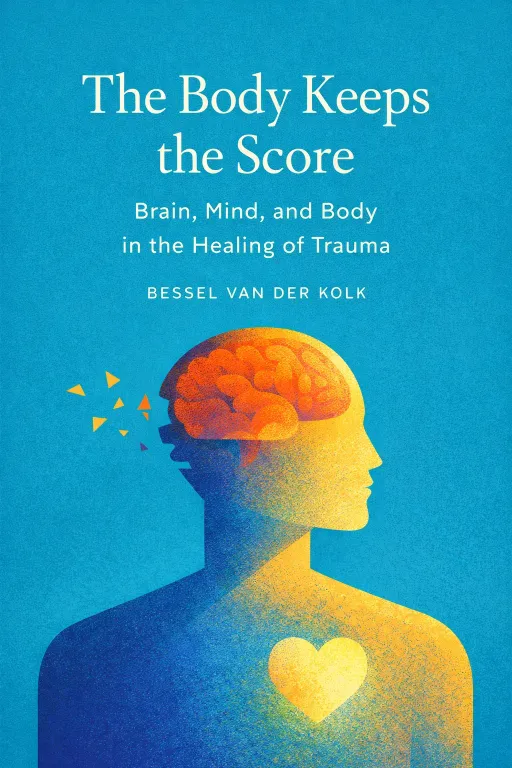
Nova: Today, we're unpacking the insights from Bessel van der Kolk's groundbreaking book,, and Judith Herman's pioneering work,. Van der Kolk, with his decades of clinical experience, essentially mapped out how trauma literally reshapes the brain and body. Herman, a true trailblazer, gave us the language and framework for understanding complex trauma and the long road to recovery. Both of these authors didn't just write books; they shifted entire paradigms in psychology and psychiatry, forcing us to look at human behavior through an entirely new lens.
Atlas: That makes me wonder, how do these insights challenge our traditional ideas of accountability and justice? Because, let's be honest, our current systems aren't exactly known for their nuanced understanding of the human psyche.
The Profound Impact: How Trauma Reshapes Mind and Body
SECTION
Nova: That's precisely where the seismic shift happens, Atlas. For too long, we've operated under the assumption that people in legal trouble are making rational choices, that their actions are purely volitional. But van der Kolk and Herman show us a much more complex reality. Imagine your brain as a supercomputer. When trauma hits, it's like a massive software bug that rewrites the operating system. The amygdala, your brain's alarm system, goes into overdrive, constantly scanning for danger, even when there isn't any.
Atlas: Hold on. So, are we saying people aren't to act out, but are literally wired differently after trauma? Because that sounds like it fundamentally challenges the idea of free will in certain contexts.
Nova: It absolutely does. It's not about excusing behavior, but it through a neurobiological lens. When your amygdala is constantly firing, your prefrontal cortex – the part of your brain responsible for planning, rational thought, and impulse control – effectively shuts down. You're in survival mode. The body remembers the trauma even when the conscious mind can't or won't. Think of a veteran with PTSD, hyper-vigilant in a quiet room, or a child who experienced abuse, learning helplessness and distrust as a core survival strategy. Their nervous systems are stuck in a loop.
Atlas: Wow. That's incredible. So, it's not just a psychological wound, but a physical one, too. The body literally. It’s like their internal alarm bell is permanently broken, always ringing, even when there's no fire.
Nova: Precisely. And Herman’s work builds on this by showing the profound psychological effects: the shattering of trust, the loss of a sense of self, the difficulty regulating emotions. Trauma doesn't just happen you; it changes at a fundamental level. It impacts your relationships, your ability to form attachments, your entire worldview. Recovery isn't just about forgetting; it's about rebuilding a shattered inner world.
Atlas: That sounds incredibly complex. So, if someone's brain and body are literally reacting to past threats, how can a system designed around 'rational choice' possibly help them? Our traditional justice model often says, "You broke the rule, here's the punishment." That seems to completely miss this fundamental wiring issue.
Nova: It does, and that's the empathy gap in action. When we ignore these deep-seated impacts, our interventions often become ineffective, or worse, re-traumatizing. Imagine someone with a history of sexual abuse being interrogated aggressively in a cold, sterile room. That experience, even if it's "standard procedure," can trigger their trauma response, making them shut down, lash out, or give answers that aren't truly reflective of reality, simply because their body perceives an overwhelming threat.
Atlas: That's such a powerful point. It’s not just about what we intend, but the of our actions and environments on someone whose nervous system is already on high alert. I can see how that would lead to a vicious cycle. You punish the symptom without ever addressing the root cause, creating more trauma in the process.
Nova: Exactly. And the consequences are far-reaching, not just for the individual, but for society. Higher rates of recidivism, continued cycles of violence, and a justice system that feels anything but just to those who navigate it. It becomes a system that manages problems rather than truly solving them.
Atlas: It’s like trying to fix a complex machine by just hitting it harder. You might get a temporary reaction, but you’re not addressing the underlying malfunction.
Nova: A perfect analogy, Atlas. And it highlights why a trauma-informed lens isn't just a compassionate ideal; it's a pragmatic necessity for building more effective systems.
From Punishment to Healing: Crafting Trauma-Informed Justice
SECTION
Nova: And that naturally leads us from understanding trauma does, to within our justice systems. If traditional punitive measures often re-traumatize, then a trauma-informed approach seeks to do the opposite: to create safety, promote healing, and foster genuine accountability.
Atlas: Okay, so this isn't just about being 'nicer,' it's about being fundamentally more effective. For our listeners who are advocates or strategists, they're probably thinking, "How does this actually? Can you give an example of a restorative justice program that truly integrates a trauma-informed lens, maybe something that challenges our usual ideas of 'justice'?"
Nova: Absolutely. Consider a restorative justice circle, for instance. Instead of focusing solely on the crime and punishment, the process brings together the victim-survivor, the offender, and community members. The core principle is to understand the that was done, not just the rule that was broken. The victim-survivor has the opportunity to speak their truth, to explain the impact of the harm. The offender is then guided to understand that impact, to take responsibility, and to actively participate in repairing it.
Atlas: So, it's about making the offender truly the human cost of their actions, rather than just serving time in a cell? That's a huge shift from our current model, which often isolates the offender and dehumanizes the victim.
Nova: Precisely. And for an offender who might have their own history of trauma, the circle provides a safe, structured environment where they can begin to process their own pain, understand how it might have contributed to their actions, and learn healthier ways to respond. It’s about building empathy on all sides. It's moving from "What's wrong with you?" to "What happened to you?" for both the victim-survivor and the person who caused harm.
Atlas: That’s actually really inspiring. It redefines justice not as a blind scale, but as a deeply human process. It forces us to confront the systemic trauma that often underpins individual actions.
Nova: One powerful example comes from some indigenous communities who have long practiced forms of restorative justice. They understand that when one person harms another, the entire community is wounded. Their processes emphasize healing the breach in the community fabric, which often includes addressing the underlying social and emotional issues that led to the harm. It's a holistic approach that recognizes human dignity even in moments of profound brokenness.
Atlas: That gives me chills. So, it's not just about individual healing, but about community restoration. I imagine a lot of our listeners who care about human dignity are thinking, "How do we even begin to implement something like that on a systemic level?" What are the biggest hurdles, or perhaps the most surprising benefits?
Nova: The hurdles are significant, of course. It requires a profound cultural shift away from punitive models, significant training for justice professionals, and resources for community-based programs. But the benefits are equally profound. Studies have shown lower recidivism rates, higher victim-survivor satisfaction, and stronger, more resilient communities. It really is about building bridges for lives, as you said earlier, rather than simply punishing transgressions. It’s about understanding that true justice creates more safety for everyone.
Atlas: It sounds like this approach is not just about addressing past harm, but actively preventing future cycles of harm. It's about breaking those trauma loops you mentioned earlier, both individually and systemically.
Nova: Absolutely. It's about recognizing that the "rules" and "procedures" we hold so dear in justice are only truly effective when they are grounded in an understanding of human psychology, biology, and the pervasive impact of trauma. Without that, we're just rearranging deck chairs on the Titanic.
Synthesis & Takeaways
SECTION
Nova: What we're really talking about here is closing the empathy gap itself, isn't it? It’s recognizing that empathy isn't a soft skill; it's a fundamental, strategic tool for effective justice.
Atlas: Honestly, that’s actually really inspiring. It redefines justice not as a blind scale, but as a deeply human process. It forces us to confront the systemic trauma that often underpins individual actions. For anyone driven by justice – an advocate, a strategist, an empath – this isn't just an academic idea; it's a blueprint for rebuilding lives and communities. It’s a call to action for policy changes, for new ways of thinking about rehabilitation and restoration.
Nova: Exactly. It gives us a framework for true healing, for moving beyond simply managing symptoms to addressing root causes. So, the deep question for us all becomes: how might acknowledging systemic trauma change the way we design and implement restorative justice programs in our own communities?
Atlas: A question that demands more than just a quick answer. It demands reflection, action, and a commitment to seeing the whole person.
Nova: This is Aibrary. Congratulations on your growth!