The Mockingbird's Compass: Deconstructing Courage and Conscience
Golden Hook & Introduction
SECTION
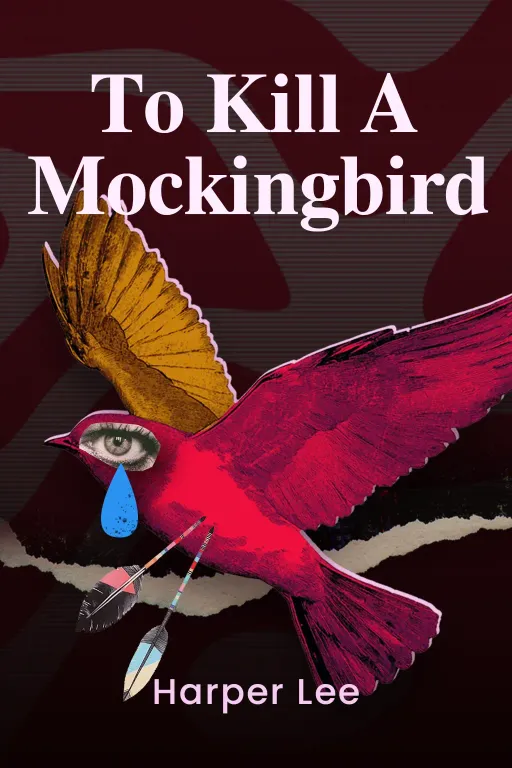
Socrates: "It’s when you know you’re licked before you begin but you begin anyway and you see it through no matter what." That's Harper Lee's definition of real courage in "To Kill a Mockingbird." It’s not about winning; it’s about the fight itself. Most of us read this book in school as a story about racism in the South. But today, we're going to treat it as something more: a philosophical guide, a kind of moral operating system for navigating a complex world. And I'm thrilled to have LEYI LI here, whose analytical and deeply curious mind is perfect for this.
LEYI LI: I'm excited to be here, Socrates. That quote already turns the whole idea of heroism on its head. It’s not about glory, it’s about something much deeper.
Socrates: Exactly. It suggests that the most important battles are the ones we fight internally, often without an audience. And that's the journey we're on today. We'll dive deep into this from two powerful perspectives. First, we'll explore the book's radical redefinition of courage. Then, we'll discuss the ultimate authority of a person's conscience, even when it stands alone against the world.
LEYI LI: I’m ready. It feels like these are questions that are more relevant than ever.
Deep Dive into Core Topic 1: The Anatomy of True Courage
SECTION
Socrates: So let's start with that redefinition of courage. In the book, Atticus Finch's children, Jem and Scout, are a little embarrassed by their father. He's older, he wears glasses, he reads all the time. He doesn't seem like the other dads. Then one day, a rabid dog is staggering down their street, a real threat to the whole neighborhood. The sheriff arrives, but he hands his rifle to Atticus, saying he's not a good enough shot. And Atticus, in one clean shot, takes the dog down.
LEYI LI: And suddenly, in his children's eyes, he's a hero. He has this hidden, incredible talent. That's the kind of courage we can all easily recognize—skill, bravery under pressure, a clear and public victory over a threat.
Socrates: It is. It's the Hollywood version of courage. But later, Atticus insists that this is real courage. He points to a very different, much more complicated example: a terminally ill, elderly woman named Mrs. Henry Lafayette Dubose.
LEYI LI: Who, by all accounts, is just a horrible person. She sits on her porch and screams insults at Jem and Scout every time they walk by.
Socrates: Vicious insults. And one day, she goes too far. She attacks Atticus's character for defending Tom Robinson, a black man wrongly accused of a crime. She calls him a "nigger-lover." Jem, who is just a boy, snaps. He takes his sister's new baton, runs into Mrs. Dubose's yard, and just destroys all of her prized camellia bushes. He cuts the tops off every single one.
LEYI LI: It's a moment of pure rage, but you can understand where it comes from. He's defending his father's honor. But of course, Atticus doesn't see it that way.
Socrates: Not at all. His punishment is strange. He makes Jem go to Mrs. Dubose's house every afternoon and read to her for a month. And these sessions are bizarre. Scout, who goes with him, describes Mrs. Dubose as being distant, her face twitching. An alarm clock would go off, and a nurse would come in, give her some medicine, and kick the children out. And each day, the alarm clock was set for a little bit later.
LEYI LI: From a child's perspective, that punishment must have felt so unjust and confusing. He's being forced to spend time with someone who is actively hostile and, from his view, just a terrible person. There's a deep sense of unfairness there. It feels like he's being punished for loving his father.
Socrates: It's a complete mystery to them. Then, a little over a month after the reading sessions end, Mrs. Dubose dies. Atticus comes home and explains everything. He gives Jem a small box she left for him. Inside is a single, perfect, white camellia.
LEYI LI: A peace offering, of a sort.
Socrates: A symbol of forgiveness, maybe. Atticus then tells Jem the truth. Mrs. Dubose was a morphine addict. Her doctor had prescribed it for her pain for years, and she had become dependent. But before she died, she was determined to break the addiction. She wanted to die, in her words, "beholden to nothing and nobody."
LEYI LI: Oh, wow. So the fits, the twitching... that was withdrawal.
Socrates: Exactly. And Jem's reading? It was a distraction. It was to help her pass the time, to help her fight the craving for just a few more minutes each day. She was using a boy she insulted to help her win this private, agonizing war. And this is when Atticus delivers the core lesson. He tells Jem, "I wanted you to see what real courage is, instead of getting the idea that courage is a man with a gun in his hand. It’s when you know you’re licked before you begin but you begin anyway and you see it through no matter what."
LEYI LI: That completely reframes everything. The courage wasn't in a grand public act like shooting a dog; it was in a private, agonizing, and unwitnessed battle. It's the fight against her own demons, knowing she was going to die anyway. It's not about the outcome, but the integrity of the struggle. That's a profoundly different, and I think more meaningful, way to think about strength. It’s about winning a battle over yourself, for yourself.
Socrates: She won. She died free. And Atticus wanted his son to understand that that victory, a victory no one else would ever see or celebrate, was the most important kind.
Deep Dive into Core Topic 2: The Sovereignty of Conscience
SECTION
Socrates: And that very specific, internal kind of courage is the prerequisite for the book's other great philosophical challenge. It's one thing to fight your own demons, but what about when the 'demon' is your entire community? This brings us to the Tom Robinson case.
LEYI LI: The central conflict of the novel.
Socrates: Right. Atticus, a respected lawyer in the small town of Maycomb, is appointed to defend Tom Robinson, a black man falsely accused of assaulting a white woman, Mayella Ewell. In the 1930s American South, this is an impossible case. The verdict is a foregone conclusion simply because of the defendant's race.
LEYI LI: And the town expects Atticus to just go through the motions. To put on a show of a defense but not to actually.
Socrates: Exactly. But Atticus decides to offer a real, vigorous defense. And for this, the town turns on him. His family is ostracized. His children are taunted at school. He's called a traitor to his race. At one point, he has to physically stand between Tom Robinson and a lynch mob. It's a total social and professional risk.
LEYI LI: It's a huge burden. And it's his young daughter, Scout, who asks the simplest, most direct question: why is he doing it? If everyone in town thinks it's wrong, why is he the only one who thinks it's right?
Socrates: And his answer is the second great pillar of the book's philosophy. He tells her, "before I can live with other folks I’ve got to live with myself. The one thing that doesn’t abide by majority rule is a person’s conscience." LEYI, as someone who thinks about how systems work, what does that statement mean to you in the context of Maycomb's social system?
LEYI LI: It's the ultimate assertion of individual integrity against a flawed system. The 'majority rule' of Maycomb is built on a foundation of deep-seated prejudice. The system is designed to produce an unjust outcome. Atticus is essentially saying there's a higher law, a personal, moral law, that he cannot violate, regardless of the social or professional cost. He's acting as a single, independent node of morality in a network that is corrupted. It's an incredibly lonely, but necessary, position to take.
Socrates: Lonely is the perfect word. He knows he will lose the case. He tells his children as much. He is, in his own words, 'licked before he begins.' But his conscience demands he begins anyway. It connects right back to Mrs. Dubose, doesn't it?
LEYI LI: It's the exact same principle applied on a different scale. One is a private battle with addiction; the other is a public battle with systemic injustice. But both are fueled by a commitment to a principle, not a guaranteed victory. It's about being able to live with yourself at the end of the day. Atticus can't look his children in the eye and teach them about fairness if he doesn't embody it himself, even when it's hard. Especially when it's hard.
Socrates: He's modeling that the integrity of the process, the integrity of the attempt, is where the real value lies. The court of public opinion is one thing, but the court of his own conscience is the one he truly has to answer to.
LEYI LI: And that's a powerful and timeless message. In any organization, in any society, there are pressures to conform. There are 'majority rules' that may not align with what we know to be right. Atticus provides a blueprint for how to navigate that.
Synthesis & Takeaways
SECTION
Socrates: So we have these two powerful, interconnected ideas from Harper Lee. First, that real courage is an internal struggle, often invisible, fought against impossible odds for the sake of one's own integrity. And second, that a person's conscience is the only true compass for navigating the external world, even when—and especially when—it leads you into a losing fight.
LEYI LI: And what's so beautiful about the book is that it shows this isn't just for heroes. It's a capacity within everyone. Atticus isn't a superhero; he's a man who has made a conscious choice to live by his principles. He's modeling a way of being for his children, and for the reader. It’s about making a choice, every day, to be the person you believe you should be.
Socrates: He's teaching them, and us, how to build that inner moral framework. How to know what's right when everyone around you is telling you you're wrong.
LEYI LI: It’s about finding that unshakeable core within yourself. The book makes it clear that it's not easy. It comes at a great cost. But the alternative—violating your own conscience—is a cost that Atticus is unwilling to pay.
Socrates: Which leaves us with a question to ponder. Atticus tells his children, "You rarely win, but sometimes you do." Mrs. Dubose won her battle. Atticus, in the courtroom, lost. But in the court of conscience, he won. So, for everyone listening, here's the thought: Where in your life is there a 'fight' worth starting, even if you feel you're licked before you begin? What small act of conscience is waiting for you?
LEYI LI: That’s a heavy question, but a necessary one. It’s not about changing the world in one go, but about taking that first, principled step.
Socrates: The first step in a fight you know is worth having. LEYI LI, thank you for helping us unpack these profound ideas today.
LEYI LI: Thank you, Socrates. It was a pleasure.