The Gavel and the Gut: Deconstructing Decision Biases in Public Service
Golden Hook & Introduction
SECTION
Nova: Imagine you're a code enforcement officer. You're inspecting an old building and you spot a hairline crack in a support beam. Your gut, that fast, intuitive part of your brain, screams 'danger!' But your analytical mind, the slower, more deliberate part, says the data doesn't support an immediate shutdown. What do you do? Who do you trust? This isn't just a hypothetical; it's a daily battle inside the minds of those responsible for our safety.
Nova: Welcome to the show. Today, we're incredibly lucky to be joined by Gemechis Dugasa, who works with the Addis Ababa City Administration Code Enforcement Authority. Gemechis, thank you for being here.
GemechisDugasa: It's a pleasure, Nova. That opening scenario is... well, it's very familiar.
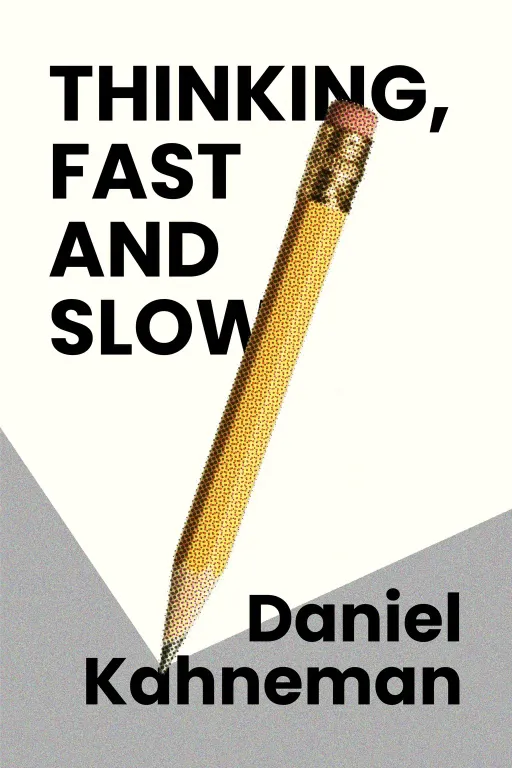
Nova: I can only imagine. And that's the core of what we're exploring today, using Daniel Kahneman's revolutionary book, "Thinking, Fast and Slow." It's a book that pulls back the curtain on why we make the choices we do. Today we'll dive deep into this from two perspectives. First, we'll explore the two competing 'minds' that every official uses to make judgments—the fast and the slow. Then, we'll uncover the hidden mental traps, like the Availability Heuristic and Loss Aversion, that can lead even the most dedicated public servants astray.
Deep Dive into Core Topic 1: The Two Minds of an Officer
SECTION
Nova: So, Gemechis, let's start with those two minds Kahneman talks about. He gives them simple names: System 1 and System 2. System 1 is our gut reaction. It's automatic, effortless. Kahneman gives an example: if I show you a picture of an angry woman, you don't have to think about it. You instantly know she's angry and might say something harsh. That's System 1.
GemechisDugasa: Right, it's an immediate, intuitive leap.
Nova: Exactly. But then there's System 2. This is our slow, analytical mind. If I ask you to solve the math problem "17 times 24," you have to stop, focus, and deliberately work through the steps. Your heart rate might even go up a bit. That's System 2, and it's lazy. It doesn't like to work unless it absolutely has to.
GemechisDugasa: That's a perfect analogy for our work. System 1 is the 'on-the-street' assessment. You walk onto a chaotic construction site, and you instantly sense if something is dangerously wrong. It's a form of pattern recognition built from years of experience. Kahneman mentions a story about a firefighter who suddenly ordered his team out of a burning house, right before the floor collapsed. He didn't know why, but he later realized the fire was unusually quiet and his ears were hot. His System 1 recognized a pattern of danger his conscious mind hadn't processed yet.
Nova: Yes, that's the magic of expert intuition! It’s System 1 at its best. But Kahneman warns us that this same system is the source of major, predictable errors. He talks about the 'Illusion of Understanding' and 'Hindsight Bias.' This is the tendency to look back at past events and believe they were far more predictable than they actually were. He uses the tragic 9/11 intelligence failure as a powerful example.
GemechisDugasa: Could you walk us through that? I think it’s a really important case.
Nova: Of course. In the months before the attacks, there were signals, fragments of intelligence. The CIA knew al-Qaeda was planning something. But these signals were buried in an ocean of other, less relevant information—what Kahneman calls 'noise.' After the attacks, when the outcome was known, it became easy to connect the dots. Critics could point to specific memos and say, 'See? It was obvious!' They constructed a simple, coherent story of failure.
GemechisDugasa: And that's where hindsight bias becomes the bane of our existence in public service. After a bridge collapses or a building has a major structural failure, everyone becomes an engineering expert overnight. They say, 'How could the inspector not see the structural fatigue?' or 'The signs were all there!'
Nova: They create a simple story.
GemechisDugasa: Exactly. But before the event, that specific data point—that one report on metal fatigue—was one of thousands of pieces of information an agency has to process. It's what Kahneman calls the 'narrative fallacy'—we create a simple, linear story of failure, and it almost always points to a villain. That villain is usually the person who had to make a judgment call with incomplete information. We forget the 'noise' they were dealing with.
Nova: So your teams are constantly battling against these simplified, after-the-fact narratives?
GemechisDugasa: Constantly. It undermines public trust and creates a culture of risk aversion. If every judgment call that doesn't turn out perfectly is going to be framed as an obvious mistake in hindsight, officials become hesitant to make any call at all. It's a paralyzing effect.
Deep Dive into Core Topic 2: The Hidden Traps
SECTION
Nova: That's a powerful point, Gemechis. It's not just about flawed stories of the past. These mental shortcuts also distort how we see the present and future. This brings us to our second key idea: the hidden traps of heuristics, especially what Kahneman calls the 'Availability Heuristic.'
GemechisDugasa: The idea that what's easy to remember seems more likely?
Nova: Precisely. We judge the frequency of an event by how easily an example comes to mind. Kahneman tells a chilling personal story about this. During a period of frequent suicide bombings on buses in Israel, he found himself avoiding buses, even though he knew, statistically, that the risk was minuscule. Why? Because the horrific, vivid images from the news were so 'available' in his mind. The of risk completely overshadowed the statistical reality.
GemechisDugasa: Wow. We see this constantly in our work. If there's a widely publicized building fire in one part of the city, for the next month, our department is flooded with calls about minor fire code issues that were always there. The actual, statistical risk across the city hasn't changed, but the of that dramatic event in the public consciousness has skyrocketed.
Nova: So it distorts public perception of risk.
GemechisDugasa: It completely reshapes it. And it forces us to allocate resources not always based on a rational assessment of where the greatest dangers lie, but in response to public fear, which is driven by these available, vivid stories. It's a major challenge for efficient governance.
Nova: And this ties into another trap: how the public perceives your actions. Kahneman discusses how 'Loss Aversion'—our tendency to feel the pain of a loss about twice as strongly as the pleasure of an equal gain—shapes our sense of fairness. He uses a great example of a hardware store.
GemechisDugasa: I'm curious to hear this one.
Nova: Okay, so a hardware store sells snow shovels for $15. A huge snowstorm hits, and the next morning, the store raises the price to $20. From a pure supply-and-demand view, this is logical. But the public is outraged. Kahneman's research found that people overwhelmingly see this as unfair. Why? Because the pre-storm price of $15 acts as a 'reference point.' The new price isn't seen as a market adjustment; it's seen as the store on its customers. And we hate losses.
GemechisDugasa: That... that is the core challenge of enforcement. That right there. When we introduce a new, stricter safety regulation—say, for electrical wiring in old homes—the public doesn't immediately see the future fires that are prevented. They don't see the abstract statistical gain.
Nova: What do they see?
GemechisDugasa: They see the immediate 'loss.' The cost of compliance for homeowners. The loss of an old, familiar way of doing things. They feel that the government is imposing a burden on them, and they perceive it as fundamentally unfair, even if the goal is public safety. Our communication has to be about framing that change not as a loss, but as a collective gain in safety and security. But it's an uphill battle, because as Kahneman shows, loss aversion is such a powerful, immediate, emotional force.
Nova: It sounds like you're not just enforcing codes, you're managing the psychology of an entire community.
GemechisDugasa: In many ways, yes. You have to understand how people will perceive an action to implement it successfully. The rule itself is only half the battle.
Synthesis & Takeaways
SECTION
Nova: This has been so insightful. So, if we bring it all together, Kahneman is telling us that our minds are not perfect, rational instruments. We have these two systems, and System 1, our intuitive self, uses these shortcuts—heuristics—that can create illusions of understanding and distort our perception of risk and fairness.
GemechisDugasa: And in public service, the consequences of these biases aren't just personal; they affect public trust, resource allocation, and ultimately, public safety. The stakes are incredibly high.
Nova: So, for anyone listening, especially those in roles of judgment and authority, what's the big takeaway? How do we tame our flawed System 1?
GemechisDugasa: I think Kahneman's work teaches us humility, first and foremost. We can't just will these biases away. They are part of our mental wiring. But we can build systems to counter them. For anyone in a position of judgment, the most powerful tool is often the most boring one: a simple checklist. Or conducting what Kahneman calls a 'premortem'—before you make a big decision, you get your team together and imagine it has failed spectacularly, then you work backward to figure out all the ways it could have gone wrong.
Nova: That forces you to engage that slow, analytical System 2.
GemechisDugasa: Exactly. It forces you to move beyond your initial gut feeling, your first simple story, and consider the complexities. So, the question I'd leave everyone with is this: in your own work, or even your own life, what is one important decision you regularly make on gut feeling that could benefit from a simple, deliberate checklist? It might not feel as heroic as a flash of intuition, but it's often a lot smarter.
Nova: A brilliant and practical thought to end on. Gemechis Dugasa, thank you so much for sharing your expertise and connecting these ideas to the real world so powerfully.
GemechisDugasa: Thank you, Nova. It was a fascinating conversation.