When Logic Meets Emotion: Unpacking Behavioral Economics for Smarter Decisions.
Golden Hook & Introduction
SECTION
Nova: You know, Atlas, I was thinking about how we all like to believe we're these perfectly rational beings, especially when it comes to our money. Like, every investment, every purchase, every savings decision is a carefully calculated move.
Atlas: Oh, I know that feeling. The illusion of control, right? My brain tells me I'm a financial wizard, but my bank account often tells a very different, slightly more chaotic story. It’s like there’s a tiny, impulsive toddler running my finances sometimes.
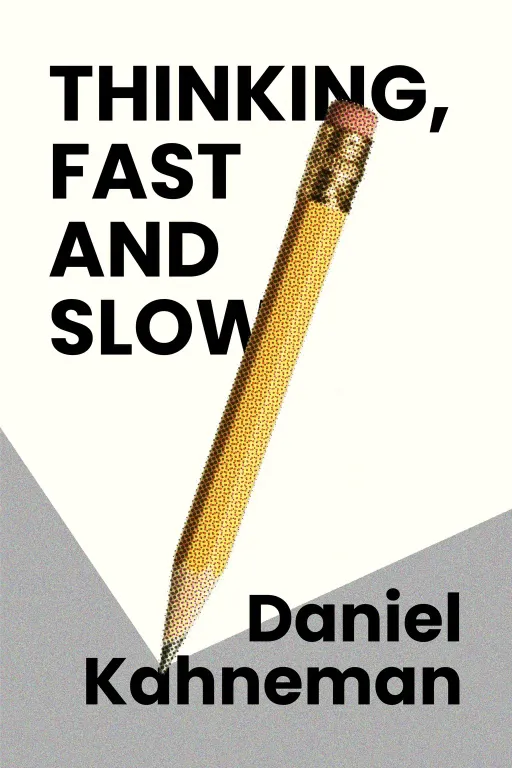
Nova: Exactly! And that tiny toddler is precisely what we're talking about today. We're diving into the fascinating world where logic meets emotion, unpacking behavioral economics for smarter decisions, all inspired by two pivotal books: Daniel Kahneman's groundbreaking "Thinking, Fast and Slow" and Richard H. Thaler and Cass R. Sunstein's incredibly insightful "Nudge."
Atlas: Whoa, Kahneman won a Nobel Prize in Economics, and he's a psychologist, right? That's such an interesting crossover. It makes me wonder what deep psychological truths he unearthed that totally flipped the economic world on its head. For our strategic investors out there, what does that radical shift mean for understanding market behavior?
Nova: It means everything! It means recognizing that the market isn't just a cold, calculating machine. It's a pulsating entity driven by millions of human brains, each with its own quirks and biases. And understanding those quirks is a superpower.
Deep Dive into Core Topic 1: The Dual Mind & Financial Blind Spots
SECTION
Nova: So, let's start with Kahneman. He introduces us to two systems of thinking. Imagine you're driving on an empty highway, just cruising along, no real effort. That's your System 1: fast, intuitive, emotional, automatic. It's what tells you to flinch when something flies at your face, or how to instantly understand a simple sentence.
Atlas: Okay, I like that. So it's the autopilot, the gut reaction, the instinctual brain. I can definitely see how that would be useful for survival, but what about when you're trying to figure out which stock to invest in?
Nova: Exactly! Now, imagine you're merging onto a busy freeway in rush hour traffic, trying to navigate multiple lanes, calculate distances, and anticipate other drivers. That's your System 2: slow, deliberate, logical, effortful. It's what you use for complex calculations, solving a puzzle, or, yes, making a well-reasoned financial decision.
Atlas: That makes so much sense. But wait, you’re saying our 'gut feelings' are actually leading us astray in finance? Like, how does System 1 play out in something like a market crash, or even just our everyday spending? Because it feels so immediate, so... real.
Nova: It’s incredibly real, and often, incredibly misleading. Take something called "anchoring bias." Imagine a real estate agent shows you a house that's ridiculously overpriced, say, a million dollars, even though it's only worth seven hundred thousand. Your System 1 latches onto that initial high "anchor."
Atlas: Oh, I see. So even if I know it’s overpriced, that million-dollar figure is now stuck in my head as a reference point.
Nova: Precisely. Then, the agent shows you another house at eight hundred thousand. Suddenly, eight hundred thousand feels like a "deal" because your System 1 is still anchored to the million. Your logical System 2 might kick in and say, "Wait, is this truly a good value?" but the emotional pull of the "deal" is strong. This is how market panic or euphoria often starts – an initial piece of news, an anchor, sets off a chain reaction of System 1 thinking.
Atlas: That makes so much sense! It's like when I hear a company is "the next big thing," my brain immediately starts looking for reasons to believe it, ignoring the red flags. It’s not just about the numbers; it’s about the narrative we build around them. How do we even begin to override that fast thinking when it feels so natural? It almost feels like fighting our own biology.
Nova: It feels like it because, in a way, it is. Kahneman's work shows us that our brains are efficiency machines, and System 1 is incredibly efficient, but prone to these predictable errors. The first step, as you just articulated, is simply recognizing it. Understanding that your "gut feeling" about a hot stock might just be confirmation bias, where your System 1 is selectively looking for information that confirms what you already want to believe. It's not about eliminating System 1—that's impossible—but about teaching System 2 to step in more often, especially when the stakes are high.
Deep Dive into Core Topic 2: Strategic Nudges & Engineering Better Financial Behavior
SECTION
Nova: Well, that's where the brilliant work of Richard Thaler and Cass Sunstein comes in with their idea of "nudges." If Kahneman taught us how our minds trick us, Thaler and Sunstein show us how to subtly trick our minds back, but for our own good.
Atlas: Nudges, I like that! It sounds less like being told what to do and more like... a gentle push. Can you give us an example of a financial nudge that actually works? Because for a strategic investor, knowing how to influence behavior—even your own—is gold.
Nova: Absolutely. One of the most powerful examples is the default setting for retirement savings plans. Historically, most companies had an "opt-in" system. Employees had to actively fill out forms, decide on percentages, and choose funds to start saving for retirement. What do you think happened?
Atlas: My guess, based on what we just discussed about System 1 and System 2, is that a lot of people just... didn't. It requires effort, deliberation, and overcoming inertia.
Nova: Precisely. Participation rates were often low. Then, companies started implementing "opt-out" retirement plans. Employees were automatically enrolled, and contributions were deducted unless they actively chose to opt out.
Atlas: Whoa, that's incredibly powerful. So, it's not about forcing people, but designing choices so the easier path is the one that benefits them most. It's like making the healthy choice the default. I imagine a lot of our listeners, the strategic investors out there, could apply this to their own financial systems, designing their own 'choice architecture.'
Nova: Exactly! It's about recognizing that humans are herd animals, we're prone to inertia, and we often follow the path of least resistance. So, instead of fighting human nature, you work with it. If you want to save more, automate your savings. Make it an "opt-out" for yourself. If you want to avoid impulsive spending, make it harder to access certain funds.
Atlas: That is such a fascinating idea. It’s about being smarter than our own System 1, by setting up the environment. It’s not just about willpower; it’s about clever design. It really appeals to the 'Empathetic Storyteller' in me too, because it’s a story about how we can design systems that improve lives, rather than just expecting people to be perfectly rational.
Nova: And for strategic investors, understanding nudges isn't just about influencing your own behavior. It's also about recognizing where market forces, companies, or even governments might be nudging. Are those "limited-time offers" a genuine deal, or a nudge designed to trigger your System 1's fear of missing out? Understanding this gives you a profound advantage.
Synthesis & Takeaways
SECTION
Nova: So, to bring it all together, Kahneman gives us the internal map of our minds, revealing the two systems and their biases. Thaler and Sunstein then provide the toolkit for external design, showing us how to create environments—or "nudges"—that guide our behavior towards better outcomes.
Atlas: So it's like becoming the architect of our own financial psychology, rather than just being a passenger. It’s about building a legacy of smart choices, not just leaving things to chance or impulse. That deep question from the book content—where has a fast emotional reaction overridden slow logical analysis in our own decisions—really hits home when you think about it this way.
Nova: It truly does. It's empowering to know that while our minds play tricks, we're not helpless. We can learn to spot those tricks, and even design our world to work with our human nature, not against it, especially when it comes to something as vital as our financial well-being. Start by noticing one decision this week where your System 1 might have taken over.
Atlas: That's a great challenge. Honestly, that sounds like my Monday mornings trying to resist hitting snooze. I’d love to hear from our listeners too. What’s a financial "nudge" you've either implemented for yourself or encountered that really worked? Or a moment when your "fast thinking" led you down an unexpected path? Share your stories with us!
Nova: Absolutely! We love hearing how these concepts play out in your lives. This is Aibrary. Congratulations on your growth!