Unpacking Cognitive Biases: Sharpen Your Analytical Edge
Golden Hook & Introduction
SECTION
Nova: Atlas, I was today years old when I realized that most of my 'gut feelings' are actually just my brain taking a shortcut and probably making a mistake. It's a humbling thought, isn't it?
Atlas: Oh man, I feel that in my bones. It’s like, you think you’re this highly rational being, meticulously weighing pros and cons, and then you discover your brain’s just running on autopilot half the time, making snap judgments. It's a bit deflating, frankly.
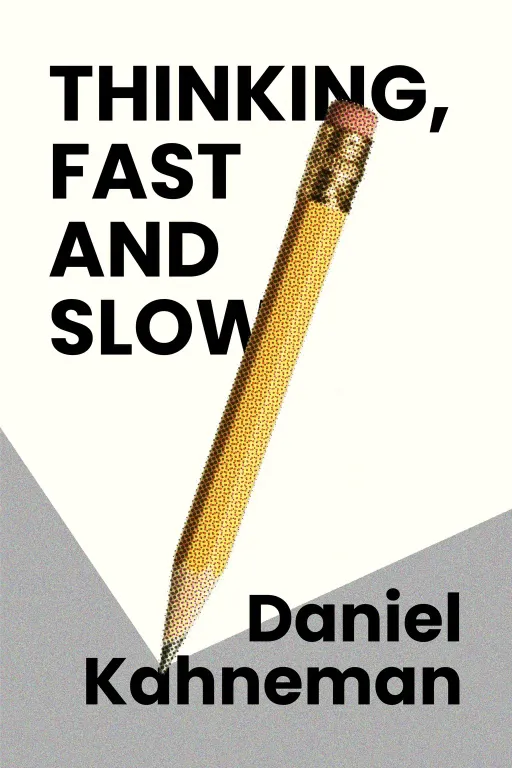
Nova: Deflating, but also incredibly empowering once you understand it. And that's exactly what we're dissecting today, pulling back the curtain on the hidden forces that shape our decisions. We're diving into the brilliant world of cognitive biases, largely inspired by two seminal works: Daniel Kahneman's groundbreaking "Thinking, Fast and Slow" and "Nudge: Improving Decisions About Health, Wealth, and Happiness" by Richard H. Thaler and Cass R. Sunstein.
Atlas: Kahneman's work, in particular, completely reshaped how we understand human rationality. He's not just a psychologist; he won a Nobel Prize in Economic Sciences for this, which is just mind-blowing when you think about it. It’s like saying, 'Hey, your squishy human brain messes up economics, and here’s the science of why!'
Nova: Exactly! It’s that interdisciplinary bridge that makes his work so powerful. And today, we're going to use these insights to sharpen our own analytical edge. We'll start by unpacking Kahneman's revolutionary idea of the dual systems of thought, and then we’ll explore how that understanding feeds into the concept of 'choice architecture' from Thaler and Sunstein.
The Dual Systems of Thought: System 1 vs. System 2
SECTION
Nova: So, let's kick things off with what Kahneman calls System 1 and System 2. Imagine your brain has two distinct operating modes. System 1 is like the super-fast, intuitive, emotional, almost automatic part of your mind. It’s what helps you recognize a familiar face, understand a simple sentence, or slam on the brakes if a car swerves. It operates effortlessly, constantly, and often unconsciously.
Atlas: So you're saying it's the 'instinct' part of our brain? The one that just without really thinking?
Nova: Precisely. It’s incredibly efficient, a survival mechanism. But its speed comes at a cost: it’s prone to biases and quick judgments. Then there's System 2. This is your slow, deliberate, logical, effortful thinking. It's what you use to solve a complex math problem, fill out a tax form, or carefully weigh the pros and cons of a major life decision.
Atlas: Okay, so System 1 is the quick, gut reaction, and System 2 is the deep, analytical dive. I can definitely see how those two could clash, or how one might accidentally take over when the other should be in charge.
Nova: That’s where the biases creep in. Kahneman argues that we often we're using System 2, being rational and logical, but System 1 has already made its judgment and is subtly influencing us. Think about the 'anchoring effect.'
Atlas: Oh, I know this one! Is that where an initial piece of information, even if irrelevant, heavily sways subsequent judgments?
Nova: You got it. He famously demonstrated this with an experiment where participants were asked to estimate the percentage of African nations in the UN. But first, they spun a wheel of fortune that landed on either 10 or 65. People who landed on 10 gave much lower estimates than those who landed on 65, even though they knew the wheel was random. System 1 latched onto that initial number, that 'anchor,' and System 2 then made adjustments from there, but not enough to overcome the initial bias.
Atlas: That’s incredible! So, if I’m negotiating a salary, and the other person throws out a low number first, my System 1 might get anchored to that, and I'll end up asking for less than I initially planned, even if I try to be rational?
Nova: Exactly! Or consider the 'availability heuristic.' System 1 makes us overestimate the likelihood of events that are easily recalled or vivid in our memory. If you've just heard a news report about a plane crash, you might suddenly feel air travel is more dangerous, even though statistics show it's incredibly safe. Your System 1 brings that vivid image to mind, and it feels more 'available.'
Atlas: Wow, that’s so true. It’s like after watching a shark attack movie, you suddenly think every ripple in the ocean is a fin. Our brains are just constantly playing tricks on us. For someone who prides themselves on being an analyst, this is a bit of a rude awakening. How do we even begin to counteract something so ingrained?
Nova: Well, the first step is awareness. Kahneman isn't saying System 1 is bad; it's essential. It saves us immense cognitive effort. The challenge is recognizing when it's appropriate and when we need to engage System 2. It's about building 'self-awareness' around our decision-making process. The book really pushes us to understand that our intuition, while powerful, is not always our friend in complex situations.
Atlas: So, it’s not about getting rid of System 1, but about putting System 2 in charge more often, especially for important decisions. But what if System 2 is lazy? Because let’s be honest, deep thinking is hard work!
Nova: That’s where the second part of our discussion comes in, and where Thaler and Sunstein pick up the baton with 'choice architecture.' Once you understand these biases and the inherent laziness of System 2, you can start designing environments – or 'architectures' – that 'nudge' people towards better decisions.
Choice Architecture and Nudging Better Decisions
SECTION
Nova: So, building on Kahneman's insights, Thaler and Sunstein introduce 'choice architecture.' It's the idea that the way choices are presented to us profoundly impacts the decisions we make. Every decision we make happens within a choice architecture, whether someone designed it intentionally or not. For example, the default option on a form.
Atlas: You mean like when you sign up for software, and the box for 'receive marketing emails' is already checked? That's a choice architecture?
Nova: Absolutely. And it's a powerful one. They call these 'nudges' – subtle interventions that steer people towards certain choices without restricting their freedom. The classic example is organ donation. In some countries, you have to to be an organ donor. In others, you're automatically an organ donor unless you. The opt-out countries have significantly higher donation rates.
Atlas: That’s a perfect example of how System 1 is at play. Most people probably don’t feel strongly enough about opting out to go through the effort, so they just stick with the default. It’s leveraging that inherent System 2 laziness you just mentioned.
Nova: Precisely. It’s about understanding human psychology and designing systems that work our biases, rather than against them, to achieve positive outcomes. Another great example is cafeteria design. Thaler and Sunstein talk about how simply rearranging the food in a school cafeteria can lead to healthier eating. Putting fruits and vegetables at eye level, making them easily accessible, and placing less healthy options further away or harder to reach.
Atlas: That's a great analogy for real-world application. It’s not telling kids they have cookies, it's just making the apple a little easier to grab. So, for our listeners who are trying to apply this to their own lives, or even to their teams, it's about designing their own 'choice architectures.'
Nova: Exactly! If you want to save more money, make your 401k contribution automatic – that's a nudge. If you want to eat healthier, put the healthy snacks front and center in your fridge and hide the junk food – that's choice architecture. It’s about proactively shaping your environment to make good decisions the easiest, most default option.
Atlas: So, it's about creating an environment where your System 1, that fast, intuitive part, is more likely to make the 'right' decision without your lazy System 2 having to do all the heavy lifting. I mean, that sounds like a game-changer for anyone trying to build better habits or make more strategic choices. It's like rigging the game in your own favor.
Nova: It’s empowering, isn't it? Instead of constantly battling your own willpower, you design your world to make willpower less necessary. It’s a profound shift in thinking. The books aren't just about identifying problems; they're about offering elegant, practical solutions grounded in a deep understanding of human behavior.
Atlas: And it speaks to the user profile we have today—the inquisitive analyst, the strategic learner, the impactful communicator. This isn't just theory; it's a toolkit for self-improvement and for influencing positive change in any sphere, whether it's personal habits or organizational design.
Synthesis & Takeaways
SECTION
Nova: So, what we've really been talking about today is the powerful interplay between understanding we think and we can then design our world to think better. Kahneman gives us the diagnostic tools, revealing the intricate dance between System 1 and System 2, and the biases that emerge. Thaler and Sunstein then provide the architectural blueprints, showing us how to build environments that gently guide us towards superior outcomes.
Atlas: It’s like Nova's Take said: understanding these systems provides a powerful lens for self-awareness. It's not just about knowing you have biases; it's about leveraging that knowledge to design more effective strategies in your work and personal growth. For anyone who's ever felt frustrated by their own irrational decisions, this is a roadmap.
Nova: And the tiny step recommendation from our content today is brilliant: "Observe your decision-making process for a week. Can you identify moments where System 1 or a specific bias might be at play? Jot them down." That act of observation, of becoming a detective of your own mind, is the genesis of all change.
Atlas: Absolutely. It’s the difference between being a passenger in your own mind and taking the wheel. Because once you see System 1 in action, once you recognize the anchor or the availability heuristic influencing you, you can then consciously engage System 2, or even better, redesign your choice architecture to bypass that bias entirely. That’s a powerful insight.
Nova: Indeed. It's about moving from being passively influenced by our cognitive shortcuts to actively becoming the architects of our own decisions. It's a journey into profound self-mastery, one nudge at a time. This is Aibrary. Congratulations on your growth!