Unlocking Your Inner Architect: Foundations of Self-Awareness
Golden Hook & Introduction
SECTION
Nova: Atlas, I was today years old when I realized that our minds aren't just one coherent system, but actually a fascinating, often contradictory, dual operating system. It's like having two different drivers in the same car, each with their own agenda.
Atlas: Oh, I love that analogy! Two drivers, and sometimes one of them is just bad at directions, or maybe just totally ignoring the speed limits. So, are we talking about the conscious vs. unconscious, or something even deeper?
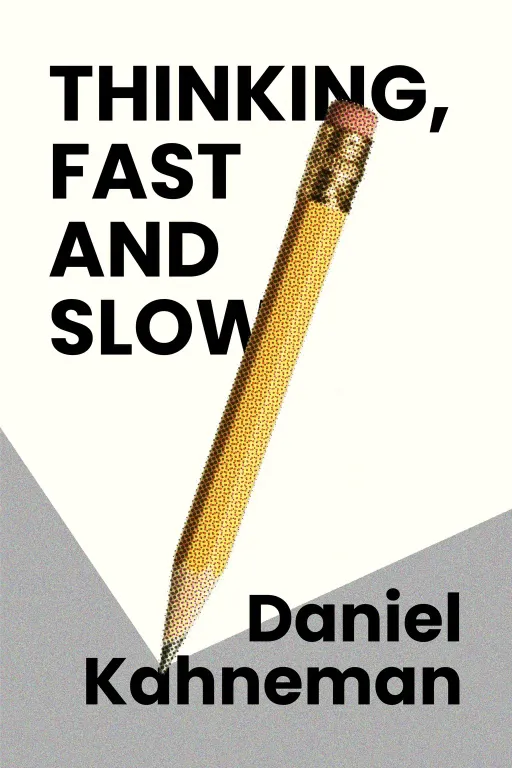
Nova: Exactly! And this isn't just some abstract philosophical musing. We're diving into the groundbreaking work of Daniel Kahneman, specifically his seminal book, "Thinking, Fast and Slow." Kahneman, a Nobel laureate in Economic Sciences, wasn't just a theorist; his work fundamentally reshaped how we understand human rationality and decision-making, showing us how our own minds can be our greatest allies or our most subtle saboteurs. It’s a book that really makes you question how much control you actually have over your own thoughts.
Atlas: Wow, that’s actually really inspiring, because I think a lot of us to believe we're fully rational, fully in control. But then you buy that random gadget you definitely don't need, or you say something impulsive you immediately regret, and you're left wondering, "Who was driving?" So, what are these two drivers, these two systems, that Kahneman talks about?
The Dual Operating System of the Mind
SECTION
Nova: Well, Kahneman brilliantly categorizes them as System 1 and System 2. System 1 is our fast, intuitive, emotional, and largely unconscious mode of thinking. It's what allows you to recognize a friend's face instantly, or slam on the brakes without consciously deciding to. It’s efficient, but prone to biases.
Atlas: Okay, so System 1 is basically my gut reaction, my instinct. Like when I see a plate of cookies and System 1 immediately says, "Eat them all!"
Nova: Precisely! And then you have System 2, which is your slow, deliberate, logical, and effortful mode of thinking. This is what you use for complex calculations, learning a new skill, or carefully weighing the pros and cons of a major decision. It requires attention and energy, and it's easily distracted.
Atlas: That makes sense. So, System 2 is the part of me that, after System 1 yells "Cookies!", steps in and says, "Hold on, remember that diet? Maybe just one." It sounds like System 2 is the responsible adult, while System 1 is the impulsive toddler. But what happens when the toddler is in charge too often?
Nova: That’s where the magic, or rather, the mischief happens. Kahneman illustrates how often System 1 shortcuts, or cognitive biases, influence our judgments without System 2 even realizing it. He outlines dozens of these biases, from anchoring effects to availability heuristics, showing how they can lead us astray in everything from financial decisions to how we perceive risk. For example, the availability heuristic – if something is easy to recall, we tend to overestimate its likelihood. Think about sensational news stories; they make rare events seem common.
Atlas: That's a great example. So basically, if I keep seeing news about plane crashes, even though they're incredibly rare, System 1 makes me think flying is super dangerous. My System 2 might the statistics, but System 1 is yelling, "Planes fall out of the sky!" How does that connect to our emotions, though? Because it feels like emotions are deeply tied to those snap judgments.
Nova: Absolutely, and that's where Daniel Goleman's "Emotional Intelligence" becomes a crucial companion to Kahneman's work. Goleman defines emotional intelligence through five key components: self-awareness, self-regulation, motivation, empathy, and social skills. He argues that emotional intelligence is often a stronger predictor of success than traditional IQ. When System 1 is running wild with its biases, it's often fueled by unchecked emotions.
Atlas: So, if Kahneman gives us the framework for we think, Goleman gives us the framework for we feel, and how those feelings impact our thinking. It sounds like System 1 is very much influenced by our emotional state, and if we don't have good emotional intelligence, that System 1 toddler is going to be throwing a lot more tantrums.
Nova: Precisely. Goleman provides the tools to understand and manage those emotional inputs. For instance, self-awareness, the first component, is the ability to recognize and understand your own moods, emotions, and drives, as well as their effect on others. Without it, you're a ship without a rudder, completely at the mercy of System 1's emotional storms. This is the bedrock for true self-mastery.
Atlas: That makes me wonder, for people in high-stakes environments, like managing large teams or making critical business decisions, how much of their "rational" decision-making is actually being subtly swayed by these System 1 biases and unexamined emotions? It feels like that could have massive ripple effects.
Cultivating Mindful Cognition
SECTION
Nova: It absolutely does. And that's why cultivating mindful cognition is so vital. It’s about creating a bridge between the fast, automatic System 1 and the slow, deliberate System 2, often with emotional intelligence as the architect of that bridge. A tiny step we can all take is to practice observing our immediate emotional reactions before responding. Just a brief pause.
Atlas: Oh, I've been there. That moment right before you send that email you immediately regret, or say something in an argument that escalates things. So, it's about catching System 1 in the act before it completely hijacks the controls. But how do you even begin to identify whether it's System 1 or your emotional intelligence at play? Because sometimes that gut feeling feels so.
Nova: That's the deep question, isn't it? How do your unconscious biases, your System 1, shape your understanding of philosophical concepts or even just human behavior? It requires a moment of self-inquiry. Ask yourself: Is this reaction based on facts, or on a pattern I’ve seen before? Is it coming from a place of fear, excitement, or something else? Is there a stereotype I'm unconsciously applying? This reflection activates System 2 and brings emotional awareness to the forefront.
Atlas: That's powerful. It’s almost like you’re saying that philosophical seekers, social architects, and future builders – all the people who want to understand deeply, dissect human nature, and drive impact – need to first dissect. They need to understand their own internal operating system before they can truly understand the world around them or build anything meaningful.
Nova: Exactly. And it’s a journey, not a destination. This isn't about eradicating System 1 or becoming a purely rational, emotionless robot. It's about acknowledging that self-awareness is a continuous process. Every moment of reflection, every time you catch yourself and choose a more deliberate response, you're moving closer to your authentic self. It’s a healing moment, recognizing that growth isn't about perfection, but about consistent, mindful effort. The goal isn't to silence the intuitive voice, but to understand its language and know when to let System 2 step in and translate.
Atlas: That’s such a hopeful way to look at it. Because sometimes, when you start digging into biases, it can feel like you're just a puppet of your own mind. But what you're saying is, with self-awareness and emotional intelligence, we can actually learn to pull our own strings, or at least choose which driver gets to take the wheel.
Synthesis & Takeaways
SECTION
Nova: Precisely. The profound insight here is that true self-mastery isn't about conquering your mind, but understanding its intricate architecture. It's about recognizing that we are driven by these two powerful, often conflicting, systems, and that our emotional intelligence is the key to harmonizing them. It’s the difference between being reactive and being responsive.
Atlas: That's a huge distinction. And for anyone who's ever felt frustrated by their own irrational decisions or emotional outbursts, understanding this dual system, and then applying Goleman's emotional intelligence framework, offers a concrete path forward. It's not just about understanding you do things, but gaining the power to influence you do next.
Nova: Absolutely. It’s about embracing the journey of self-discovery, knowing that your questions are your power. By practicing mindful observation, by noticing patterns in your social world and, more importantly, within yourself, you're building a stronger, more resilient self. It’s the foundation for managing stress, deepening your understanding of human dynamics, and cultivating stronger relationships, all of which are essential for true growth and impact.
Atlas: So, the next time you feel that quick, impulsive thought or emotional surge, take a breath. Ask yourself, "Is this System 1 or emotional intelligence speaking?" That simple pause could be the most powerful act of self-mastery you make all day.
Nova: This is Aibrary. Congratulations on your growth!