Unlocking Long-Term Wealth: Mastering Your Financial Psychology
Golden Hook & Introduction
SECTION
Nova: Atlas, before we dive into today's deep analysis, let’s do a quick five-word review. Our topic is 'Unlocking Long-Term Wealth: Mastering Your Financial Psychology' – what are your five words for that?
Atlas: Oh, easy: Brains wreck wallets, learn self-control.
Nova: Ha! Mine would be: Your mind is your money. And honestly, that sums up the core of what we're talking about today. We're really pulling back the curtain on our financial lives, largely inspired by two seminal works.
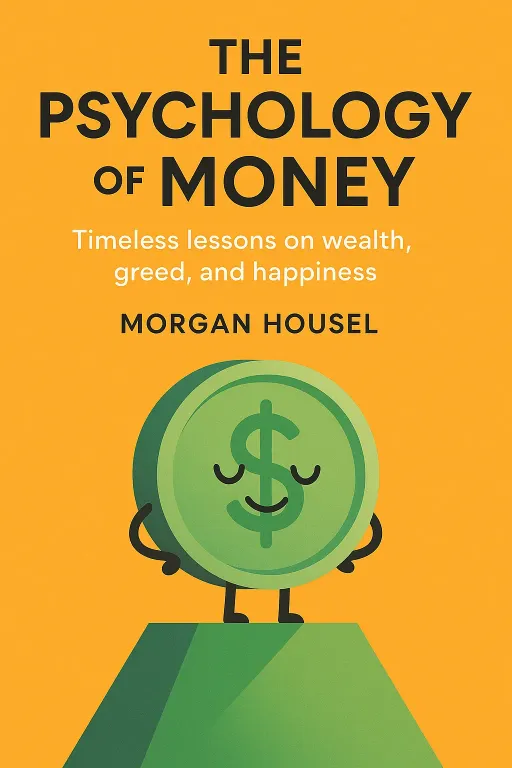
Atlas: Right, these aren't just any books. We're talking 'The Psychology of Money' by Morgan Housel, and 'Thinking, Fast and Slow' by Daniel Kahneman.
Nova: Exactly. Housel's book, in particular, became a global phenomenon, resonating with millions because it stripped away the jargon and focused on the undeniable human element of finance, earning widespread acclaim for its accessible wisdom. It's a book that makes you feel seen, financially speaking.
Atlas: And Kahneman, a Nobel laureate, gave us the scientific framework for why we're so often irrational, providing the bedrock for understanding those human elements.
Nova: Precisely. Because ultimately, building long-term wealth is less about complex financial formulas and more about mastering our own emotions and biases. It's about behavior, not just raw knowledge.
Deep Dive into Core Topic 1: The Primacy of Financial Behavior (vs. Knowledge)
SECTION
Atlas: That's a pretty strong claim, Nova. Most people would assume it's about the latest trading algorithm, or understanding complex derivatives, or even just knowing the right stocks. You're saying behavior trumps all that?
Nova: Absolutely. Housel makes a compelling case that financial success is far more about what he calls your 'behavioral muscles' than your intellectual horsepower. He suggests it's closer to 80% behavior, 20% knowledge.
Atlas: That’s a profound shift in perspective. For someone trying to strategically integrate all these moving parts in a complex organization or even just manage their own finances, how does this behavioral aspect manifest? Can you give us an example where behavior clearly outshines formal financial education?
Nova: I can give you a perfect one. Think about the story of Ronald Read.
Atlas: Ronald Read? The name doesn't immediately ring a bell.
Nova: And that's precisely the point. Ronald Read was a gas station attendant and a janitor from Vermont. He died in 2014 at the age of 92. And despite his incredibly humble professions, he left behind an $8 million fortune.
Atlas: Eight million dollars? From a janitor's salary? That sounds almost mythical. How is that even possible?
Nova: His secret wasn't some insider trading scheme or a brilliant tech startup. It was incredibly simple, consistent behavior over decades. He saved diligently, lived frugally, and invested his savings in blue-chip stocks, holding them for the long term. He didn't chase fads; he didn't panic during market downturns. He just let compound interest work its magic, fueled by patience and humility.
Atlas: So, his 'financial plan' was essentially a masterclass in delayed gratification and consistent execution. That’s fascinating. It really makes you wonder about the historical context of wealth building. Was this always true, even before modern finance, that basic principles of thrift and prudence were key?
Nova: Absolutely. Go back centuries, and the core tenets of building wealth were still about living within your means, saving, and making prudent investments that grow over time. The tools might change, but the human behaviors required for success remain remarkably constant.
Atlas: But wait, doesn't 'knowledge' still matter? Surely, understanding compound interest, or diversification, or even basic budgeting principles—that's knowledge, right? Are you saying that's irrelevant?
Nova: Not irrelevant at all, but its is behavioral. Knowing what compound interest is, is one thing. Consistently saving for decades, resisting the urge to spend, and enduring market volatility to compound interest – that's behavior. A brilliant mathematician might understand the formula for compound interest perfectly, yet if they can't control their spending or their fear during a market crash, that knowledge is practically useless for building wealth.
Atlas: That's a great way to put it. It’s the difference between knowing the recipe and actually cooking the meal consistently without burning it.
Deep Dive into Core Topic 2: Unmasking Cognitive Biases in Financial Decisions
SECTION
Nova: And this idea of behavior being paramount leads us directly to our behavior so often goes awry, and that's where Kahneman's work on cognitive biases becomes indispensable. Our brains, for all their brilliance, are wired with inherent biases that often lead us to make irrational financial choices.
Atlas: Wait, so you're telling me my brain is actively working against my long-term financial interests? That sounds... inefficient for someone like a strategic integrator trying to make a tangible difference. I imagine a lot of our listeners feel like their rational minds are in charge.
Nova: We like to think so! But Kahneman, with Amos Tversky, famously introduced us to System 1 and System 2 thinking. System 1 is fast, intuitive, emotional, and often makes quick decisions based on heuristics—mental shortcuts. System 2 is slow, deliberate, logical, and effortful. When it comes to money, System 1 often jumps in, sometimes to our detriment.
Atlas: Give me an example of how this plays out in our financial lives. What kind of biases are we talking about?
Nova: A classic one is. It's the psychological phenomenon where the pain of losing something is psychologically twice as powerful as the pleasure of gaining an equivalent amount.
Atlas: So, losing $100 feels worse than finding $100 feels good?
Nova: Exactly. In investing, this often manifests as investors selling winning stocks too early to 'lock in' gains – avoiding the regret of seeing those paper profits disappear. Conversely, they'll hold onto losing stocks for too long, refusing to sell and realize the loss, hoping it will 'come back.' They’re avoiding the immediate pain of acknowledging a mistake.
Atlas: That’s going to resonate with anyone who’s ever stared at their portfolio. It’s like denying a bad decision even when the evidence is staring you in the face. What's another common one?
Nova: Another pervasive bias is. This is our tendency to rely too heavily on the first piece of information offered when making decisions, even if that anchor is arbitrary or irrelevant.
Atlas: Like how an initial price point, even if arbitrary, disproportionately influences subsequent negotiations? For our listeners in tech, how does anchoring affect, say, a startup valuation, or even policy decisions in a large firm?
Nova: It's huge. In a startup valuation, the first number mentioned, whether by the founder or an early investor, can set an anchor that frames all subsequent discussions, even if the underlying fundamentals don't fully support it. Or in policy making, an initial budget figure, even if aspirational, can anchor future spending discussions. It’s a powerful, often subconscious, influence.
Atlas: But how do we, as ethical explorers, navigate these ingrained biases? Is there a historical precedent for recognizing and overcoming these kinds of mental traps, or is this a purely modern challenge? Because it sounds like our brains are conspiring against us.
Nova: It’s definitely not purely modern. While Kahneman gave it scientific rigor, humans have always grappled with these tendencies. Awareness is the first and most critical step. Recognizing that your intuitive System 1 might be pushing you towards a decision driven by fear or a subconscious anchor allows your System 2 to step in and apply logic. It’s about building mental speed bumps.
Synthesis & Takeaways
SECTION
Nova: So, bringing it all together, Housel shows us good financial behavior looks like – the consistent, often boring, long-term actions that build wealth. And Kahneman explains it's so incredibly hard to stick to those behaviors, by exposing the hidden emotional and cognitive forces at play.
Atlas: It's a powerful combination. It tells us that mastering financial psychology means understanding our inherent flaws and actively building systems and mental models to counteract them. It’s not about being smarter than everyone else; it’s about being more disciplined and self-aware than your own primal instincts.
Nova: Exactly. It’s about humility, patience, and recognizing that the biggest risk to your financial future often isn't the market, but the person staring back at you in the mirror.
Atlas: That’s a profound thought. So, for our listeners, what’s one tiny step they can take right now to start applying this wisdom, beyond just understanding it intellectually?
Nova: The tiny step is simple: identify one recent financial decision you made. Maybe it was buying something, selling an investment, or even just procrastinating on a financial task. Now, try to pinpoint an emotion or a bias that might have influenced that decision. Just recognizing it is a huge step.
Atlas: So, Nova, if our financial lives are truly a battle against ourselves, what's the most powerful question we can ask to reframe our approach to money, beyond just the numbers, to really internalize this?
Nova: Perhaps, 'What behavior am I choosing today that my future self will thank me for, regardless of market volatility?'
Atlas: That's a question worth pondering.
Nova: This is Aibrary. Congratulations on your growth!