Unlock Peak Performance with Mental Models and Deep Work
Golden Hook & Introduction
SECTION
Nova: Alright, Atlas, I've been thinking about the core idea of unlocking peak performance, and I've got my five-word review for it. Ready?
Atlas: Oh, I love a good five-word review challenge! Lay it on me, Nova. No pressure, but mine's going to be epic.
Nova: "Think sharper, focus harder, win smarter." Your turn.
Atlas: Whoa, that's good! Okay, mine is... "Beyond busy, into actual impact."
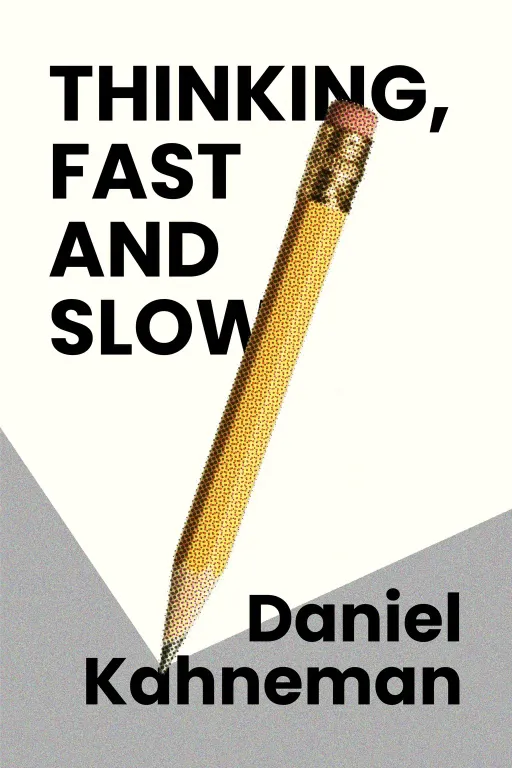
Nova: Boom! I knew you'd nail the "Achiever" vibe. And that really does sum up what we're diving into today. We're pulling insights from a trio of intellectual heavyweights: Daniel Kahneman's groundbreaking "Thinking, Fast and Slow," Cal Newport's essential "Deep Work," and Josh Kaufman's incredibly practical "The Personal MBA."
Atlas: That's a powerhouse lineup! Kahneman, of course, a Nobel laureate who completely reshaped how we understand decision-making. Newport, an academic who essentially wrote the modern manifesto for focused productivity. And Kaufman, who's made elite business wisdom accessible to everyone without the hefty tuition fee.
Nova: Exactly! And when you put these three together, what you get is not just a collection of ideas, but a complete toolkit for optimizing your intellectual approach, from making better decisions to executing tasks with unparalleled focus. It's about designing your mental operating system for maximum impact.
Unmasking Your Mental Operating Systems: Fast vs. Slow Thinking
SECTION
Atlas: Okay, so "designing your mental operating system" sounds fantastic, but where do we even begin? Our brains feel like a tangled mess half the time.
Nova: That's where Kahneman comes in. He gives us the user manual. He introduces us to two characters living in our heads: System 1 and System 2. Think of System 1 as your intuition, your gut feeling – it's fast, automatic, emotional, and always on. It's what lets you recognize a friend's face or slam the brakes without thinking.
Atlas: Oh, I like that! The brain's autopilot. So, what's System 2? I imagine that's the one that cleans up System 1's messes.
Nova: Pretty much! System 2 is the slow, deliberate, logical, and effortful thinker. It's what you use for complex calculations, comparing two products before buying, or focusing your attention in a noisy room. It's powerful, but it's also lazy. It prefers to let System 1 handle things whenever possible.
Atlas: That makes sense. I can totally relate to my brain trying to take the easy way out. But how does this interplay actually impact our decisions, especially for someone who's goal-oriented and trying to get results?
Nova: Let me give you an example. Imagine you're in a negotiation. System 1 might jump to conclusions based on initial numbers – the "anchoring effect." If the first offer is high, your System 1 automatically anchors your perception of value to that high number, even if it's completely unreasonable. Your System 2 kick in, analyze the market, research alternatives, and logically counter. But that takes effort. If you're tired, stressed, or distracted, System 1 often wins, leading you to accept a less-than-optimal deal because it like a good compromise.
Atlas: Wow, that's kind of heartbreaking. So many times I've had that "gut feeling" about a decision, only to realize later I missed crucial details. How do we prevent our autopilot from leading us astray, especially when the stakes are high, like in a career decision or a big project?
Nova: The key isn't to eliminate System 1 – it's essential for survival and quick reactions. It's about recognizing when System 1 is likely to mislead you, and then intentionally engaging System 2. For instance, if you're making a significant hiring decision, instead of just going with the "likable" candidate, you create a structured rubric, ask specific behavioral questions, and compare candidates systematically. It’s about building mental checklists and deliberate processes to override those intuitive biases.
Atlas: So basically you're saying, know your brain's shortcuts, and proactively build guardrails. That's a great way to put it. It’s about being aware of the invisible forces at play.
The Power of Deep Work: Cultivating Uninterrupted Focus
SECTION
Nova: And that naturally leads us to the second key idea we need to talk about, which often acts as a counterpoint to what we just discussed: the challenge of actually that System 2 thinking in a world designed to hijack it. This is where Cal Newport's "Deep Work" becomes absolutely critical.
Atlas: Ah, "Deep Work." I feel like everyone talks about it, but few actually it. For our listeners who are managing high-pressure teams or juggling multiple projects, this concept might feel impossible to implement. How do you actually carve out that time when your inbox is exploding and teams need you constantly?
Nova: That's precisely the challenge Newport addresses. He defines deep work as "professional activities performed in a state of distraction-free concentration that push your cognitive capabilities to their limit. These efforts create new value, improve your skill, and are hard to replicate." It's the opposite of "shallow work"—the emails, meetings, and administrative tasks that are easy to do but don't create significant value.
Atlas: Okay, but isn't a lot of our modern work shallow? How do you escape that treadmill?
Nova: Newport argues that the ability to perform deep work is becoming increasingly rare and, therefore, incredibly valuable. He shares examples like a programmer who dedicates three hours every morning to complex coding problems, with no email, no notifications, no meetings. Or a writer who retreats to a cabin for a week to focus solely on their manuscript. These aren't just anecdotes; they're deliberate. One compelling case is that of Carl Jung, who built a stone tower retreat where he could work for hours in solitude, completely disconnected, producing some of his most profound insights. It wasn't about being anti-social; it was about protecting his deepest thinking.
Atlas: Hold on. A stone tower? I imagine a lot of our listeners don't have access to a personal stone tower. What can regular people do about this? Like how do you go from constant interruptions to deep work when you're in an open-plan office or working from home with kids?
Nova: That's where the strategies come in. Newport isn't advocating for everyone to become a hermit, but to deep work. He outlines different philosophies: monastic, bimodal, rhythmic, and journalistic. The core idea is to treat deep work like a non-negotiable appointment. Block out time, turn off notifications, close irrelevant tabs, and even tell colleagues you're unavailable. It’s about creating a ritual and protecting that focused time fiercely.
Atlas: So it's not just about to focus, it's about your environment and your schedule to make focus inevitable. That makes a lot of sense. It’s like setting up your brain for success, rather than just hoping it happens.
Business Acumen for Everyone: Actionable Mental Models
SECTION
Nova: Exactly. And once you've got a handle on your cognitive biases and you've cultivated the ability to do deep work, you need a framework for to apply that brilliant thinking and intense focus to. That's where Josh Kaufman's "The Personal MBA" comes in, providing essential mental models for understanding how businesses, and even careers, truly work.
Atlas: I mean, "MBA" sounds intimidating to a lot of people. It conjures images of spreadsheets and corporate jargon. How does Kaufman make that accessible and relevant for someone focused on personal growth and career effectiveness, not necessarily starting a tech startup?
Nova: That's the beauty of it. Kaufman distills business down to its fundamental components. He argues that you don't need two years and hundreds of thousands of dollars to understand core business principles. He breaks down complex ideas into simple, actionable mental models. For example, one of his core concepts is "Value Creation." It's not about making money; it's about identifying what people need or want, and then creating it.
Atlas: So, in other words, if you want to be successful, figure out what problem you can solve for someone else.
Nova: Precisely! He uses an example of a simple lemonade stand. The value created isn't just the drink; it's quenching thirst on a hot day, providing a refreshing break, or even the convenience for a busy parent. For a career, this means asking: "What unique value do I bring to my team, my company, or my clients?" It shifts your perspective from just doing tasks to actively creating impact. This helps you understand why some projects get prioritized, why certain skills are more in demand, and how to position yourself for growth, regardless of your role.
Atlas: That’s a great way to put it. So, if I'm not starting a business, how do these mental models help me achieve my personal career goals or navigate my current role better? Because I imagine a lot of listeners are striving for promotions or trying to make a bigger impact where they are.
Nova: Absolutely. Take the mental model of "Marketing." It's not just about flashy ads; it's about understanding how to get attention and build demand for what you offer. In your career, this translates to how you communicate your achievements, how you network, how you present your ideas, and even how you craft your resume. Are you effectively 'marketing' your skills and value to the right people within your organization? It’s about thinking of your career as a product you're constantly refining and presenting.
Atlas: That’s such a hopeful way to look at it. It turns potentially intimidating business concepts into practical tools for personal and professional advancement. So, it's not just for the C-suite, it's for everyone trying to be more effective.
Synthesis & Takeaways
SECTION
Nova: Exactly. When you combine Kahneman's insights into our mental shortcuts, Newport's strategies for deep, focused work, and Kaufman's actionable mental models for understanding the systems around us, you have an incredibly powerful triad. It's about intentionally designing your intellectual life, moving beyond simply being busy, and truly creating impact.
Atlas: I love that. "Designing your intellectual life." For all our listeners who are pragmatists, explorers, and achievers, what's one immediate, actionable step they can take to start applying these ideas and achieve that peak performance?
Nova: Here's a challenge: Identify one task this week that truly requires deep, focused System 2 thinking – something that creates significant value. Then, schedule a minimum of 60 minutes for it, completely uninterrupted. Turn off notifications, close irrelevant tabs, and treat that block of time as sacred. See what you can achieve when your brain isn't constantly being pulled in a thousand directions.
Atlas: I love that. One deep work block. That’s a tangible place to start. It’s about moving from understanding these concepts to actually embodying them.
Nova: It’s not just about working harder, Atlas. It’s about working smarter, deeper, and with a clearer understanding of your own mind and the world around you. This is how you unlock true peak performance.
Atlas: That’s a powerful insight to end on.
Nova: This is Aibrary. Congratulations on your growth!