The 'Why' Behind Your Choices: Unmasking Intentions for Clarity
Golden Hook & Introduction
SECTION
Nova: What if I told you that most of your "rational" choices are actually brilliant acts of self-deception?
Atlas: Whoa, Nova. That's a bold claim right out of the gate! Are you saying my morning coffee decision was a lie? Because it felt pretty deliberate.
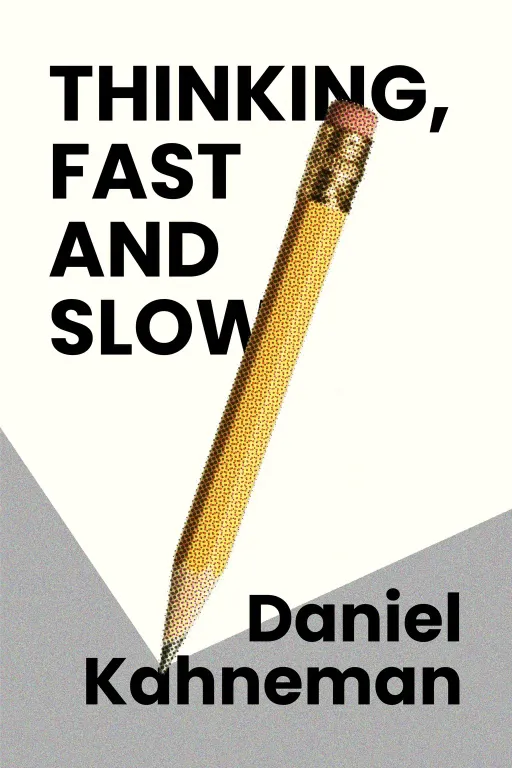
Nova: It felt deliberate, didn't it? And that's precisely the point. Today, we're unmasking those subtle deceptions by delving into insights inspired by giants like Daniel Kahneman, author of Thinking, Fast and Slow, and Dan Ariely, who penned Predictably Irrational.
Atlas: Two books that fundamentally shifted how we understand our own minds, revealing just how much we operate on autopilot. It makes me wonder, how many of our listeners are right now nodding along, thinking about that one decision they made last week that just... didn't quite add up?
Nova: Exactly. It's about the 'why' behind our choices, even the ones we don't fully acknowledge. We often believe our decisions are carefully weighed, logical, and fully aligned with our core values. Yet, there's this pervasive 'blind spot' where hidden forces subtly shape our path every single day.
Atlas: So, you're saying there's a whole layer to our decision-making that we're completely unaware of? Like a subconscious puppet master pulling the strings?
Nova: A very subtle, internal puppet master, yes! And it can keep us from truly understanding our deepest intentions.
The Blind Spot of Unconscious Intentions
SECTION
Nova: Let me give you an example. Imagine a brilliant, ambitious young professional, let's call her Sarah. She's been offered a fantastic job promotion, a significant leap in her career. It comes with more responsibility, higher pay, and prestige. On the surface, it's a no-brainer, right? Every rational part of her says, 'Take it!'
Atlas: Absolutely. That sounds like a dream opportunity for someone driven by purpose and clarity. What's the catch?
Nova: The catch is, Sarah feels this persistent, low-level anxiety about it. She knows it's a huge commitment, demanding longer hours, more travel, and less time for her personal passions – her painting, her hiking. When she talks about it, she focuses on the 'prestige' and 'what people will think,' rather than how it genuinely aligns with her desire for emotional mastery and a balanced life.
Atlas: Okay, but isn't that just a normal struggle with work-life balance? How is that a 'blind spot' rather than just a tough choice?
Nova: It becomes a blind spot when she it's solely about career progression and financial security, while deeper, unacknowledged desires for external validation, or even a fear of stagnation, are the true drivers. She's rationalizing the choice after the fact, rather than truly interrogating the underlying intentions. She might tell herself, "This is what successful people do," or "I want this," even as her gut screams for more personal freedom. The anxiety is a symptom of this misalignment.
Atlas: That makes sense. It's like we create a story for ourselves that sounds good on paper, but it doesn't quite match the internal compass. I imagine a lot of our listeners can relate to making a choice that felt right in the moment, but later, looking back, they wonder 'what was I thinking?'
Nova: Precisely. The blind spot isn't a flaw; it's a feature of how our minds work. It's the gap between our stated reasons and our actual, often unconscious, motivations. We all do it. And the more complex the decision, the thicker that blind spot can become.
Atlas: So, how do we even begin to this blind spot? How do we illuminate those hidden drivers when they're so good at hiding?
Unmasking Intentions: The Two Systems and Predictable Irrationalities
SECTION
Nova: That's where the work of Kahneman and Ariely becomes absolutely invaluable. Seeing the blind spot requires understanding our minds process information. Kahneman, for example, introduced us to two distinct modes of thinking: System 1 and System 2.
Atlas: Alright, "fast and slow" thinking. I've heard those terms thrown around. Can you give us a quick, simple breakdown of how they operate in our daily lives?
Nova: Think of System 1 as your intuition, your gut reaction. It's fast, automatic, effortless. It's what allows you to instantly recognize a friend's face, or know that 2 + 2 = 4. It's brilliant for survival and efficiency. System 2, on the other hand, is slow, deliberate, and effortful. It's what you use to solve a complex math problem like 17 x 24, or to deliberately weigh the pros and cons of a major life decision.
Atlas: Okay, so System 1 is like the quick, instinctual brain, and System 2 is the analytical, deep-thinking brain. So, when we impulsively buy something we don't need, is that System 1 overriding our deeper intention to save?
Nova: Often, yes! System 1 is constantly generating suggestions for System 2 to review. But System 2 is lazy, always looking for the easy way out. And that's where Dan Ariely's work on "predictably irrational" behavior comes in. He shows us that our errors aren't random; they follow patterns.
Atlas: So, it's not just that we make mistakes, but we make the of mistakes over and over? That's fascinating, but also a bit disheartening if we're predictably irrational.
Nova: Not disheartening, Atlas, empowering! Because once you understand the patterns, you can anticipate them. Ariely's classic example is the decoy effect. Imagine you're subscribing to a magazine. Option A: Online-only for $59. Option B: Print-only for $125. Option C: Online Print for $125.
Atlas: Okay, that's a classic. Most people would choose C, the Online and Print for $125. But if you remove the Print-only option for $125, suddenly the Online-only for $59 looks much more appealing.
Nova: Exactly! The print-only option is the 'decoy.' It's not meant to be chosen, but it makes the 'Online and Print' option seem like an incredible deal, a clear value proposition. Our System 1 quickly jumps to "good deal!" without System 2 fully analyzing the true value for. This isn't a random error; it's a predictable human response to how choices are framed.
Atlas: That's a perfect example. It's like our minds have these default settings, these hidden algorithms that are running our lives without our permission. How does understanding these help us align with our intentions, the ones we reflect on later? For someone who deeply values clarity and purpose, this feels critical.
Nova: It's absolutely critical. The first step is awareness. Recognizing that you have a System 1 that's constantly making quick judgments, and that you're susceptible to predictable irrationalities, allows you to pause. It gives System 2 a chance to engage. When Sarah, our ambitious professional, understands this, she can ask herself: "Am I truly excited by the responsibilities of this promotion, or am I being swayed by the 'prestige' decoy, or the fear of missing out, which is another predictable bias?"
Atlas: So, it's about creating that space between the stimulus and the response, to check in with our deeper self, our true intentions, before System 1 or a predictable irrationality takes the wheel.
Nova: Precisely. It's about shifting from being a passenger in your own decision-making to becoming the conscious driver. It's a journey of self-discovery, allowing you to unmask your intentions and ensure your choices truly serve your purpose.
Synthesis & Takeaways
SECTION
Nova: This journey from the blind spot to unmasking intentions is not a quick fix, but a profound shift in how we engage with our lives. It's about understanding that our minds are incredibly complex, and that our choices are often influenced by forces we're not consciously aware of.
Atlas: So, it's not about being 'broken' or 'irrational,' but about understanding the incredible machinery of our minds. And once we understand it, we can steer it. It's empowering, really. For our listeners who are seekers of profound understanding and self-discovery, this insight into our cognitive biases and decision-making offers a roadmap to greater clarity.
Nova: Exactly. The power lies in recognizing these two systems and our predictable irrationalities. It’s the first step to aligning our actions with our deeper intentions. And it’s an ongoing practice.
Atlas: What's one practical step our listeners can take today to start unmasking their own intentions? Something simple, actionable, and that resonates with that desire for introspection.
Nova: The next time you make a significant decision, or even a small one that feels 'off' or leaves you with a lingering doubt, pause. Ask yourself: "Was this choice purely a deliberate System 2 decision, or did a predictable irrationality or a hidden bias nudge me?" Then, take a moment to journal about it. Write down your initial 'why,' and then dig deeper for the unspoken 'why behind the why.'
Atlas: That's a great recommendation, Nova. Journaling is such a powerful tool for capturing those fleeting insights and tracking emotional triggers, guiding us towards that greater clarity and purpose. This ongoing quest to unmask our intentions—it's a lifelong journey, isn't it? What choice will you reflect on today?
Nova: This is Aibrary. Congratulations on your growth!