The 'Why' Behind the 'What': Unlocking Human Behavior for Better Engagement.
Golden Hook & Introduction
SECTION
Nova: Atlas, five words to describe why understanding human behavior is crucial in communication. Go.
Atlas: Unconscious drivers, surprising, powerful, essential insight.
Nova: Ooh, I like that. Mine would be: "Why we do thing." It’s endlessly fascinating, isn’t it?
Atlas: Absolutely. That 'why' is often so much more interesting, and frankly, more impactful, than the 'what.' We think we're making these perfectly rational choices, but then we trip over our own feet.
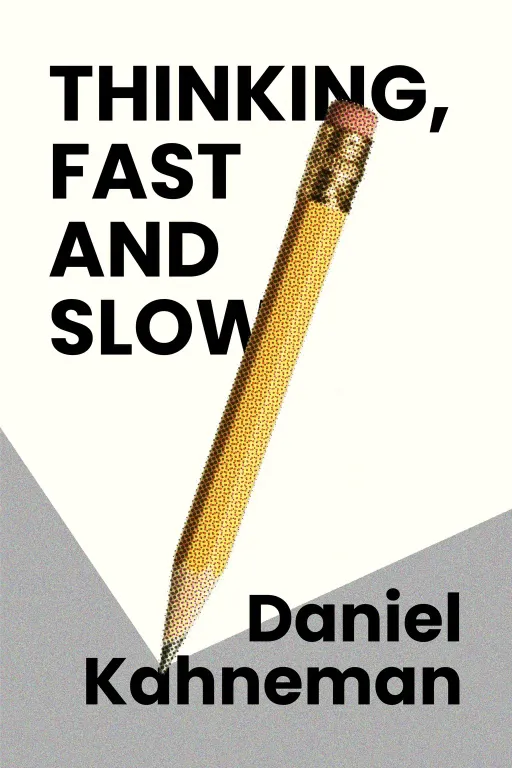
Nova: Exactly! And today, we are dissecting the brilliant minds of two Nobel laureates who completely transformed our understanding of that 'why': Daniel Kahneman's 'Thinking, Fast and Slow' and Richard H. Thaler and Cass R. Sunstein's 'Nudge: Improving Decisions About Health, Wealth, and Happiness.' What’s incredible is Kahneman, a psychologist, actually won the Nobel Prize in Economics for his work, showing just how deeply psychology underpins our financial decisions, our daily choices, everything.
Atlas: Wow. A psychologist winning the Economics Nobel. That’s a powerful statement right there about the human element in everything, even what we consider the most logical domains. It really drives home this idea that our minds aren’t just spreadsheets.
Nova: Not at all. It’s like we have this super-computer in our head that’s running two different operating systems simultaneously, and we’re only consciously aware of one of them. And that’s where our 'blind spot' begins.
The Illusion of Rationality: Unmasking System 1 and System 2 Thinking
SECTION
Nova: Most of us walk around assuming we're rational beings, making logical choices based on evidence. But Kahneman, with his partner Amos Tversky, showed us that's largely an illusion. He introduced us to System 1 and System 2 thinking. System 1 is fast, intuitive, emotional, and largely unconscious. It's what tells you to slam on the brakes when a car swerves. System 2 is slow, deliberate, analytical, and conscious – it's what you use to solve a complex math problem.
Atlas: Wait, are you saying we’re not as rational as we think? That our gut reactions are often running the show without our permission? That sounds rough for anyone trying to communicate clearly.
Nova: It’s profoundly impactful. Think about this classic example from Kahneman: Linda is 31 years old, single, outspoken, and very bright. She majored in philosophy. As a student, she was deeply concerned with issues of discrimination and social justice, and also participated in anti-nuclear demonstrations. Now, which is more probable? A) Linda is a bank teller. Or B) Linda is a bank teller and is active in the feminist movement.
Atlas: Hmm. My System 1 is immediately screaming B. She sounds exactly like someone who would be active in the feminist movement.
Nova: And that's your System 1 in action! It jumps to the most coherent, story-like conclusion. But logically, it's impossible for B to be more probable than A. The set of "bank tellers who are active in the feminist movement" is a smaller subset of "bank tellers." So, A be more probable. It’s a trick called the conjunction fallacy, and it perfectly illustrates how our intuitive System 1 can override cold, hard logic because it prefers a good story.
Atlas: That’s wild! I totally fell for it. So, for our listeners who are trying to get a message across, whether it's in a boardroom or a classroom, this means their audience might be making snap judgments based on a 'good story' rather than the actual facts?
Nova: Precisely. Or they might be influenced by an 'availability heuristic,' where the easiest information to recall—perhaps a vivid anecdote or a recent news story—overshadows more statistically relevant data. Imagine you're presenting a new strategy. If you start with a compelling, emotional story of a single failure, even if your data shows overwhelming success, your audience's System 1 might latch onto that story and make them disproportionately wary.
Atlas: That gives me chills, honestly. I can see how that plays out constantly in communication. It’s like we’re programmed to respond to certain cues, and if we don’t understand those programs, we’re just talking past each other. So, if we’re all driven by these unconscious forces, how can anyone truly communicate effectively without just manipulating people?
The Power of Nudges: Designing for Better Human Behavior
SECTION
Nova: That’s exactly where the genius of Thaler and Sunstein comes in with their book 'Nudge.' If we understand these systems, we can actually design for them, not to manipulate, but to subtly guide choices towards better outcomes. They call these 'nudges' – subtle changes in 'choice architecture' that influence behavior without restricting options.
Atlas: Okay, so 'nudges.' Give me an example. What does that actually look like in practice?
Nova: One of my favorite examples, which Thaler discusses, is the famous 'fly in the urinal.' In men's restrooms at Amsterdam's Schiphol Airport, they etched the image of a fly into the urinals. It sounds ridiculously simple, right?
Atlas: Yeah, I'm already skeptical. What did that do?
Nova: It dramatically reduced spillage by 80%! Men, engaging their System 1, subconsciously aimed at the fly. No signs telling them to be neater, no penalties, just a tiny, almost invisible change in the environment that leveraged our innate aiming instinct. It guided behavior without removing the choice to aim elsewhere.
Atlas: That’s incredible! So, this isn't about telling people what to do, it's about making the 'right' choice feel like the natural, easy, almost unconscious choice. But wait, isn't that... manipulation? How is that different from just tricking people into doing what you want? I mean, for our listeners who are empathetic communicators, this could feel a bit ethically grey.
Nova: That's a crucial distinction, and Thaler and Sunstein are very clear about it. They call it 'libertarian paternalism.' The 'libertarian' part means people always retain their freedom of choice. The 'paternalism' part means the choice architect—whether it's a government, a business, or even an individual—is trying to guide people towards choices that will make their lives better, as judged by the people themselves. It's about helping people overcome their System 1 biases when those biases lead to self-defeating outcomes.
Atlas: So, it's about designing environments that make it easier for people to make decisions that align with their own long-term best interests, even when their System 1 might otherwise lead them astray. Like, making the healthy option the default in a school cafeteria, but still allowing kids to choose the less healthy option if they really want it.
Nova: Exactly! Or in communication, it could be how you frame information to make the most important details stand out, or how you structure a meeting agenda to encourage certain types of participation. Instead of just presenting facts, you're thinking about the psychological journey your audience is taking. It's about thoughtful engagement, not coercion. It’s about leveraging our understanding of human nature to foster better decisions, whether it’s for health, wealth, or happiness.
Atlas: That gives me so much to think about. It makes me realize that as communicators, we aren't just delivering information; we're also architects of choice, whether we realize it or not.
Synthesis & Takeaways
SECTION
Nova: Absolutely, Atlas. The synthesis here is profound: by recognizing our 'blind spots'—those powerful, unconscious biases driven by System 1 thinking—we gain the insight to then strategically apply 'nudges.' This allows us to improve outcomes, not just for ourselves in our personal decisions, but for others in how we design communications, policies, or even just daily interactions. It's about moving beyond just we say, to we say it, and we present choices.
Atlas: What a powerful shift in perspective. It means that effective communication isn't just about crafting the perfect message, but about understanding the human operating system it's being delivered to. So, for our listeners, the empathetic communicators and practical educators, what's one small, actionable thing they can do this week to start applying this understanding?
Nova: I would say: next time you're trying to influence a decision or convey a message, pause and consider the 'default option' you're presenting, either explicitly or implicitly. Are you making it easy for System 1 to choose the path you want people to take, the path that genuinely benefits them? Or are you leaving it to chance, assuming pure rationality will prevail? Just that simple awareness can be a powerful nudge in itself.
Atlas: That’s a fantastic challenge. It’s about being more intentional, more human-centered, and ultimately, more effective in how we connect. It’s not about tricking people, but about truly understanding them.
Nova: Couldn't have said it better myself. The world becomes a much more navigable and understandable place when you realize the 'why' behind the 'what.'
Atlas: And with that, we've unlocked a bit more of the human puzzle.
Nova: This is Aibrary. Congratulations on your growth!